
Author

admin

Browsing

Bitcoin, the most well-known cryptocurrency, paved the way for the cryptocurrency asset class.

Now the cryptocurrency of choice, its meteoric rise has been unlike any other commodity, resource or asset. Bitcoin’s price rose more than 1,200 percent from March 2020 to reach US$69,044 on November 10, 2021.

The coin showcased its famous volatility in the following year, falling as low as US$15,787 by November 2022 amid economic uncertainty and a wave of negative media coverage.

Bitcoin started 2024 just below US$45,000 and made substantial gains in remainder of the year. Following Donald Trump’s victory over Vice President Kamala Harris in the US presidential election, Bitcoin soared to US$103,697 on December 4, 2024.

The first quarter of 2025 saw the price of Bitcoin decline by more than 25 percent to a low for the year of US$75,004 in early April. Since then, rising institutional demand and an emerging industry-friendly US regulatory environment have poured rocket fuel into the digital assets value.

Bitcoin reached its new all-time high price of US$123,153.22 before pulling back to close at US$119,839.70 on July 14, 2025.

For frequent updates on the biggest news of the crypto sector, check out our Crypto Market Recap, with updates multiple times per week.

Where did Bitcoin start, and what has spurred its price movements since its launch? Read on to find out.

In this article

    What is Bitcoin and who invented it?

    Created as a response to the 2008 financial crisis, the concept of Bitcoin was first introduced in a nine-page white paper titled “Bitcoin: A Peer-to-Peer Electronic Cash System” on October 31, 2008, on a platform called Metzdowd.

    The manifesto was penned by a notoriously elusive person (or persons) who used the pseudonym Satoshi Nakamoto. The author(s) laid out a compelling argument and groundwork for a new type of cyber-currency that would revolutionize the monetary system.

    Cryptographically secured, Bitcoin was designed to be transparent and resistant to censorship, using the power of blockchain technology to create an immutable ledger preventing double-spending. The true allure for Bitcoin’s early adopters was in its potential to wrestle power away from banks and financial institutes and give it to the masses.

    This was especially enticing as the fallout from the 2008 financial collapse ricocheted internationally. Described as the worst financial crisis since the Great Depression, US$7.4 billion in value was erased from the US stock market in 11 months, while the global economy shrank by an estimated US$2 trillion.

    On January 3, 2009, the Genesis Block was established, marking the beginning of Bitcoin’s blockchain, onto which all additional blocks have been added. The Genesis Block contained the first 50 Bitcoins ever created and a simple message: “The Times 03/Jan/2009 Chancellor on the brink of second bailout for banks.”

    Many believe the message hints at Bitcoin’s mission, as it references an article in The London Times that criticized the British government’s inadequate response to the financial crisis of 2007 to 2008, particularly the government’s inability to provide effective relief and support to the struggling economy.

    What was Bitcoin’s starting price?

    When Bitcoin started trading in 2009, its starting price was a minuscule US$0.0009.

    On January 12, 2009, Nakamoto made the first Bitcoin transaction when they sent 10 Bitcoins to Hal Finney, a computer scientist and early Bitcoin enthusiast, marking a crucial milestone in the cryptocurrency’s development and adoption.

    News of the cryptocurrency continued to spread around the Internet, but its value did not rise above US$0 until October 12, 2009, when a Finnish software developer sent 5,050 Bitcoins to New Liberty Standard for US$5.02 via PayPal Holdings (NASDAQ:PYPL), thereby establishing both the value of Bitcoin and New Liberty Standard as a Bitcoin exchange.

    The first time Bitcoin was used to make a purchase was on May 22, 2010, when a programmer in Florida named Laszlo Hanyecz offered anyone who would bring him a pizza 10,000 Bitcoin in exchange. Someone accepted the offer and ordered Hanyecz two Papa John’s pizzas for US$25. The 10,000 Bitcoin pizza order essentially set Bitcoin’s price in 2010 at around US$0.0025.

    Bitcoin’s price finally broke through the US$1 mark in 2011, and moved as high as US$29.60 that year. However, in 2012 Bitcoin pulled back and remained relatively muted.

    Bitcoin’s price saw its first significant growth in earnest in 2013, the year it broke through both US$100 and US$1,000. It climbed all the way to US$1,242 in December 2013.

    From that peak, Bitcoin’s price began to fall, and it spent most of 2015 in the US$200 range, but it turned around in December 2015 and began to climb again, ending the year at around US$430.

    Bitcoin price chart from August 2011 to December 31, 2015.

    Chart via TradingEconomics.com.

    When did the Bitcoin price start to grow?

    January 1, 2016, marked the beginning of Bitcoin’s sustained price rise. It started the year at US$433 and ended it at US$989 — a 128 percent value increase in 12 months.

    That year, several contributing factors led to Bitcoin’s rise in mainstream popularity. The stock market experienced one of its worst first weeks ever in 2016, and investors began turning to Bitcoin as a “safe-haven” stock amidst economic and geopolitical uncertainty.

    2016 also saw the Brexit referendum in the UK in June and the election of Donald Trump to the White House in November, both events that coincided with a bump in Bitcoin’s price.

    Bitcoin continued its ascent, while various industries continued to take an interest in blockchain technology, particularly technology and finance. In February, a group of investors that included IBM (NYSE:IBM) and Goldman Sachs (NYSE:GS) invested US$60 million in a New York firm developing blockchain technology for financial services, Dig Asset Holdings. Bitcoin was trading at US$368.12 on February 2, down a bit from January, but two months later it was US$418.

    In May the price of Bitcoin experienced a significant price increase, rising by 21 percent to US$539 at the end of the month. Its price went higher into June, peaking at US$764 on June 18. After that, it fell sharply and spent the summer in the high US$600 range. It dropped to US$517 on August 1 and started its climb all over again.

    Microsoft (NASDAQ:MSFT) and Bank of America Merrill Lynch partnered for a finance transacting endeavor in September. Not much price movement was observed, but Bitcoin remained on a steady upward trajectory after that. In October, Ripple partnered with 12 banks in a trial that used its native digital currency token XRP to facilitate cross-border payments. Institutional investment bolstered investor confidence, and Bitcoin went from US$629 to US$736 between October 20 and November 20.

    Bitcoin’s popularity continued into 2017, and it rose from US$1,035.24 in January to US$18,940.57 in December. Futures contracts began trading on the Chicago Mercantile Exchange in December 2017, and Bitcoin began to be more widely perceived as a legitimate investment rather than a passing fad. FOMO flooded the market. What ensued was a frenzy of media coverage featuring celebrity endorsements and initial coin offerings (ICOs) that spilled into 2018.

    Regulators began to take notice and issued warnings and guidelines meant to protect investors and mitigate risks associated with digital assets, which only seemed to make people want them more.

    Through it all, Bitcoin remained the “gold standard” of cryptocurrencies, yet its price was subject to extreme volatility. At the beginning of 2019, it was around US$3,800, it reached nearly US$13,000 in June, but by December 2019 Bitcoin was trading at around US$7,2000.

    Bitcoin price chart from January 1, 2016, to December 31, 2019.

    Chart via TradingEconomics.com.

    What factors led to Bitcoin’s rise in the early 2020s?

    2020 proved a testing ground for the digital coin’s ability to weather financial upheaval. Starting the year at US$6,950.56, a widespread selloff in March triggered by the pandemic brought its value to US$4,841.67 — a 30 percent decline.

    The low created a buying opportunity that helped Bitcoin regain its losses by May. The rally continued throughout 2020, and the digital asset ended the year at US$29,402.64, a 323 percent year-over-year increase and a 507 percent rise from its March drop.

    By comparison, gold, one of the best-performing commodities of 2020, added 38 percent to its value from the low in March through December, setting what was then an all-time high of US$2,060 per ounce in August.

    Bitcoin’s ascent continued in 2021, rallying to an all-time high of US$68,649.05 in November, a 98.82 percent increase from January. Much of the growth in 2021 was attributed to risk-on investor appetite.

    Increased money printing in response to the pandemic also benefited Bitcoin, as investors with more capital looked to diversify their portfolios. The success of the world’s first cryptocurrency amid the market ups and downs of 2020 and 2021 led to more interest and investment in other coins and digital assets as well. For example, 2021 saw the rise of non-fungible tokens (NFTs), unique crypto assets that are stored, sold and traded digitally using blockchain technology.

    Almost immediately following its record close above US$69,000 in November 2021, Bitcoin’s value began to fall once again. Market uncertainty weighed especially heavily on Bitcoin in 2022. During the second quarter of that year, values dived below US$20,000 for the first time since December 2020.

    On May 7, 2022, Curve Whale Watching posted the first sign that confidence in Terra Luna, a cryptocurrency pegged to the US dollar, was waning after 85 million of its stablecoin UST exchanged for less than the 1:1 ratio it was supposed to maintain. This triggered a massive sell-off that brought Luna’s value down 99.7 percent and eventually resulted in the Terra tokens ceasing to be traded on major crypto exchanges.

    Terra’s collapse had a domino effect on the industry as investors’ faith in crypto crumbled. In July, the Celsius network, a platform where users could deposit crypto into digital wallets to accrue interest, halted all transfers due to “extreme market conditions”, driving down the price of Bitcoin even further to US$19,047, a 60 percent decline from January 2022. In July, Celsius filed for Chapter 11 bankruptcy.

    However, the biggest shake-up to the industry came in November when CoinDesk published findings that cryptocurrency trading firm Alameda Research led by Sam Bankman-Fried had borrowed billions of dollars of customer funds from crypto exchange and sister company FTX. Over a third of Alameda’s assets were tied up in FTT, the native cryptocurrency of FTX.

    Once this news broke, investors withdrew their funds en masse, causing a liquidity crunch that collapsed FTX. Bankman-Fried was later arrested and sentenced to 25 years in federal prison on counts of money laundering, wire fraud and securities fraud.

    Although Bitcoin was never implicated, the fallout of the FTX scandal led to a crisis of confidence across the sector and increased scrutiny from regulators and law enforcement. By the end of 2022, prices for Bitcoin had moved even lower to settle below US$17,000.

    Bitcoin price chart from January 1, 2020, to December 31, 2022.

    Chart via TradingEconomics.com.

    Bitcoin’s powerful performance cannot be understated as evidenced by its price performance in the later half of 2023 and so far in 2024.

    Concerns with the banking system led the price of Bitcoin to rally in March 2023 to US$28,211 by March 21 after the failure of multiple US banks alarmed investors.

    In Q2 2023, Bitcoin continued its ascent, stabilizing above US$25,000 even as the US Securities Exchange Commission (SEC) filed lawsuits against Coinbase Global (NASDAQ:COIN), along with Binance and its founder Changpeng Zhao.

    Although it looked like bad news for the sector, Bitcoin stayed steady, holding above US$25,000. This was supported by BlackRock (NYSE:BLK), the world’s largest asset manager, filing for a Bitcoin exchange-traded fund with the SEC on June 15.

    Bitcoin’s price jumped above US$30,000 on June 21, 2023, and on July 3, 2023, the crypto hit its highest price since May 2022 at US$31,500. It held above US$30,000 for nearly a month before dropping just below on July 16, 2023. By September 11, 2023, prices had slid further to US$25,150.

    Heading into the final months of the year, the Bitcoin price benefited from increased institutional investment on the prospect of the SEC approving a bevy of spot Bitcoin exchange-traded funds by early 2024. In mid-November the price for the popular cryptocurrency was trading up at US$37,885, and by the end of the year that figure had risen further to US$42,228 per BTC.

    2024 Bitcoin price performance

    Bitcoin price chart from January 1, 2024, to November 6, 2024.

    Chart via TradingEconomics.com.

    Once the SEC’s approval of 11 spot Bitcoin ETFs hit the wires, the price per coin jumped again to US$46,620 on January 10, 2024. These investment vehicles were a major driving force behind the more than 42 percent rise in value for Bitcoin in February; it reached US$61,113 on the last day of the month.

    On March 4, Bitcoin surged almost 8 percent in 24 hours to trade at US$67,758, less than 2 percent away from its previous record, and on March 11 it hit a new milestone, surpassing the US$72,000 mark. Three days later, on March 14, Bitcoin reached its highest-ever recorded price of US$73,737.94, surpassing the market cap of silver.

    Bitcoin often surges leading up to the halving events, which is when Bitcoin rewards are halved for miners. The most recent came in April when the reward for completing a block was cut from 6.25 to 3.125 Bitcoin.

    Several sources cited the 2024 halving as one of the forces that drove the price of Bitcoin to its newest high.

    The halving occurred at around 8:10 p.m. EDT on a Friday, and Bitcoin’s price remained stable within the US$63,000 to US$65,000 range over the ensuing weekend. On April 22, the Monday following the halving, it was slightly above US$66,000.

    While Bitcoin’s price stayed relatively stable, the cryptocurrency’s trading volume experienced significant fluctuations through that weekend, with a 45 percent increase from April 19 to April 20 followed by a 68 percent decline on April 21. Between April 30 and May 3, it fell as low as US$56,903 following the Federal Reserve’s April policy meeting, which did not produce a rate cut.

    Reports that the SEC was moving to approve spot Ether ETFs in May sent the price of Bitcoin climbing again alongside that of Ether, the native token of the Ethereum blockchain, which serves as the foundation for these ETFs. Bitcoin passed US$71,000 for the second time ever at 8:00 p.m. EDT on May 20, days before the SEC approved spot Ether ETFs on May 23.

    Bitcoin hovered between US$67,000 and US$69,000 for the remainder of the month and into the middle of June. It fell back below US$67,000 on June 13 and moved lower the next day when the Federal Reserve opted to delay lowering interest rates once again.

    Losses picked up speed through late June and continued in July, with analysts pointing to uncertainty over post-election regulations, Germany’s sell-off of seized Bitcoin assets and concerns about the impact of the defunct trading platform Mt. Gox on the token market. Bitcoin dropped to a two-month low of US$55,880 on July 8, but quickly recovered most of its losses after Federal Reserve Chairman Jerome Powell’s congressional testimony on July 9 that signaled rate cuts may not be far off.

    As crypto gains wider acceptance and accessibility, with more traditional financial institutions and products incorporating digital assets, the type of risk that Bitcoin represents has evolved. Bitcoin was primarily seen as a highly speculative alternative investment. Now, with expanding institutional interest, it is increasingly seen as a ”risk-on” asset – meaning its price movements are influenced by market sentiment, investor confidence and broader economic conditions.

    A rise in Bitcoin’s price ensued after the July 13 assassination attempt of US presidential candidate Donald Trump, who has been actively endorsing the crypto industry for support. Bitcoin rose from US$57,899 to US$66,690 in the week following the incident as the odds of a Trump victory were seen to improve, highlighting the impact of regulatory uncertainty on the market. However, Bitcoin’s price didn’t experience any significant pullbacks in the week after current US President Joe Biden dropped out of the race on July 21 and current Vice President Kamala Harris took over as the new nominee.

    Other significant developments affecting Bitcoin during the summer included the underwhelming performance of spot Ether ETFs, fears of a US government Bitcoin sell-off, Trump’s proposed national Bitcoin stockpile and Trump’s declining chances of winning the election as support for Harris snowballs.

    Bitcoin experienced a tumultuous August, with its price plummeting alongside other digital assets and the stock market on August 5th. Several factors triggered this sell-off, including weaker-than-expected economic data on August 2 and an unexpected interest rate hike in Japan. These events sparked panic in Asian markets, leading investors to liquidate high-risk assets like Bitcoin.

    Despite a brief recovery, Bitcoin continued to fluctuate throughout August, dropping to US$58,430 on the weekend of August 10 and 11, and experiencing further price swings between US$60,700 and US$56,700. While positive inflation data boosted the stock market, Bitcoin struggled to break past a US$60,000 ceiling.

    A brief rally on August 23rd, prompted by the Federal Reserve’s signal to begin lowering interest rates, was quickly followed by another price drop. This pattern of rallies and subsequent declines persisted for the remainder of August and most of September. Bitcoin ended the month at just above US$64,540.

    During the lead up to the 2024 US presidential election had a notable affect on Bitcoin’s price movements, with the Republican party generally seen as more ‘crypto-friendly’ than the Democrats. On October 28, PolyMarket, bettors favored Trump with a 66.1 percent probability of winning compared to Harris’ 33.8 percent. This translated into a 7 percent gain in a little over 24 hours on October 29 to flirt with the previous all-time high, coming in at US$73,295.

    A few days later on November 3, Trump’s lead would seemingly narrow with the gap closing to 55 percent for Trump and 44.3 percent for Harris. The Bitcoin price responded by dropping to US$67,874 on November 4.

    Bitcoin set a then high price on November 6, 2024, when it reached US$76,243 per BTC at 4:00 p.m. EST. This price came after the 45th US President Donald Trump made a stunning political comeback to become the 47th US President. His retaking of the presidency was heralded as hugely positive for the cryptocurrency market.

    “We have a #Bitcoin President,” Michael Saylor, founder of Bitcoin development company Strategy (NASDAQ:MSTR), posted on X.

    Bitcoin crossed the US$100,000 threshold for the first time on December 4, rising as high as US$103,697.

    What was the highest price for Bitcoin?

    Bitcoin set a new all-time high price on July 14, 2025, when it reached US$123,153.22 per BTC at 07:38 a.m. GMT. Reuters reported that the Bitcoin price has rallied more than 60 percent since the US election in early November.

    This latest record high price came as US lawmakers announced key ‘Crypto Week’ bills, and President Trump signaled support for the GENIUS Act, which is expected to create a clear framework for banks and enterprises to issue digital currencies.

    The crypto market has found a friend in the Trump administration thus far. Since it began, US regulators have been more inclined to make policy changes that loosen regulations for crypto investing.

    What is Bitcoin at today?

    As of August 4, 2025, Bitcoin is trading around the US$115,000 level after spending the prior few weeks holding above US$110,000.

    Earlier in 2025, Bitcoin demonstrated its volatile nature when the price of the cryptocurrency fell to as low as US$75,000 per coin by April 9. This represented a key buying opportunity as crypto buffs were anticipating further strength in the market under Trump.

    Soon after, the price of Bitcoin was once again on a steady upward path and breached the US$100,000 level on May 8.

    FAQs for investing in Bitcoin

    What is a blockchain?

    A blockchain is a digitized and decentralized public ledger of all cryptocurrency transactions.

    Blockchains are constantly growing as completed blocks are recorded and added in chronological order. The mechanism by which digital currencies are mined, blockchain has become a popular investment space as the technology is increasingly being implemented in business processes across a variety of industries. These include banking, cybersecurity, networking, supply chain management, the Internet of Things, online music, healthcare and insurance.

    Is Peter Todd Satoshi Nakamoto?

    Canadian software developer Peter Todd has denied he is Satoshi Nakamoto, a claim made by the documentary ‘Money Electric: The Bitcoin Mystery,’ which aired on October 8, based on circumstantial evidence such as posts on an early Bitcoin forum and correspondence between Todd and Hal Finney, who received the first Bitcoin from Satoshi.

    Aired on HBO, the film by Cullen Hoback features interviews with people involved in Bitcoin’s creation and suggests that Todd could be the elusive Satoshi Nakamoto who wrote the 2008 white paper that led to Bitcoin’s launch. Reddit posts dating back to 2015 have also suggested that Todd could be Satoshi.

    Todd has continuously denied the claim, most recently to multiple media outlets, including CoinDesk and Bloomberg.

    How to buy Bitcoin?

    Bitcoin can be purchased through a variety of crypto exchange platforms and peer-to-peer crypto trading apps, and then held in a digital wallet. These include Coinbase Global, CoinSmart Financial Inc (OTC Pink:CONMF, NEO:SMRT), BlockFi, Binance and Gemini.

    What is the Bitcoin halving?

    Unlike traditional currencies that can increase circulation through printing, the number of Bitcoins is finite. This limit is a core function of Bitcoin’s algorithm and was designed to offset inflation by maintaining scarcity. There are 21 million in existence, of which 19,787,175 are in circulation as of August 8. This means there are 1,212,825 still unmined.

    A new Bitcoin is created when a Bitcoin miner uses highly specialized software to complete a block of transaction verifications on the Bitcoin blockchain. Roughly 900 Bitcoins are currently mined per day; however, after 210,000 blocks are completed, a Bitcoin protocol called a halving automatically reduces the number of new coins issued by half. Halving not only counteracts inflation but also supports the cryptocurrency’s value by ensuring that its price will increase if demand remains the same.

    Halvings have occurred every four years since 2012, with the most recent happening on April 19, 2024. The next halving is expected to occur in 2028.

    Bitcoin’s halving has significant implications for the cryptocurrency’s mining activity and supply because of how Bitcoin mining works. Currently, miners are paid 3.125 Bitcoin for every block they complete. After the next halving, the pay rate will lower to 1.5625 Bitcoin for every completed block for the next four years.

    What is Coinbase?

    Coinbase Global is a secure online cryptocurrency exchange that makes it easy for investors to buy, sell, transfer and store cryptocurrencies such as Bitcoin.

    How does crypto affect the banking industry?

    Cryptocurrencies are an alternative to traditional banking, and tend to attract people interested in assets that are outside mainstream systems. According to data from Statista, 53 percent of crypto owners are between the ages of 18 and 34, showing that the industry is drawing younger generations who may be interested in decentralized digital options.

    Privacy is a key draw for cryptocurrency owners, as is the fact that they are separated from third parties such as central banks. Additionally, crypto transactions, including purchases, sales and transfers, are often quick and have fewer associated fees than transactions going through the banking system in the typical manner.

    That said, banks are starting to notice how popular cryptocurrencies are. As Bitcoin and its compatriots become increasingly mainstream, many banks have begun to invest in cryptocurrencies and blockchain companies themselves.

    Is Bitcoin a good investment anymore?

    While Bitcoin has reached new heights in 2025, one of its well-known features is its volatility. Investors who are more accepting of risk could look to the cryptocurrency space as there historically has been money to be made, and Bitcoin is regaining value after plummeting in 2022. However, there is also historically money to be lost, and investors who prefer to take smaller risks should look towards other avenues.

    For more information on investing in Bitcoin right now, check out our article Is Now a Good Time to Buy Bitcoin?

    Who has the most invested in Bitcoin?

    Satoshi Nakomoto, the mysterious founder of Bitcoin, is believed to also be the biggest holder of the coin. Analysis into early Bitcoin wallets has revealed that Nakamoto likely owns over 1 million of the nearly 19.5 million Bitcoins in existence.

    Does Elon Musk own Bitcoin?

    Tesla and Twitter CEO Elon Musk’s association with both Bitcoin and the meme coin Dogecoin is well known, and both his tweets and Tesla’s actions have influenced the cryptocurrencies’ trajectories over the years.

    While it is unknown just how much he owns, Musk has disclosed that he personally has holdings of Bitcoin and Dogecoin, as well as Ether. It was revealed in September 2023 that Musk may be funding Dogecoin on the quiet, according to Forbes.

    As for Tesla, the company purchased US$1.5 billion of Bitcoin in 2021, but sold 75 percent of that the next year. As of July 2025, the EV maker’s Bitcoin holdings were estimated at 11,509 Bitcoin, the eigth-largest bitcoin holdings for a publicly traded company. In a January 2024 post on his social media platform X, Musk said “I still own a bunch of Dogecoin, and SpaceX owns a bunch of Bitcoin.’

    Securities Disclosure: I, Meagen Seatter, hold no direct investment interest in any company mentioned in this article.

    2024 Tech Outlook Report

    What red hot sector is expected to grow 85.7% annually until 2032?

    Download your investor report today.

    Learn About Exciting Opportunities in the Tech Sector

    Your Newsletter Preferences

    This post appeared first on investingnews.com

    Wednesday marks the 80th anniversary of when the U.S. employed the first ever nuclear bomb over the Japanese city of Hiroshima, followed by the bombing of Nagasaki three days later on Aug. 9. But despite nearly a century of lessons learned, nuclear warfare still remains a significant threat.

    ‘This is the first time that the United States is facing down two nuclear peer adversaries – Russia and China,’ Rebeccah Heinrichs, nuclear expert and senior fellow at the Hudson Institute, told Fox News Digital.

    Heinrichs explained that not only are Moscow and Beijing continuing to develop new nuclear capabilities and delivery systems, but they are increasingly collaborating with one another in direct opposition to the West, and more pointedly, the U.S.

    ‘It’s a much more complex nuclear threat environment than what the United States even had to contend with during the Cold War, where we just had one nuclear peer adversary in the Soviet Union,’ she said. ‘In that regard, it’s a serious problem, especially when both China and Russia are investing in nuclear capabilities and at the same time have revanchist goals.’

    Despite the known immense devastation that would accompany an atomic war between two nuclear nations, concern has been growing that the threat of nuclear war is on the rise. 

    The bombings of Hiroshima and Nagasaki – which collectively killed some 200,000 people, not including the dozens of thousands who later died from radiation poisoning and cancer – have been attributed with bringing an end to World War II.

    But the bombs did more than end the deadliest war in human history – they forever changed military doctrine, sparked a nuclear arms race and cemented the concept of deterrence through the theory of mutually assured destruction.

    Earlier this year the Bulletin of Atomic Scientists moved forward the ‘Doomsday Clock’ by one second – pushing it closer to ‘midnight,’ or atomic meltdown, than ever before.

    In January, the board of scientists and security officials in charge of the 78-year-old clock, which is used to measure the threat level of nuclear warfare, said that moving the clock to 89 seconds to midnight ‘signals that the world is on a course of unprecedented risk, and that continuing on the current path is a form of madness.’

    Despite the escalated nuclear threats coming out of North Korea, and international concern over the Iranian nuclear program, the threat level largely came down to the three biggest players in the nuclear arena: Russia, the U.S. and China.

    The increased threat level was attributed to Russia’s refusal to comply with international nuclear treaties amid its continuously escalating war in Ukraine and its hostile opposition to NATO nations, as well as China’s insistence on expanding its nuclear arsenal.

    But the Bulletin, which was founded by scientists on the Manhattan Project in 1945 to inform the public of the dangers of atomic warfare, also said the U.S. has a role in the increased nuclear threat level.

    ‘The U.S. has abdicated its role as a voice of caution. It seems inclined to expand its nuclear arsenal and adopt a posture that reinforces the belief that ‘limited’ use of nuclear weapons can be managed,’ the Bulletin said. ‘Such misplaced confidence could have us stumble into a nuclear war.’

    But Heinrichs countered the ‘alarmist’ message and argued that deterrence remains a very real protectant against nuclear warfare, even as Russia increasingly threatens Western nations with atomic use.

    ‘I do think that it’s a serious threat. I don’t think it’s inevitable that we’re sort of staring down nuclear Armageddon,’ she said. 

    Heinrichs argued the chief threat is not the number of nuclear warheads a nation possesses, but in how they threaten to employ their capabilities.

    ‘I think that whenever there is a threat of nuclear use, it’s because adversaries, authoritarian countries, in particular Russia, is threatening to use nuclear weapons to invade another country. And that’s where the greatest risk of deterrence failure is,’ she said. ‘It’s not because of the sheer number of nuclear weapons.’

    Heinrichs said Russia is lowering the nuclear threshold by routinely threatening to employ nuclear weapons in a move to coerce Western nations to capitulate to their demands, as in the case of capturing territory in Ukraine and attempting to deny it NATO access.

    Instead, she argued that the U.S. and its allies need to improve their deterrence by not only staying on top of their capabilities but expanding their nuclear reach in regions like the Indo-Pacific.

    ‘The answer is not to be so afraid of it or alarmed that you capitulate, because you’re only going to beget more nuclear coercion if you do that,’ she said. ‘The answer is to prudently, carefully communicate to the Russians they are not going to succeed through nuclear coercion, that the United States also has credible response options.

    ‘We also have nuclear weapons, and we have credible and proportional responses, and so they shouldn’t go down that path,’ Heinrichs said. ‘That’s how we maintain the nuclear peace. That’s how we deter conflict. And that’s how we ensure that a nuclear weapon is not used.’

    This post appeared first on FOX NEWS

    Republican Rep. Marjorie Taylor Greene of Georgia asserted that she is ‘radically AMERICA FIRST,’ shaming those who are not and labeling them as ‘the enemy.’

    The congresswoman said that the nation is ‘falling apart.’ 

    ‘I’m America First. Maybe even America only. I don’t care if you call me an isolationist. America is our home. And it’s falling apart,’ she wrote on social media.

    ‘When my children’s generation are buried in credit card debt, student loan debt, can’t afford rent, can’t afford car insurance, health insurance, and feel like they will never be able to afford to buy a home, Yes. I’m unapologetically and radically AMERICA FIRST. AND SHAME ON EVERYONE ELSE WHO IS NOT. As a matter of fact YOU are the problem. YOU are the enemy. As a mother, I can’t see it any other way,’ she declared.

    Greene has been expressing frustration with the GOP. 

    ‘I don’t know if the Republican Party is leaving me, or if I’m kind of not relating to Republican Party as much anymore,’ she told the Daily Mail. 

    ‘I think the Republican Party has turned its back on America First and the workers and just regular Americans,’ Greene said, according to the outlet.

    She has served in the U.S. House of Representatives since 2021.

    This post appeared first on FOX NEWS

    Lockheed Martin is designing a space-based missile interceptor and aims to test the technology for potential integration into President Donald Trump’s ‘Golden Dome’ defense shield within the next three years.

    The defense contractor revealed this week that it hopes to test a satellite defensive weapon capable of destroying hypersonic missiles by 2028.

    If successful, this would mark the first time in history the United States has deployed interceptors in space to destroy enemy missiles before they reach the homeland. Lockheed is still weighing different technologies, ranging from lasers to kinetic satellites that could maneuver and strike high-speed targets in flight.

    ‘We have missile warning and tracking satellites made by Lockheed Martin in orbit today that provide timely detection and warning of missile threats,’ said Amanda Pound, mission strategy and advanced capabilities director at Lockheed Martin Space, told Fox News Digital.

    ‘We are committed to making space-based interceptors for missile defense a reality, leveraging our decades of experience, investments, and industry partnerships, to be ready for on orbit testing in 2028.’

    Lockheed’s space interceptor project directly supports Trump’s ‘Golden Dome for America’ initiative, first unveiled in May 2025. The ambitious missile defense concept calls for a global constellation of satellites armed with sensors and interceptors, designed to detect, track and eliminate advanced missile threats – including hypersonic and ballistic weapons – before they can strike U.S. soil.

    The idea echoes President Ronald Reagan’s 1983 Strategic Defense Initiative, often dubbed ‘Star Wars,’ which was dismissed at the time as science fiction. But today, the technologies once seen as far-fetched are rapidly advancing, according to defense leaders.

    Gen. Michael Guetlein, appointed by the Trump administration to head Golden Dome, emphasized that key components of the system already exist, expressing confidence in achieving a test-ready platform by 2028. Still, it’s no easy feat.

    ‘Intercepting a missile in orbit is a pretty wicked hard problem physics‑wise,’ said Jeff Schrader, vice president of Lockheed’s space division. ‘But not impossible,’ he added, noting breakthroughs in maneuverability and guidance systems.

    Analysts caution that to make the Golden Dome vision a reality, the U.S. may need to launch thousands of interceptors into orbit. Some have compared it to the Cold War–era ‘Brilliant Pebbles’ program, which proposed a similar space-based missile shield but was eventually shelved due to skyrocketing costs and technical hurdles.

    Golden Dome is currently projected to cost $175 billion, with $25 billion already approved by Congress. But long-term estimates range anywhere from $161 billion to over $830 billion over two decades – raising questions about the program’s affordability and long-term sustainability.

    Meanwhile, Lockheed is bolstering ground-based missile defense systems to complement the orbital layer. In March 2025, the company’s Aegis Combat System aboard the USS Pinckney successfully simulated the interception of hypersonic medium-range missiles during the FTX-40 exercise, codenamed Stellar Banshee.

    The company is also advancing infrared seeker technology for interceptors, which would enhance the tracking and targeting of fast-moving missiles in their terminal phase.

    Lockheed remains a central player in the Pentagon’s broader missile defense and hypersonic weapons development effort. It is the prime contractor for the Next Generation Interceptor (NGI), which is targeting an initial operating capability by the end of fiscal year 2028.

    Simultaneously, the company is fulfilling Navy contracts for its Conventional Prompt Strike (CPS) hypersonic weapons system. Sea-based deployment of CPS is expected to begin between 2027 and 2028.

    President Trump has publicly stated he wants Golden Dome operational by the end of his term. But industry officials warn that supply chain limitations and the Pentagon’s slow-moving procurement system make full deployment by 2029 unlikely.

    This post appeared first on FOX NEWS

    Rep. Marjorie Taylor Greene, R-Ga., is urging that President Donald Trump commute former Rep. George Santos’ seven-year sentence, calling the punishment ‘a grave injustice’ and an ‘abusive overreach by the judicial system.’

    The former New York congressman was sentenced to 87 months, or just over seven years, after pleading guilty in 2024 to wire fraud and aggravated identity theft. Santos reported to prison on July 25 to begin serving his sentence.

    Santos was assessed the maximum sentence in April by U.S. District Judge Joanna Seybert. He was also ordered to pay nearly $374,000 in restitution and forfeit more than $205,000 in fraud proceeds.

    Santos’ guilty plea followed an investigation into campaign finance fraud, donor identity theft and false COVID-era unemployment claims.

    On Monday, Greene said in a post on X that she sent a letter to the Office of the Pardon Attorney urging Trump to commute Santos’ sentence.

    ‘A 7-year prison sentence for campaign-related charges is excessive, especially when Members of Congress who’ve done far worse still walk free,’ she wrote in the post. ‘George Santos has taken responsibility. He’s shown remorse. It’s time to correct this injustice. We must demand equal justice under the law!’

    Greene addressed her letter to the Honorable Edward R. Martin Jr., pardon attorney for the U.S. Department of Justice (DOJ), and she acknowledged the gravity of the actions by her former colleague.

    ‘As a Member of Congress, I worked with Mr. Santos on many issues and can attest to his willingness and dedication to serve the people of New York who elected him to office,’ she wrote. ‘He is sincerely remorseful and has accepted full responsibility for his actions. Furthermore, my office has spoken with a pastor of his who discussed the regret and remorse of Mr. Santos, agreeing that the sentence imposed is a grave injustice.

    ‘While his crimes warrant punishment, many of my colleagues who I serve with have committed far worse offenses than Mr. Santos yet have faced zero criminal charges,’ Greene continued. ‘I strongly believe in accountability for one’s actions, but I believe the sentencing of Mr. Santos is an abusive overreach by the judicial system.’

    Prosecutors shared how Santos and his campaign treasurer, Nancy Marks, doctored donor reports to qualify for national Republican Party funding. They fabricated contributions from Santos’ family and falsely reported a $500,000 loan from Santos, though he had under $8,000 in his accounts.

    He also stole credit card information from donors, including ‘victims he knew were elderly persons suffering from cognitive impairment or decline’ and made unauthorized charges to fund both campaign and personal expenses, according to the DOJ. Santos also used a fake political fundraising company to solicit tens of thousands of dollars, which he spent on ‘designer clothing.’

    During the pandemic, Santos fraudulently claimed over $24,000 in unemployment benefits while employed at an investment firm. He also submitted false congressional financial disclosures to the House.

    Santos was elected in 2022 after flipping New York’s 3rd District for the GOP. His resumé was easily debunked. He falsely claimed academic degrees, Wall Street jobs and family ties to the Holocaust and 9/11. 

    He was expelled from Congress in December 2023 after a scathing ethics report, becoming just the sixth member ever removed from the People’s House.

    Santos has remained publicly active after his sentencing, selling video messages on Cameo and making social media posts.

    Unless pardoned, Santos is expected to remain incarcerated until at least early 2032. He has reportedly appealed to President Donald Trump for clemency. 

    Greene and the White House did not immediately respond to Fox News Digital’s request for comment.

    Fox News Digital’s Jasmine Baehr contributed to this report.

    This post appeared first on FOX NEWS

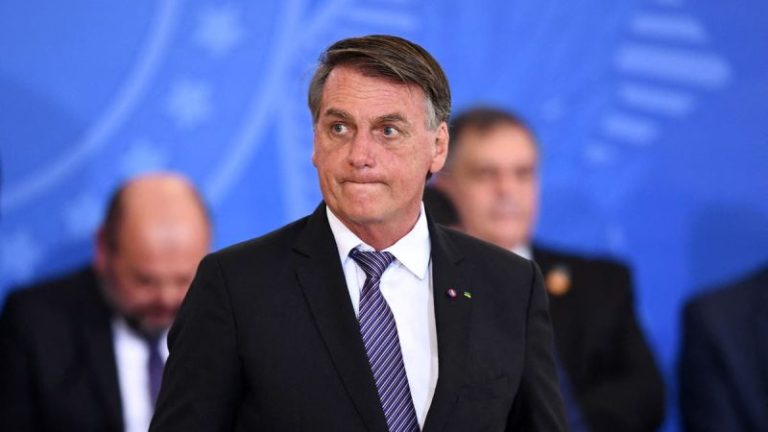
    On Monday, Brazil’s Supreme Court ordered former President Jair Bolsonaro to be placed under house arrest amid ongoing legal proceedings over his alleged attempt to overturn the 2022 presidential election results.

    The case has gripped the nation since its inception in 2023 and has intensified international scrutiny, especially as it unfolds under the authority of a Supreme Court justice recently sanctioned by the Trump administration in the United States.

    Justice Alexandre de Moraes, who is overseeing the case, accused Bolsonaro, 70, of violating court-imposed restrictions.

    According to the ruling, first reported by the Associated Press, Bolsonaro used a Sunday protest in Rio de Janeiro to publicly address supporters using a cellphone owned by one of his three sons, all of whom are lawmakers.

    Bolsonaro’s brief message, ‘Good afternoon, Copacabana, good afternoon my Brazil, a hug to everyone, this is for our freedom,’ was deemed a violation of his release conditions.

    Bolsonaro’s legal team announced plans to appeal, arguing that the statement was symbolic, not criminal, and did not justify additional restrictions.

    Mounting International Fallout

    The political stakes have now extended well beyond Brazil. The case triggered backlash from President Trump, a longtime Bolsonaro ally, who tied newly imposed U.S. tariffs on Brazilian imports to what he called an ongoing ‘witch hunt.’ His remarks have further strained the already delicate diplomatic relationship between the two nations.

    In a pointed statement on X, the U.S. State Department’s Bureau of Western Hemisphere Affairs condemned the Brazilian court’s actions, writing: ‘Putting even more restrictions on Jair Bolsonaro’s ability to defend himself in public is not a public service. Let Bolsonaro speak!’

    The bureau also warned that individuals involved in what it described as ‘sanctioned behavior’ would be held accountable.

    The statement marked a sharp escalation, particularly as it followed closely on the heels of sanctions imposed by the U.S. Treasury Department, under Trump’s administration, against Justice de Moraes. He was designated a ‘U.S.-sanctioned human rights abuser’ and accused of weaponizing the judiciary to silence political opponents.

    The Basis for Sanctions

    Secretary of the Treasury Scott Bessent accused de Moraes of leading an unlawful crackdown:

    ‘Alexandre de Moraes has taken it upon himself to be judge and jury in an unlawful witch hunt against U.S. and Brazilian citizens and companies. He is responsible for an oppressive campaign of censorship, arbitrary detentions, and politicized prosecutions—including those against former President Jair Bolsonaro,’ Bessent said.

    These sanctions were imposed under Executive Order 13818, issued during Trump’s first term in 2017. The order declared a national emergency concerning global human rights abuses and corruption and expanded upon the Global Magnitsky Human Rights Accountability Act passed in 2016. The law empowers the U.S. government to impose financial and travel sanctions on foreign officials accused of human rights violations.

    Despite growing international pressure, the Brazilian government has yet to issue a formal response.

    Details of the Case

    Brazilian prosecutors allege that Bolsonaro led a coordinated effort to delegitimize, and ultimately overturn, the results of the 2022 election, including planning violent acts and even an alleged assassination plot targeting President Luiz Inácio Lula da Silva and Justice de Moraes. Bolsonaro lost the election by a narrow margin.

    A panel of Supreme Court justices accepted the charges in March, ultimately ordering Bolsonaro to stand trial. Monday’s house arrest ruling builds on earlier restrictions: an ankle monitor, a nighttime curfew, and a travel ban keeping the former president confined to Brasília despite his deep political roots in Rio de Janeiro.

    A former army captain and deeply polarizing figure, Bolsonaro now joins a short but consequential list of former Brazilian presidents arrested since the country’s return to democracy in 1985, a system he has frequently criticized and linked to the military dictatorship he once praised.

    Justice de Moraes, defending the court’s decision, wrote: ‘The judiciary will not allow itself to be mocked. Justice applies equally to everyone. A defendant who knowingly violates precautionary measures—especially for the second time—must face legal consequences.’

    Fox News’ Alec Schemmel and The Associated Press contributed to this report. 

    Stepheny Price is a writer for Fox News Digital and Fox Business. She covers topics including missing persons, homicides, national crime cases, illegal immigration, and more. Story tips and ideas can be sent to stepheny.price@fox.com

    This post appeared first on FOX NEWS

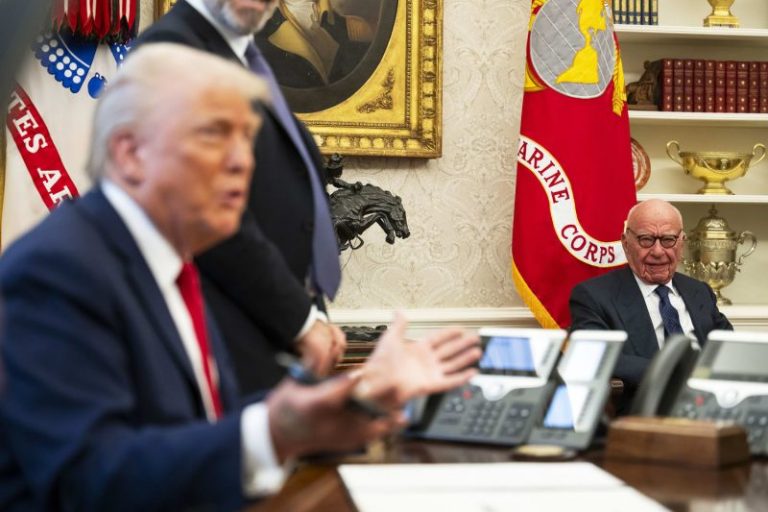
    Conservative media baron Rupert Murdoch will give President Donald Trump regular updates on his health as part of an agreement to postpone Murdoch’s deposition in Trump’s $10 billion defamation lawsuit against him over a Wall Street Journal article about late sex offender Jeffrey Epstein.

    The unusual stipulation comes a week after Trump’s lawyers sought a quick deposition in the case. Their filing in Miami federal court implied that Murdoch might be either dead or too sick to testify in person by the time the case went to trial.

    “Murdoch is 94 years old, has suffered from multiple health issues throughout his life, is believed to have suffered recent significant health scares, and is presumed to live in New York, New York,” Trump’s lawyers said in their filing last week.

    Murdoch’ agreement to divulge highly personal information about his health to Trump and his lawyers contrasts sharply with the cozy relationship Murdoch’s Fox News has had with the president over the years.

    Fox News for more than a decade has acted as a cheerleader for Trump and his policies. The president is an avid watcher of the conservative network, and several of his key administration officials have worked for Fox. Trump’s daughter-in-law, Lara Trump, currently has a show on Fox News.

    The new deal, outlined in a court filing jointly filed by Trump’s and Murdoch’s lawyers late Monday night, postpones Murdoch’s deposition in the case until after a judge rules on his and other defendants’ motions to dismiss Trump’s lawsuit.

    If the judge denies that dismissal motion, Murdoch would have to sit for questioning under oath from Trump’s lawyers within 30 days.

    The deal has to be approved by the judge, but it is likely to be approved given that both sides have agreed to it.

    When the judge signs off on it, Murdoch will be required within three calendar days to give Trump’s’ lawyers “a sworn declaration describing his current health condition,” according to the stipulation filed Monday.

    “Defendant Murdoch has further agreed to provide regularly scheduled updates to Plaintiff regarding his health, including a mechanism for him to alert the Plaintiff if there is a material change to his health,” the filing says.

    That mechanism is described in a separately signed agreement, which was not publicly filed with the court.

    If Murdoch fails to provide the updates as agreed to in the abatement agreement, he will have to sit for an “expedited” deposition, the filing says.

    A spokesman for Trump declined to comment on the filing.

    CNBC has requested comment from Dow Jones & Co., the publisher of the Journal, which is owned by Murdoch’s News Corp.

    Trump’s suit alleges defamation for a Wall Street Journal article in July which said he had sent Epstein a “bawdy” birthday card in 2003 for Epstein’s 50th birthday.

    Trump, who denies writing the note, sued Murdoch; News Corp and its CEO Robert Thomson; Dow Jones & Co.; and the two reporters who wrote the article.

    For weeks, the president and the Justice Department have faced criticism for a decision not to release investigative files about Epstein, a former friend of Trump’s, who died by suicide in jail in 2019, after being arrested on child sex trafficking charges.

    This post appeared first on NBC NEWS

    WASHINGTON — The Agriculture Department allowed six additional states Monday to bar participants in the Supplemental Nutrition Assistance Program from using their benefits to buy certain processed foods, such as sodas and candy.

    The SNAP waivers for West Virginia, Florida, Colorado, Louisiana, Oklahoma and Texas amend the statutory definition of food for purchase and put an end to the subsidization of popular types of junk food beginning in 2026.

    The administration of President Donald Trump has encouraged all states to take such measures as part of its “Make America Healthy Again” initiative, named for the social movement led by Health Secretary Robert F. Kennedy Jr.

    The USDA had so far signed waivers to allow six states — Arkansas, Idaho, Utah, Iowa, Indiana and Nebraska — to place similar purchasing restrictions on SNAP recipients.

    “I hope to see all 50 states join this bold commonsense approach. For too long, the root causes of our chronic disease epidemic have been addressed with lip service only,” said the U.S. Food and Drug Commissioner Marty Makary.

    Agriculture Secretary Brooke Rollins announced the additional waivers at an event at the USDA headquarters in Washington.

    “These state waivers promote healthier options for families in need,” said Secretary Rollins.

    More than 42 million people receive SNAP benefits, sometimes called food stamps, as part of the nation’s largest anti-hunger program.

    The massive tax cut and spending bill signed by President Trump in July makes significant changes to the SNAP program, including expanding work requirements and shifting more spending for the program to states.

    This post appeared first on NBC NEWS

    Amazon is laying off roughly 110 employees in its Wondery podcast division and the head of the group is leaving as part of a broader reshuffling of the company’s audio unit.

    In a Monday note to staffers, Steve Boom, Amazon’s vice president of audio, Twitch and games, said the company is consolidating some Wondery units under its Audible audiobook and podcasting division. Wondery CEO Jen Sargent is also stepping down from her role, Boom said.

    “These changes will not only better align our teams as they work to take advantage of the strategic opportunities ahead but, even more crucially, will ensure we have the right structure in place to deliver the very best experience to creators, customers and advertisers,” Boom wrote in the memo, which was viewed by CNBC. “Unfortunately, these changes also include some role reductions, and we have notified those employees this morning.”

    Bloomberg was first to report on the job cuts.

    The move comes nearly five years after Amazon acquired Wondery as part of a push to expand its catalog of original audio content. The podcasting company made a name for itself with hit shows like “Dirty John” and “Dr. Death.”

    More recently, Wondery signed several lucrative licensing deals with Jason and Travis Kelce’s “New Heights” podcast, along with Dax Shepard’s “Armchair Expert.”

    Amazon is streamlining “how Wondery further integrates” into the company by separating the teams that oversee its narrative podcasts from those developing “creator-led shows,” Boom wrote.

    The narrative podcasting unit will consolidate under Audible, and creator-led content will move to a new unit within Boom’s organization in Amazon called “creator services,” he wrote.

    Amazon’s audio pursuits face a heightened challenge from the growing popularity of video podcasts on Alphabet’s YouTube, which now hosts an increasing number of shows.

    Video shows require different discovery, growth and monetization strategies than “audio-first, narrative series,” Boom wrote in the memo to Amazon staffers.

    “The podcast landscape has evolved significantly over the past few years,” Boom said.

    This post appeared first on NBC NEWS


    Virtual Investor Conferences, the leading proprietary investor conference series announced the agenda for the OTCQB Venture Virtual Investor Conference to be held August 7 th .


    Individual investors, institutional investors, advisors, and analysts are invited to attend.

      REGISTER HERE   


    It is recommended that investors pre-register and run the online system check to expedite participation and receive event updates. There is no cost to log-in, attend live presentations, or schedule 1×1 meetings with management.


    ‘Now in its seventh year, the OTCQB Venture Investor Conference has become the go-to platform for innovative early-stage companies to connect directly with investors,’ said Jason Paltrowitz, Executive Vice President of Corporate Services at OTC Markets Group. ‘It offers a unique window into the momentum and vision driving the next generation of public companies.’


      August 7   th  


      Eastern  
    Time (ET)  
      Presentation     Ticker(s)  
      9:30 AM ET   Sparc AI Inc.   (OTCQB: SPAIF | CSE: SPAI)  
      10:00 AM ET   Surge Copper. Corp   (OTCQB: SRGXF | TSXV: SURG)  
      10:30 AM ET   ReGen III Corp.   (OTCQB: ISRJF | TSXV: GIII)  
      11:00 AM ET    Silver47 Exploration Corp.   (OTCQB: AAGAF | TSXV: AGA,OTC:AAGAF)
      11:30 AM ET   Nature’s Miracle Holding Inc.   (OTCQB: NMHI)  
      12:00 PM ET   Zero Candida Technologies Inc.   (OTCQB: ZCTFF | TSXV: ZCT)  
      12:30 PM ET   Oncotelic Therapeutics, Inc.   (OTCQB: OTLC)  
      1:00 PM ET   Telo Genomics Corp.   (OTCQB: TDSGF | TSXV: TELO)  
      1:30 PM ET   Zomedica Corp.   (OTCQB: ZOMDF)  
      2:00 PM ET   Metaguest.AI Incorporated   (OTCQB: MGSTF | CSE: METG)  
      2:30 PM ET   Waste Energy Corp.   (OTCQB: WAST)  
      3:00 PM ET   CleanGo Innovations Inc.   (OTCQB: CLGOF | CSE: CGII)  
      3:30 PM ET   Sekur Private Data Ltd.   (OTCQB: SWISF | CSE: SKUR)  
      4:00 PM ET   CyberCatch Holdings, Inc.   (OTCQB: CYBHF | TSXV: CYBE)  


    To facilitate investor relations scheduling and to view a complete calendar of Virtual Investor Conferences, please visit www.virtualinvestorconferences.com .


      About Virtual Investor Conferences   ®


    Virtual Investor Conferences (VIC) is the leading proprietary investor conference series that provides an interactive forum for publicly traded companies to seamlessly present directly to investors.


    Providing a real-time investor engagement solution, VIC is specifically designed to offer companies more efficient investor access. Replicating the components of an on-site investor conference, VIC offers companies enhanced capabilities to connect with investors, schedule targeted one-on-one meetings and enhance their presentations with dynamic video content. Accelerating the next level of investor engagement, Virtual Investor Conferences delivers leading investor communications to a global network of retail and institutional investors.


      Media Contact:  
    OTC Markets Group Inc. +1 (212) 896-4428,   media@otcmarkets.com   


      Virtual Investor Conferences Contact:  
    John M. Viglotti
    SVP Corporate Services, Investor Access
    OTC Markets Group
    (212) 220-2221
    johnv@otcmarkets.com  


    News Provided by GlobeNewswire via QuoteMedia

    This post appeared first on investingnews.com