
Author

admin

Browsing

Two U.S. judges in separate federal courts scrapped their rulings last week after lawyers alerted them to filings that contained inaccurate case details or seemingly ‘hallucinated’ quotes that misquoted cited cases — the latest in a string of errors that suggest the growing use of artificial intelligence in legal research and submissions.

In New Jersey, U.S. District Judge Julien Neals withdrew his denial of a motion to dismiss a securities fraud case after lawyers revealed the decision relied on filings with ‘pervasive and material inaccuracies.’

The filing pointed to ‘numerous instances’ of made-up quotes submitted by attorneys, as well as three separate instances when the outcome of lawsuits appeared to have been mistaken, prompting Neals to withdraw his decision.

In Mississippi, U.S. District Judge Henry Wingate replaced his original July 20 temporary restraining order that paused enforcement of a state law blocking diversity, equity and inclusion programs in public schools after lawyers notified the judge of serious errors submitted by the attorney. 

They informed the court that the decision ‘relie[d] upon the purported declaration testimony of four individuals whose declarations do not appear in the record for this case.’ 

Wingate subsequently issued a new ruling, though lawyers for the state have asked his original order to be placed back on the docket. 

‘All parties are entitled to a complete and accurate record of all papers filed and orders entered in this action, for the benefit of the Fifth Circuit’s appellate review,’ the state attorney general said in a filing. 

A person familiar with Wingate’s temporary order in Mississippi confirmed to Fox News Digital that the erroneous filing submitted to the court had used AI, adding that they had ‘never seen anything like this’ in court before.

Neither the judges’ office nor the lawyers in question immediately responded to Fox News Digital’s requests for comment on the retracted New Jersey order, first reported by Reuters. It was not immediately clear if AI was the reason for that erroneous court submission in that case.

However, the errors in both cases — which were quickly flagged by attorneys, and prompted the judges to take action to revise or redact their orders — come as the use of generative AI continues to skyrocket in almost every profession, especially among younger workers. 

In at least one of the cases, the errors bear similarities to AI-style inaccuracies, which include the use of ‘ghost’ or ‘hallucinated’ quotes being used in filings, citing incorrect or even nonexistent cases.

For bar-admitted attorneys, these erroneous court submissions are not taken lightly. Lawyers are responsible for the veracity of all information included in court filings, including if it includes AI-generated materials, according to guidance from the American Bar Association.

In May, a federal judge in California slapped law firms with $31,000 in sanctions for using AI in court filings, saying at the time that ‘no reasonably competent attorney should out-source research and writing to this technology — particularly without any attempt to verify the accuracy of that material.’

Last week, a federal judge in Alabama sanctioned three attorneys for submitting erroneous court filings that were later revealed to have been generated by ChatGPT.

Among other things, the filings in question included the use of the AI-generated quote ‘hallucinations,’ U.S. District Judge Anna Manasco said in her order, which also referred the lawyers in question to the state bar for further disciplinary proceedings.

‘Fabricating legal authority is serious misconduct that demands a serious sanction,’ she said in the filing.

New data from the Pew Research Center underscores the rise of AI tools among younger users. 

According to a June survey, roughly 34% of U.S. adults say they have used ChatGPT, the artificial intelligence chatbot — roughly double the percentage of users who said the same at the same point two years ago, in 2023. 

The share of employed adults who use ChatGPT for work has spiked by a whopping 20 percentage points since June 2023; and among adults under 30, adoption is even more widespread, with a 58% majority saying they have used the chatbot.

This post appeared first on FOX NEWS

A longtime ally of former President Joe Biden is appearing before House investigators on Thursday, the eighth ex-White House aide to be summoned for Oversight Committee Chair James Comer’s probe.

Michael Donilon served as senior advisor to the president for the entirety of Biden’s four-year term.

He’s now expected to sit down with House Oversight Committee staff for a closed-door transcribed interview that could last several hours.

Comer, R-Ky., is investigating whether Biden’s top White House aides concealed signs of mental decline in the then-president, and if that meant executive actions were signed via autopen without his knowledge.

Donilon will likely be of key interest to investigators, considering his decades-long working relationship with the former president.

He first began working for Biden in 1981 as a strategist, pollster, and media advisor, according to a biography by the Harvard University Institute of Politics, where he was a Spring 2025 fellow.

Biden was serving as a senator from Delaware at the time.

He also served as chief strategist on Biden’s 2020 and 2024 campaigns before Biden dropped his re-election bid in July 2024.

The loyal former aide accused the Democratic Party of melting down earlier this year after top left-wing leaders forced Biden out of the 2024 presidential race over his disastrous debate against current President Donald Trump.

‘Lots of people have terrible debates. Usually the party doesn’t lose its mind, but that’s what happened here. It melted down,’ he said at a Harvard event in February.

It comes after another close former aide, ex-counselor to the president Steve Ricchetti, appeared before investigators for his own transcribed interview on Wednesday.

Like Ricchetti, Donilon is appearing on voluntary terms – the fifth ex-Biden aide to do so.

Three of the previous six Biden administration officials who appeared before the House Oversight Committee did so under subpoena. Ex-White House physician Kevin O’Connor, as well as former advisors Annie Tomasini and Anthony Bernal, all pleaded the Fifth Amendment during their compulsory sit-downs.

But the four voluntary transcribed interviews that have occurred so far have lasted more than five hours, as staff for both Democrats and Republicans take turns in rounds of questioning.

‘You were reportedly responsible for erecting a wall between the former president and senators ‘to shield Biden from bad information.’ Recently, during an event at Harvard University, you displayed your willingness to speak about the former president’s cognition but you reportedly ‘denounced claims that the president’s acuity and judgment declined,” Comer wrote in a June letter to Donilon asking him to appear.

‘The scope of your responsibilities—both official and otherwise—and personal interactions within the Oval Office cannot go without investigation. If White House staff carried out a strategy lasting months or even years to hide the chief executive’s condition—or to perform his duties—Congress may need to consider a legislative response.’

This post appeared first on FOX NEWS

President Donald Trump hammered back at former Russian President Dmitry Medvedev’s warnings about war with the United States, telling the deputy chairman of Russia’s Security Council to ‘watch his words.’ 

‘I don’t care what India does with Russia. They can take their dead economies down together, for all I care,’ Trump wrote on TRUTH Social at midnight Thursday. ‘We have done very little business with India, their Tariffs are too high, among the highest in the World. Likewise, Russia and the USA do almost no business together. Let’s keep it that way, and tell Medvedev, the failed former President of Russia, who thinks he’s still President, to watch his words. He’s entering very dangerous territory!’

In response to Trump’s post, Medvedev referenced Russia’s ‘Dead Hand’ – the Cold War-era automated nuclear retaliation system developed by the Soviet Union. 

‘If a few words from a former Russian president provoke such a nervous reaction from the supposedly mighty President of the United States, then clearly Russia is in the right – and will continue on its chosen path,’ Medvedev wrote on Telegram. 

‘And as for all that talk about the ‘dead economies’ of India and Russia, or about ‘venturing into dangerous territory’ – well, maybe he should rewatch some of his favorite zombie movies,’ he added. ‘And also remember just how dangerous the supposedly mythical ‘Dead Hand’ system can be.’ 

In theory, the ‘Dead Hand,’ described by the West during the 1980s as a Russian doomsday device, is meant to guarantee a massive retaliatory nuclear strike even if Moscow’s leadership is destroyed or incapacitated. 

While in Scotland on Monday, Trump warned during public remarks that Russian President Vladimir Putin had 10 or 12 days to reach a ceasefire agreement with Ukraine, shortening a previous 50-day deadline he issued earlier this month. If Russia does not, Trump promised more ‘sanctions, tariffs, and maybe secondary tariffs’ against Moscow and the purchasers of Russian goods and energy. He lamented that repeated talks with Putin have resulted in little progress toward peace. 

‘Trump’s playing the ultimatum game with Russia: 50 days or 10,’ Medvedev complained in a post to X earlier this week. ‘He should remember 2 things: 1. Russia isn’t Israel or even Iran. 2. Each new ultimatum is a threat and a step towards war. Not between Russia and Ukraine, but with his own country. Don’t go down the Sleepy Joe road!’ 

Trump on Wednesday announced a 25% tariff on imports from India – one of the biggest consumers of Russian oil, next to China – starting on Aug. 1. The president described India as a ‘friend,’ but slammed the South Asian country’s ‘strenuous and obnoxious non-monetary’ trade barriers. Trump vowed other unspecified ‘penalties’ against India for buying most of its military equipment from Russia and Russian energy ‘at a time when everyone wants Russia to STOP THE KILLING IN UKRAINE.’ 

During an unrelated press conference, Trump noted that India and Russia are founding members of BRICSoriginally formed as a counterweight to Western institutions. 

BRICS is ‘basically a group of countries that are anti-the United States and India is a member of that, if you can believe it. It’s an attack on the dollar. And we’re not going to let anybody attack the dollar,’ Trump said. ‘We have a tremendous deficit.’

In recent days, Medvedev has also shredded the framework of the trade deal Trump reached with European Commission President Ursula von der Leyen during his recent trip to Scotland. 

Trump has repeatedly communicated that trade deals with other countries would be contingent on foreign policy alignment with the United States. 

For example, after Canada announced it was backing Palestinian statehood amid Israel’s war against Hamas terrorists in Gaza, Trump wrote Thursday, ‘That will make it very hard for us to make a Trade Deal with them.’ 

Trump, meanwhile, on Thursday celebrated this reciprocal tariffs plan after telling reporters on Wednesday that they brought ‘billions’ of dollars into the U.S. economy. 

‘Tariffs are making America GREAT & RICH Again,’ Trump wrote on social media. ‘They were successfully used against the USA for decades and, coupled with really dumb, pathetic, and crooked politicians, we’re having a devastating impact on the future, and even the survival, of our country. Now the tide has completely turned, and America has successfully countered this onslaught of Tariffs used against it.’

‘ONE YEAR AGO, AMERICA WAS A DEAD COUNTRY, NOW IT IS THE ‘HOTTEST’ COUNTRY ANYWHERE IN THE WORLD. CONGRATULATIONS TO ALL!’ Trump added. 

This post appeared first on FOX NEWS

If you haven’t heard the name Sydney Sweeney before, odds are you definitely know her name now if you consume any news at all. American Eagle featured the actress in their new ad campaign that kicked off last week, and liberal women lost their ever loving minds. 

What triggered their spiral this time? Sydney has ‘good genes’ and she’s wearing ‘jeans.’

Outrageous, I know.

This good genes/jeans word play game, well it’s a whole lot of Nazi propaganda with some racism thrown in and linked to eugenics. 

If you’re not a White liberal woman, I’ll try to simplify. In liberal math, good genes + jeans = Nazi. 

I know, that wasn’t on our flashcards growing up. 

The next time you compliment a friend on her looks, resist the urge to mention good genes. Sally down the street will think you’re calling her a Nazi, when really you just want to know what face cream she’s using.

If the good genes/jeans word play were a clue on ‘Jeopardy!’ liberals would answer: ‘I’ll take Sydney Sweeney is a Nazi for $1,000, with a side of eugenics and white supremacy.’ 

Let’s ask the politically incorrect elephant in the room question — If you’re putting a large chunk of money behind an ad to sell jeans targeted at Gen Z, are you going to put someone with good genes or bad genes in front of the camera?

To quote ‘The Godfather’ — ‘It’s not personal, it’s strictly business.’ 

It also doesn’t surprise me that the perpetually outraged liberal and mostly women who have piled on over this campaign seem to ignore one more fact. According to Fox News, ‘100 percent of net proceeds from Sweeney’s ‘Sydney Jean’ – which is embroidered with a butterfly to represent domestic violence awareness – will be donated to Crisis Text Line, a nonprofit that provides free and confidential text-based mental health support and crisis intervention.’ That sure doesn’t sound like Nazis and eugenics to me.

This week, ‘Good Morning America’ (GMA) didn’t miss the chance to showcase just how unserious they are by jumping on the jean — or gene — meltdown.

Maybe GMA gambled on their viewers not having that first cup of coffee yet, so they wouldn’t notice their fuzzy Nazi math. Is it any wonder that Americans’ trust in the media is at its lowest in more than five decades, according to a Gallup poll?

Going back to the vault, circa 1980, Brooke Shields did a Calvin Klein jeans ad with the same American Eagle/Sydney Sweeney ad vibe. ‘Genes’ and ‘jeans’ were used interchangeably, as well as phrases like ‘natural selection’ and ‘survival of the fittest.’

GMA was around back then, but I don’t recall co-host Joan Lunden doing a Nazi propaganda segment calling out Brooke Shields or Calvin Klein. Then again, that was when history was still being taught in school. 

Ironically, the eugenics trigger is the greatest self-own for White liberal elites, whose holy grail is abortion on demand — anytime, any place, any reason. Legalized abortion has long been one of the most effective ways to reduce populations who are deemed less than.

The White liberal class is largely all in. 

In 2018, then-Pope Francis said, ‘I have heard that it’s fashionable, or at least usual, that when in the first months of pregnancy they do studies to see if the child is healthy or has something, the first offer is: let’s send it away, I say this with pain. In the last century, the whole world was scandalized about what the Nazis did to purify the race. Today we do the same, but now with white gloves.’

If you’re a woman who’s ever been pregnant, or if you’re the dad supporting the woman, you know doctors highly encourage having screenings for chromosomal disorders such as Down Syndrome and Trisomy 18. They don’t do this because they can cure these chromosomal disorders in utero. They push these tests so you can eliminate the ‘less than perfect problem.’ 

If only these same liberal women were as upset about the fate of unborn babies as they are about jeans. 

Oh, and in case you’re wondering, the fact that American Eagle has ‘American’ in its name makes it obvious they’re Nazis. Thankfully, self-appointed experts have the freedom to warn us all from a non-American platform like X.

This week is one of those times I’m grateful to be spending the end of the summer in the South, where sanity tends to rule the day. If I were home — where I’m outnumbered by the White liberal outrage class by about 50-1 — I’m quite confident that between their pique rage hours of Starbucks and Chardonnay, I’d be on the receiving end of the Sydney Sweeney faux fury. 

These people need a time-out — away from all cameras and keyboards … preferably with a history book.

Never underestimate the left’s ability to overplay their hand. They are screamers, but when they scream, conservatives are the ones who quietly act. Think Bud Light.

Personal finance guru Dave Ramsey likes to say the best predictor of future behavior is past behavior, so it’s no surprise that American Eagle’s stock is up more than 15% since the campaign’s rollout last week. 

I’ll be among those contributing to the rise of American Eagle’s stock when I take my girls back to school shopping. Spending my money somewhere that has the left spiraling over an imaginary offense — sign me up. 

Sydney Sweeney may have good genes, but the screamers may be the ad American Eagle never knew it needed. 

It’s back to school season, and the silent actors are shopping loudly.

This post appeared first on FOX NEWS

A member of former President Joe Biden’s inner circle sat with House Oversight Committee investigators for a marathon closed-door interview that lasted more than eight hours on Wednesday.

Steve Ricchetti, who served as counselor to the president for all four years of Biden’s term, was described as ‘combative and defensive’ during his voluntary meeting, a source familiar with the sitdown told Fox News Digital.

The source described Ricchetti as defiant in the face of doubts about Biden’s mental acuity, though he ‘admitted that they all knew President Biden’s age was an issue and were dealing with it as a political matter,’ they said.

‘Mr. Ricchetti stated that he believed President Biden had the ability to be president and that he was performing the capacity of president every day. He believes that Joe Biden is capable to being president today, and that he could have won in 2024,’ the source told Fox News Digital.

Ricchetti, a longtime Democratic operative and lobbyist, first began working for Biden in March 2012 when he was appointed counselor to the vice president under former President Barack Obama. He was elevated to be Biden’s chief of staff in December 2013.

He touted his closeness to Biden over the last 13 years, the source said, and described having personal relationships with former first lady Jill Biden and Hunter Biden as well.

Ricchetti’s own children were also close to the White House during Biden’s tenure – at least three of them had jobs in the Democratic administration at some point.

House Oversight Committee Chairman James Comer, R-Ky., is investigating whether Biden’s top White House aides concealed signs of mental decline in the president, and if that meant executive actions were signed via autopen without his knowledge.

Ricchetti is the seventh ex-Biden aide to come in, but just the fourth to appear on voluntary terms. Former White House doctor Kevin O’Connor and former White House aides Annie Tomasini and Anthony Bernal all pleaded the Fifth Amendment to avoid answering questions.

Ricchetti told investigators that he was not involved in O’Connor’s physical evaluation letters for Biden, ‘but he did have conversations with senior staff on how to communicate and present President Biden’s physical evaluation letters,’ the source told Fox News Digital.

He also defended Biden’s frequent gaffes, describing them as ‘common mistakes’ that anyone could make, the source said.

‘He said the frequency of these mistakes have not increased since Joe Biden was vice president,’ the source said.

The majority of questioning during the eight-hour session came from Republicans – the source said Democrats frequently attempted to change the topic to discuss President Donald Trump.

Ricchetti said nothing to reporters when leaving the meeting on Wednesday evening.

No lawmakers were present for the sitdown, as is usually the case with such transcribed interviews.

Fox News Digital reached out to Ricchetti’s attorney for comment but did not hear back by press time.

This post appeared first on FOX NEWS

President Donald Trump on Wednesday signed an executive order ending the de minimis trade loophole for low-value packages shipped from all countries.

The order, which takes effect Aug. 29, will subject any shipments of imported goods into the U.S. worth $800 or less to duties, the White House said.

Any goods shipped through the international postal network will be subject to tariff rates based on the value of the package and its country of origin.

The move comes after Trump in May shuttered the de minimis loophole for goods from China and Hong Kong. A federal trade court on Monday declined to block Trump’s de minimis ban, even after an auto parts retailer argued the action was unlawful and threatened its business.

Use of the de minimis provision has exploded in recent years as online shopping has become more prevalent. Ultra-cheap online retailers such as Temu and Shein have used the loophole to ship packages to American shoppers directly from China duty-free.

Shares of PDD Holdings, the parent company of Temu, dipped lower following the announcement.

The Trump administration has sought to close the loophole, calling it a “big scam” that hurts U.S. businesses. Officials have said de minimis facilitates shipments of fentanyl and other illicit substances, saying the packages are less likely to be inspected by customs agents.

The volume of de minimis shipments has skyrocketed to 309 million units so far this fiscal year, up from 115 million for all of last year, the White House said.

This post appeared first on NBC NEWS

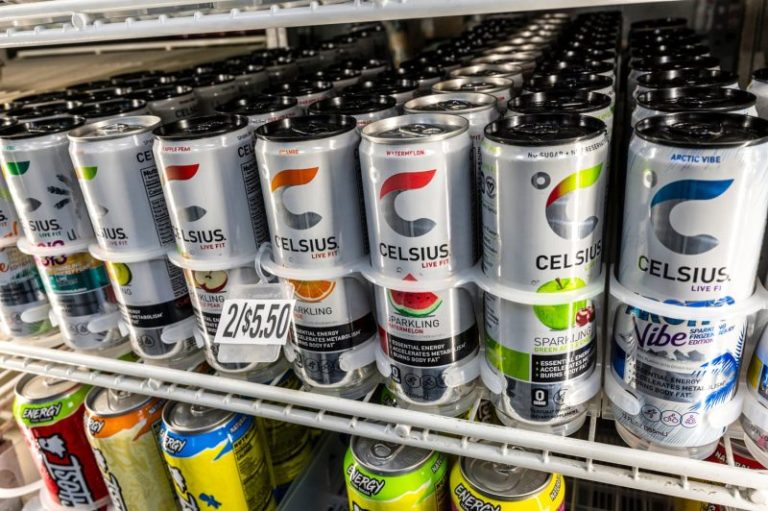
The canned cocktail maker High Noon is warning customers that some of its vodka seltzers were accidentally labeled as Celsius energy drinks.

In a recall notice posted to the Food and Drug Administration’s website, High Noon said an unspecified number of its Beach Variety packs contain cans are filled with High Noon vodka seltzer alcohol but have been mislabeled as Celsius Astro Vibe energy drink, Sparkling Blue Razz Edition, with a silver top.

Celsius Astro Vibe Energy Drink, Sparkling Blue Razz Edition.Celsius

The products were shipped to retailers in Florida, New York, Ohio, South Carolina, Virginia and Wisconsin from July 21 to July 23.

The recall was initiated after High Noon discovered that a shared packaging supplier mistakenly shipped empty Celsius cans to High Noon, it said.

No illnesses have been reported to date.

This post appeared first on NBC NEWS

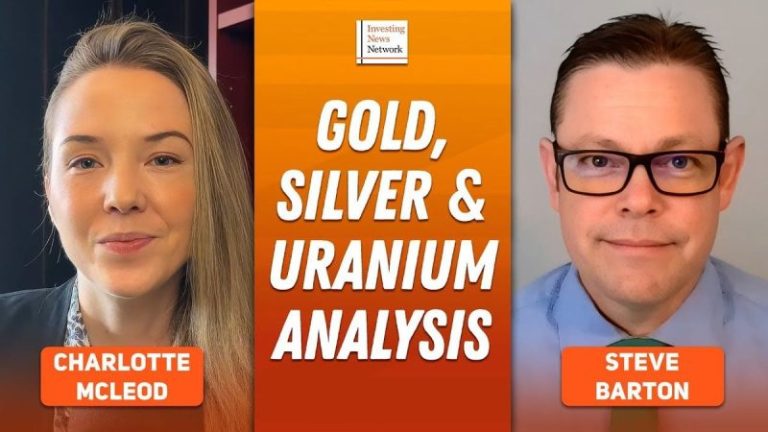
“Whatever is out of favor and hated at the moment, that’s probably what you need to buy,” he said. “Buy it when it’s boring and no one cares, then you get to ride the wave up.”

Barton also broke down his current portfolio, which holds a 30 percent weighting in precious metals—particularly gold—citing concerns over currency policies and the long-term upside for gold and silver.

Watch the interview above for more from Barton on the similarities between poker and resource investing.

Securities Disclosure: I, Georgia Williams, hold no direct investment interest in any company mentioned in this article.

This post appeared first on investingnews.com

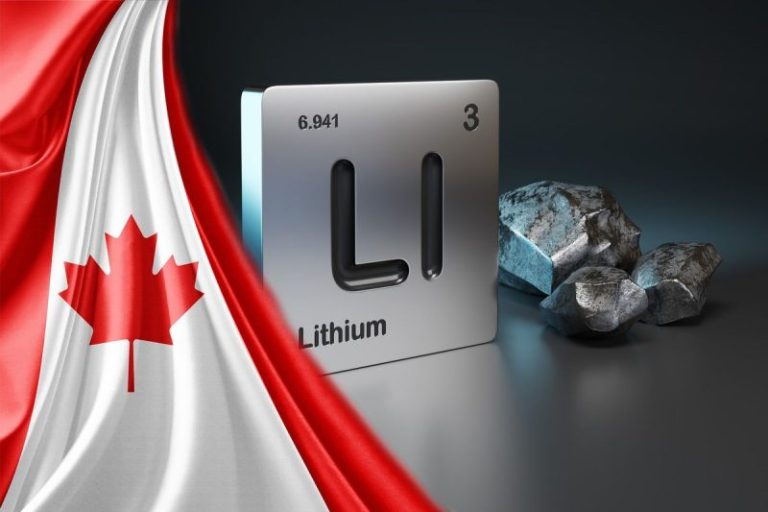
As the global push toward electrification accelerates, lithium remains a critical piece of the energy transition.

Continued oversupply remained a persistent headwind for lithium prices through the first half of 2025. Demand for the battery metal jumped 29 percent year-over-year in 2024, fueled by surging electric vehicle sales and rising power needs from sectors like data centers and heavy industry.

Fastmarket’s analysts expect lithium demand to grow 12 percent annually through 2030, supported by structural trends such as renewable energy integration and battery energy storage.

However, a rapid increase in global supply — particularly from China, Australia and South America — has driven prices to multi-year lows, raising concerns about project economics and the sustainability of new production.

Against this backdrop, Canadian lithium stocks are gaining attention as investors look for companies positioned to benefit from long-term demand growth while navigating short-term price pressure.

1. NOA Lithium Brines (TSXV:NOAL)

Year-to-date gain: 58.82 percent
Market cap: C$488.32 million
Share price: C$0.30

NOA is a lithium exploration and development company with three projects in Argentina’s Lithium Triangle region. The company’s flagship Rio Grande project and prospective Arizaro and Salinas Grandes land packages total more than 140,000 hectares.

As NOA works to advance its flagship asset, the company brought on Hatch in April to lead the preliminary economic assessment (PEA).

The PEA will evaluate the project’s economic and development potential with a target production of 20,000 metric tons of lithium carbonate equivalent (LCE) annually, with a scalable plant design that could double capacity to 40,000 metric tons per year.

NOA has also been working to secure a water source in the arid region through a drilling program targeting fresh water. In late June, the company discovered a fresh water source at the project, located near high-grade lithium zones in the project’s northeast area. According to the company, the location means the water source could support future production facilities or evaporation ponds.

The well, drilled to 190 meters in the northern part of the property, is being tested and developed.

Shares of NOA reached a year-to-date high C$0.425 on July 17, 2025.

2. Wealth Minerals (TSXV:WML)

Year-to-date gain: 40 percent
Market cap: C$23.93 million
Share price: C$0.07

Wealth Minerals is focused on the acquisition and development of lithium projects in Chile, including the Yapuckuta project in Chile’s Salar de Atacama, as well as the Kuska Salar and Pabellón projects near the Salar de Ollagüe.

Wealth Minerals’ shares spiked to a year-to-date high of C$0.095 on February 9, 2025, following the company’s acquisition of the Pabellón project.

According to Wealth, Pabellón has been shortlisted by Chile’s Ministry of Mining as a potential site for a Special Lithium Operation Contract based on its geological and environmental suitability. Located in Northern Chile near the Bolivia border, the project spans 7,600 hectares across 26 exploration licenses about 70 kilometers south of the Salar de Ollagüe.

In May, Wealth formed a joint venture with the Quechua Indigenous Community of Ollagüe to advance the Kuska project. The new entity, Kuska Minerals SpA, is 95 percent owned by Wealth and 5 percent by the community, which also holds anti-dilution rights and a seat on the five-member board.

3. Avalon Advanced Materials (TSX:AVL)

Year-to-date gain: 37.5 percent
Market cap: C$38.26 million
Share price: C$0.055

Avalon Advanced Materials is a Canadian mineral development company focusing on integrating the Ontario lithium supply chain. Avalon is developing the Separation Rapids and Snowbank lithium projects near Kenora, Ontario, and the Lilypad lithium-cesium project near Fort Hope, Ontario.

Separation Rapids and Lilypad are part of a 40/60 joint venture between Avalon and SCR Sibelco, with Sibelco serving as the operator.

Avalon started the year with a revised mineral resource estimate for the Separation Rapids project, which boosted resources in the measured and indicated category by 28 percent.

Company shares rose to C$0.07, a year-to-date high, on July 15, the day after Avalon released its results for its fiscal quarter ended May 31.

A week later, Avalon announced an additional C$1.3 million in funding through its C$15 million convertible security agreement with Lind Global Fund II. The drawdown, expected to close within two weeks, will support project development and general corporate needs, according to the company.

4. Frontier Lithium (TSXV:FL)

Year-to-date gain: 20 percent
Market cap: C$125.41 million
Share price: C$0.54

Pre-production mining company Frontier Lithium aims to be a strategic and integrated supplier of premium spodumene concentrates as well as battery-grade lithium salts in North America.

The company’s flagship PAK lithium project, which is a joint venture with Mitsubishi (TSE:8058), holds the “largest land position and resource” in a premium lithium mineral district located in the Great Lakes region of Ontario, Canada. Frontier also owns the Spark deposit, located northwest of the PAK project.

Shares of Frontier Lithium reached a year-to-date high of C$0.79 on March 4. The stock uptick coincided with a government release reporting the federal and provincial governments supported the company’s plans to build a critical minerals refinery in Northern Ontario.

Once complete, the proposed lithium conversion facility will process lithium from the PAK mine project into approximately 20,000 metric tons of lithium salts per year.

In late May, Frontier released a definitive feasibility study for the mine and mill segment of its PAK project. The study outlines a 31 year mine life with average production of 200,000 metric tons of spodumene concentrate. As for the economics, it projects net revenue of C$11 billion, an after-tax NPV of C$932 million and a 17.9 percent internal rate of return.

5. Century Lithium (TSXV:LCE)

Year-to-date gain: 17.31 percent
Market cap: C$51.58 million
Share price: C$0.30

US-focused Century Lithium is currently advancing its Angel Island lithium project in Esmeralda County, Nevada. The company is also engaged in the pilot testing phase at its on-site lithium extraction facility, which will process material from the lithium-bearing claystone deposit.

On May 6, Century Lithium announced the successful completion of testwork on the direct lithium extraction (DLE) process at its demonstration plant.

The results exceeded expectations, showing 91.6 percent lithium recovery and an eluate grade of 575 milligrams per liter (mg/L) from a 328 mg/L lithium concentrate feed. The company says these improvements could significantly reduce capital and operating costs at its Angel Island project.

Shares of Century Lithium registered a year-to-date high of C$0.49 on May 19.

Recently, the company participated in First Phosphate’s (CSE:PHOS,OTCQB:FRSPF) successful production of commercial-grade lithium iron phosphate (LFP) 18650 battery cells.

As noted in the press release, the cells were made using North America-sourced materials, including lithium carbonate from Century’s Angel Island project in Nevada that was processed at its demonstration plant alongside high-purity phosphoric acid and iron from First Phosphate’s Bégin-Lamarche project in Québec, Canada.

Securities Disclosure: I, Georgia Williams, hold no direct investment interest in any company mentioned in this article.

This post appeared first on investingnews.com

Investor Insight

With high-quality, drill-ready assets with world-class discovery potential, Piche Resources is a compelling business case for investors looking to leverage a bull market for uranium and gold.

Overview

Piche Resources (ASX:PR2) is an ASX-listed mineral exploration company focused on uranium and gold exploration in Tier-1 jurisdictions: Western Australia and Argentina. The company holds 100 percent ownership of all of its projects and is supported by a highly experienced board and technical team.

Targeting globally significant discoveries in Tier-1 mineral provinces

Piche’s portfolio includes the advanced-stage Ashburton uranium project in Western Australia and two large-scale exploration projects in Argentina: the Cerro Chacon gold-silver project and the Sierra Cuadrada uranium project. These projects have delivered high-grade exploration results and are drill-ready, positioning the company to unlock significant shareholder value through systematic exploration programmes.

Piche has an internationally recognized board focused on creating long-term shareholder value, and an in-country technical team in Argentina with a proven track record of taking projects from discovery through to development.

Company Highlights

  • Flagship Ashburton uranium project in Western Australia with recent high-grade drilling results over wide intercepts.
  • Sierra Cuadrada uranium project in Argentina showing extensive near-surface mineralisation with assays up to 2.86 percent U₃O₈.
  • Cerro Chacon gold-silver project with high-grade surface results (up to 11.65 g/t gold and 333.7 g/t silver) across a 14 km mineralised corridor.
  • Fully permitted and EIA-approved for drilling at Cerro Chacon (Chacon South and Middle).
  • Large, 100-percent-owned tenement package across all projects (Ashburton: 335 sq km; Cerro Chacon: 414 sq km; Sierra Cuadrada: 1,310 km²).
  • Board of directors includes former leaders of Peninsula Energy, Orano, Rio Tinto Uranium and Barrick Gold.
  • Upcoming drill campaigns planned at Cerro Chacon and Ashburton to test multiple high-priority targets.

Key Projects

Gold: Cerro Chacon, Argentina

Cerro Chacon interpreted geology and tenement holding

Cerro Chacon is a large-scale, early-stage gold-silver exploration project located in the Chubut Province of Argentina. The project is situated within a region known for hosting world-class low-sulphidation epithermal systems, including Cerro Negro and Cerro Vanguardia. With multiple gold-bearing structures confirmed over a 14 km corridor, Cerro Chacon is emerging as a highly promising and underexplored precious metals system with substantial scale and grade potential.

Project Highlights

Location: ~40 km southwest of Paso de Indios, Chubut Province

Tenure: 414 sq km across multiple tenements

Highlights:

  • A 14 km-long mineralised corridor has been delineated across Chacon Grid, La Javiela and Toro Hosco prospects.
  • High-grade geochemical results include:
    • 11.65 g/t gold and 120.3 g/t silver at Toro Hosco
    • 333.7 g/t silver, 9.48 percent lead, and 8.57 percent zinc at La Javiela South
  • Maiden RC drilling programme of 57 holes (7,905 m) scheduled across three main targets:
    • Chacon Grid: 45 holes (5,590 m)
    • La Javiela: 8 holes (1,740 m)
    • Toro Hosco: 4 holes (575 m)
  • EIA approvals for Chacon South and Chacon Middle were received in May 2025, enabling drilling to proceed.
  • Vein systems range from 2 to 6 km in strike length and up to 50 m in width; hosted within structurally controlled low-sulphidation epithermal veins (LSEV).

Uranium: Ashburton Project, Australia

The Ashburton project is Piche’s flagship uranium exploration asset in Australia, situated in the Pilbara region of Western Australia. Located within a historically underexplored but highly prospective unconformity-related uranium district, the project provides the company with strong leverage to the growing global demand for uranium. The project is geologically analogous to world-class Proterozoic uranium systems, with multiple confirmed mineralised zones and a regional corridor of 60 km.

Project Highlights

  • Location: Pilbara region, ~1,150 km north of Perth
  • Tenure: 335 sq km following the recent application for tenement E52/4461 (214 sq km), adding to the existing 122 sq km holdings.
  • Highlights:
    • 2024 RC and diamond drilling confirmed high-grade uranium mineralisation at multiple stratigraphic levels.
    • Best intercepts include:
      • 3.45 m @ 5,129 ppm eU₃O₈ from 137.62 m (ARC006)
      • 10.48 m @ 1,412 ppm eU₃O₈ from 114.30 m (ADD005)
      • 2.42 m @ 2,681 ppm eU₃O₈ from 155.10 m (ADD003).
      • 7.86 m @ 2,266 ppm eU₃O₈ from 105.42 m (ADD006)
    • The company has outlined a 60 km structural corridor hosting multiple uranium occurrences including Angelo A & B, Canyon Creek, Ristretto and Atlantis.
    • Atlantis prospect: historical drilling returned up to 7,400 ppm U₃O₈ over 2.2 m; rock chip samples have returned up to 37 percent U₃O₈.

Uranium: Sierra Cuadrada, Argentina

Sierra Cuadrada is Piche’s primary uranium asset in Argentina, covering a vast area within the San Jorge Basin. This large-scale project has demonstrated strong surface uranium mineralisation with multiple drill-ready prospects. With mineralisation confirmed across extensive zones and supported by historical radiometric and geochemical data, Sierra Cuadrada has the potential to host multiple Tier-1 uranium deposits in a cost-effective, near-surface setting.

Teo 5 and 6 prospect 2024 auger drill programme

Project Highlights:

Location: San Jorge Basin, ~200 km north of Comodoro Rivadavia

Tenure: 1,310 sq km across multiple licences

Highlights:

  • The project area contains broad, flat-lying mineralisation at multiple stratigraphic levels.
  • High-grade uranium assays include:
    • 28,650 ppm U₃O₈ (2.86 percent) from rock chip sampling at Teo 8
    • 24,017 ppm U₃O₈ from channel sampling
    • 2,772 ppm U₃O₈ over 0.5m from auger drill sample
  • Mineralised zones extend over a strike of 60 sq km, with confirmed targets on the majority of tenements.
  • 2024 auger drilling and sampling confirmed uranium continuity across a sandstone and conglomerate sedimentary package with 14 samples exceeding 200 ppm U₃O₈.
  • Rock chip sampling has returned 114 samples >200ppm U₃O₈
  • RC drilling is planned to follow up on anomalies identified in the auger and channel sampling programmes.

Management Team

John (Gus) Simpson – Executive Chairman

John Simpson has over 37 years of experience in mineral exploration, development and mining. Previously the executive chairman and founder of Peninsula Energy Limited (ASX:PEN), a USA uranium producer.

Stephen Mann – Managing Director

Stephen Mann is a geologist with over 40 years of experience in exploration, discovery and development of mining projects, including 20 years in the uranium sector. Formerly the Australian managing director of Orano, the world’s third-largest uranium producer.

Pablo Marcet –Executive Director

Pablo Marcet is a senior geoscientist with 38 years of experience in exploration, discovery and development of mineral deposits. Currently an independent director of lithium producer Arcadium Lithium (NYSE:ALTM) and previously a director of Barrick Gold (NYSE:GOLD) and U3O8 (TSX:UWE).

Clark Beyer – Non-executive Director

Clark Beyer is an internationally recognized nuclear industry executive with over 35 years of experience. Formerly the managing director of Rio Tinto Uranium and currently principal of Global Fuel Solutions, providing strategic consulting to the international uranium and nuclear fuels market.

Stanley Macdonald – Non-executive Director

Stanley Macdonald is a nationally recognized mining entrepreneur, founding director and instrumental in the success of numerous ASX-listed companies, such as Giralia Resources, Northern Star and Redhill Iron. He is currently a director of Zenith Minerals.

This post appeared first on investingnews.com