Author

admin

Browsing

The Senate confirmed President Donald Trump’s nominee Emil Bove as a federal judge Tuesday, handing a controversial leader at the Department of Justice a lifetime role on a powerful appellate court.

Bove was narrowly confirmed to the U.S. Court of Appeals for the 3rd Circuit in a 50-49vote with no support from Democrats. His confirmation followed a contentious weeks-long vetting process that included three whistleblower complaints and impassioned outside figures voicing both support and opposition to his nomination.

Senate Judiciary Committee Chairman Chuck Grassley, R-Iowa, said from the Senate floor before the vote that he supported Bove and believed the nominee had been the target of ‘unfair accusations and abuse.’

‘He has a strong legal background and has served his country honorably. I believe he will be a diligent, capable, and fair jurist,’ Grassley said. 

Bove’s ascension to the appellate court marks a peak in his legal career.

He started out as a high-achieving student, college athlete and Georgetown University law school graduate. He went on to clerk for two federal judges and worked for about a decade as a federal prosecutor in the Southern District of New York, leading high-profile terrorism and drug trafficking cases through 2019.

Alongside Todd Blanche, now a deputy attorney general, Bove led Trump’s personal defense team during the president’s criminal prosecutions. Blanche told Fox News Digital in an interview last month that Bove was a ‘brilliant lawyer’ who authored the vast majority of their legal briefs for Trump’s cases. In a letter to the Senate, attorney Gene Schaerr called Bove’s brief writing ‘superb.’

Bove will leave behind his job as principal associate deputy attorney general at the DOJ. Attorney General Pam Bondi congratulated him in a statement.

‘This is a GREAT day for our country,’ Bondi wrote on X. ‘I cannot thank Emil enough for his tireless work and support at @TheJusticeDept. He will be missed — and he will be an outstanding judge.’

Two Republicans, Sens. Lisa Murkowski of Alaska and Susan Collins of Maine, voted against Bove.

Democrats and some who crossed paths with Bove during his time in New York and at DOJ headquarters fiercely opposed his nomination and said he was unqualified.

One whistleblower, Erez Reuveni, had become a successful prosecutor at the DOJ over the last 15 years when he was fired under Bove’s watch. Reuveni said he was party to a meeting in March in which Bove floated defying any court orders that would hinder one of Trump’s most legally questionable deportation plans, a claim Bove denies. Reuveni also said the culture at the DOJ, particularly during the most intense moments of immigration lawsuits, involved misleading federal judges and was like nothing he had experienced during his tenure, which included Trump’s first term.

Two other anonymous whistleblowers emerged at the eleventh hour during the confirmation process and vouched for Reuveni’s claims.

A spokeswoman for Grassley told Fox News Digital the third whistleblower only brought claims to Senate Democrats and did not attempt to engage with Grassley. Grassley’s staff eventually met with the whistleblower’s lawyers after the chairman’s office reached out, the spokeswoman said.

Grassley said his staff interviewed more than a dozen people to vet the initial whistleblower claims and could not find evidence that Bove urged staff to defy the courts.

‘Even if you accept most of the claims as true, there’s no scandal,’ Grassley said. ‘Government lawyers aggressively litigating and interpreting court orders isn’t misconduct—it’s what lawyers do.’

While in New York, Bove also alienated some colleagues. In 2018, a band of defense lawyers said in emails reported by The Associated Press that Bove could not ‘be bothered to treat lesser mortals with respect or empathy.’ Another lawyer who had interactions with Bove in New York told Fox News Digital he was a ‘bully’ who browbeat people. 

A group that opposes Bove’s nomination, Justice Connection, published a letter signed by more than 900 former DOJ employees calling for the Senate to reject Bove’s nomination.

Among their concerns was that Bove led the controversial dismissal of Democratic New York City Mayor Eric Adams’ federal corruption charges. Several DOJ officials resigned in protest over Bove’s orders to toss out the charges. In the letter, the former employees said Bove has been ‘trampling over institutional norms’ and that he lacked impartiality.

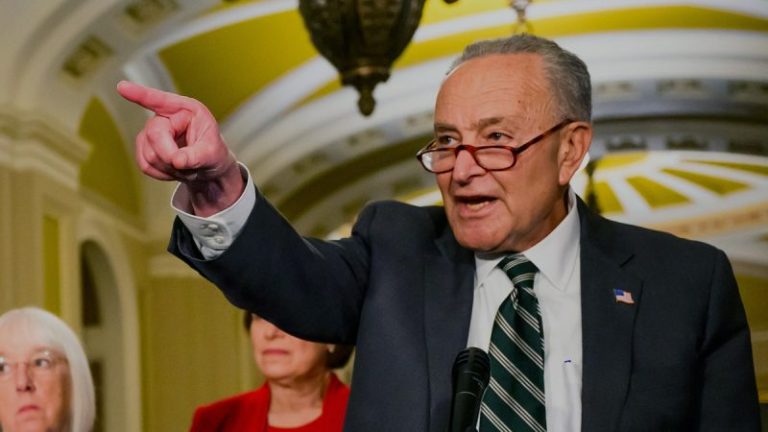
Senate Judiciary Committee Democrats, in an unusual move, staged a walkout at a hearing on Bove before a recent vote to advance his nomination. Senate Minority Leader Chuck Schumer, D-N.Y., called him a ‘henchman,’ a description Democrats have widely adopted for him.

‘He’s the extreme of the extreme,’ Schumer told reporters. ‘He’s not a jurist. He’s a Trumpian henchman. That seems to be the qualification for appointees these days.’

Bove defended himself against critics during his confirmation hearing.

‘I am not anybody’s henchman. I’m not an enforcer,’ Bove said. ‘I’m a lawyer from a small town who never expected to be in an arena like this.’

Fox News’ Alex Miller contributed to this report.

This post appeared first on FOX NEWS

When Canadian-Russian programmer Vitalik Buterin penned a white paper in 2013 outlining a new kind of blockchain platform, few could have predicted the seismic impact it would have on the world of finance, technology, and beyond.

Today (July 30), Ethereum turns 10 years old, marking a milestone that represents a decade of one of the most influential blockchain platforms and a testament to the growing pains, triumphs, and resilience of the decentralized movement.

How did Ethereum go from a white paper drafted by a 19-year-old to a billion-dollar ecosystem that reshaped global finance?

Read on to find out more.

What is Ethereum and who invented it?

Co-founder Buterin said in a 2016 interview that Ethereum was born out of admiration for Bitcoin’s decentralized structure and frustration at its limited capabilities.

“I thought [those in the Bitcoin community] weren’t approaching the problem in the right way. I thought they were going after individual applications; they were trying to kind of explicitly support each [use case] in a sort of Swiss Army knife protocol,” Buterin said, summarizing his motivation to build something more adaptable.

From this foundational idea, Ethereum emerged as a decentralized, programmable blockchain — a “world computer” that would host smart contracts and decentralized applications (dApps), cutting out middlemen and enabling new forms of coordination.

The foundation of the fledgling project was laid between 2013 and 2014. After releasing his white paper in late 2013, Buterin attracted a handful of co-founders, including Gavin Wood, Charles Hoskinson, Joseph Lubin, Anthony Di Iorio, Jeffrey Wilcke, Mihai Alisie, and Amir Chetrit. Together, they spearheaded a crowdfunding campaign in mid-2014 that raised over US$18 million, one of the earliest and most successful Initial Coin Offerings (ICOs) in crypto history.

Despite this momentum, the Ethereum blockchain didn’t launch until July 30, 2015. That release, dubbed “Frontier,” was a basic, raw, and developer-focused version of Ethereum designed for building the infrastructure that would follow.

ETH, Ethereum’s native coin, initially traded for under a dollar. The early months saw little market movement as ETH hovered between US$0.70 and US$2.00, supported mainly by enthusiasts and developers interested in dApp potential.

When was Ethereum’s first major peak?

Ethereum’s first major price rally came during the 2017 crypto bull run, when rising global interest in blockchain technology and the initial coin offering (ICO) boom brought ETH into the mainstream.

After beginning the year at just barely US$8, Ethereum surged to a then-record high of around US$1,400 by January 2018, capping off one of the most explosive price increases in the history of digital assets. This more than 17,000 percent rise was driven by a combination of speculative demand and the emergence of Ethereum as the preferred platform for launching new tokens via ICOs.

By early 2018, however, the market began to reverse. A sweeping crypto correction saw Ethereum’s price fall back below US$100 by the end of that year. The drawdown exposed Ethereum’s technical bottlenecks, such as high gas fees and slow confirmation times during network congestion.

What was the DAO Hack, and how did it influence Ethereum’s trajectory?

Ethereum’s ethos of decentralization was also tested early on. In 2016, an experiment in decentralized governance — the Decentralized Autonomous Organization or DAO — raised about US$150 million in ETH from the community. The idea was to create a venture capital fund governed entirely by smart contracts and token-holder votes.

But just weeks after launch, a vulnerability in the DAO’s code that allowed for recursive call exploit was discovered, draining 3.6 million ETH or about a third of the fund.

At just ten months old, Ethereum was now facing a crisis that tested its fundamental principles, chief among them the immutability of the blockchain and the inviolability of smart contracts.

Three primary responses were debated. One option was to do nothing, honoring the hacker’s actions as legitimate under the rules of the code and accepting the theft. Another was to implement a “soft fork” that would blacklist the child DAO’s address, effectively freezing the stolen funds.

The most radical option was a “hard fork” that would roll back the ledger and return all stolen Ether to the original investors, which would undo the hack entirely.

Ultimately, the hard fork went ahead, and Ethereum split into two chains: the main Ethereum chain (ETH), where the funds were returned to investors, and a new chain called Ethereum Classic (ETC), which preserved the original ledger including the DAO hack.

How has Ethereum performed post-2020?

Ethereum price performance July 30, 2015 – June 30, 2025.

Chart via TradingView.

Ethereum reached its all-time high price of US$4,878 on November 10, 2021, during the peak of the 2020–2021 crypto bull run. The rally was driven by a convergence of factors: institutional adoption of crypto, a massive expansion of decentralized finance (DeFi), and explosive interest in NFTs, most of which were built on Ethereum’s ERC-721 standard.

By late 2021, Ethereum was settling billions in daily transaction volume and powering thousands of decentralized applications, cementing its position as the leading smart contract platform.

However, the peak was short-lived. Inflation fears and global risk aversion in early 2022 triggered a sharp correction across risk assets, including crypto. Ethereum’s price dipped below US$1,000 in June 2022 amid cascading liquidations and platform collapses like Terra and Celsius.

Still, even through the drawdown, Ethereum remained the backbone of DeFi, NFT markets, and layer-2 innovation, setting the stage for its long-planned transition to proof-of-stake later that year.

In the years that followed the fork, Ethereum faced growing pressure to scale and reduce its environmental impact, particularly as DeFi and NFT activity surged.

These challenges set the stage for a major protocol overhaul: Ethereum’s transition from Proof-of-Work (PoW) to Proof-of-Stake (PoS) was considered to be one of the most ambitious technical feats in blockchain history. Officially known as “the Merge,” the upgrade combined Ethereum’s execution layer (the mainnet) with the Beacon Chain, which introduced staking-based consensus.

The Merge took place in September 2022 and the environmental impact was immediate: Ethereum’s energy consumption dropped by over 99 percent.

While the Merge had little short-term effect on price, it marked a crucial moment for Ethereum’s long-term viability. At the time of the upgrade, ETH was trading at around US$1,600, which was a sharp decline from its all-time high of US$4,891 in November 2021 during the height of the crypto bull market.

That price peak had been driven by unprecedented network demand as NFTs and decentralized finance exploded in popularity, both largely built on Ethereum. By mid-2022, however, macroeconomic tightening, rising interest rates, and a series of high-profile crypto failures, including the collapse of TerraUSD and the insolvency of major lending platforms, had triggered a broad downturn.

After the Merge, ETH remained volatile. It already lost ground by as much as 70 percent against crypto leader Bitcoin since the Merge, and the introduction of EIP-1559 in 2021 had already created a more deflationary pressure on ETH supply through base fee burns.

Despite this setback, ETH showed relative resilience compared to many altcoins. In 2023, Ethereum hovered mostly between US$1,200 and US$2,100, with price movements closely tracking investor sentiment toward regulatory developments, Bitcoin’s performance, and broader market liquidity. Institutional interest in Ethereum also grew during this period, with more funds launching ETH products and staking services expanding.

Entering 2024, Ethereum gained momentum amid improving macroeconomic conditions and renewed optimism about real-world applications for blockchain technology. The network saw moderate success in sectors like tokenized assets, layer-2 infrastructure, and decentralized identity.

ETH briefly reclaimed the US$4,000 level in early March 2024 before retreating again due to renewed regulatory scrutiny in the US. Despite the pullback, Ethereum remained the second-largest cryptoasset by market capitalization and retained the majority share of developer activity across all chains.

The 2025 Swing

Ethereum 1-year price performance, July 28, 2024 – July 28, 2025.

Chart via TradingView.

Ethereum, as well as the rest of the crypto landscape, saw a full positive swing in 2025 as regulatory clarity dominated the first half of the year.

In June, the US Senate approved the Guiding and Establishing National Innovation for US Stablecoins (GENIUS) Act with bipartisan support. President Donald Trump, now serving his second term, publicly backed the bill, calling it “a win for American innovation and financial leadership.”

The GENIUS Act establishes a regulatory framework for US-pegged stablecoins, requiring full reserve backing, independent audits, and federal licensing for large issuers. It also clarifies that qualifying stablecoins are not securities, pulling them out of the SEC’s jurisdiction and instead aligning oversight with banking regulators like the OCC and Federal Reserve.

Crucially, the law defines “payment stablecoins” as a new category of digital cash, and Ethereum has emerged as one of the largest beneficiaries of this policy shift. The majority of dollar-backed stablecoins, which include USDC, USDT, and newer entrants like PayPal USD, are issued and transacted on Ethereum.

The GENIUS Act’s legal recognition of stablecoins has given institutional players more confidence to engage with Ethereum-based infrastructure.

As a result, capital inflows into Ethereum have accelerated, with analysts noting a sharp uptick in demand for ETH as a “platform asset” powering tokenized dollars and digital settlement rails.

ETH’s price also soon followed. Following the Senate’s approval of the GENIUS Act in June 2025, ETH jumped over 25 percent in two weeks, briefly reaching US$3,824 — outperforming Bitcoin and breaking out of a multi-month consolidation range.

The act has also prompted strategic shifts among financial institutions. BlackRock, Fidelity, and JPMorgan have expanded their Ethereum-based offerings, including on-chain fund administration, tokenized treasuries, and collateralized lending protocols that rely on smart contracts.

Several US banks are also piloting internal payment rails using tokenized dollars on Ethereum rollups.

What’s next for Ethereum?

Buterin himself has acknowledged that Ethereum’s current roadmap is not the end. Speaking in late 2022 before the Merge, he noted that “Ethereum is 55 percent complete.”

The long-term vision includes greater privacy features, zero-knowledge proofs for secure scalability, and expanding the reach of dApps to a billion users.

As of mid-2025, Ethereum currently trades around US$3,400, buoyed by strong institutional adoption, continued growth of layer-2 networks like Arbitrum and Base, and early signs of real-world asset tokenization gaining traction among banks and fintech firms.

While Ethereum’s price remains well below its 2021 peak, its performance since 2020 reflects growing maturity, with fewer speculative surges and more interest anchored in a more crypto-friendly environment.

Securities Disclosure: I, Giann Liguid, hold no direct investment interest in any company mentioned in this article.

This post appeared first on investingnews.com

Investor Insight

With high-quality, drill-ready assets with world-class discovery potential, Piche Resources is a compelling business case for investors looking to leverage a bull market for uranium and gold.

Overview

Piche Resources (ASX:PR2) is an ASX-listed mineral exploration company focused on uranium and gold exploration in Tier-1 jurisdictions: Western Australia and Argentina. The company holds 100 percent ownership of all of its projects and is supported by a highly experienced board and technical team.

Targeting globally significant discoveries in Tier-1 mineral provinces

Piche’s portfolio includes the advanced-stage Ashburton uranium project in Western Australia and two large-scale exploration projects in Argentina: the Cerro Chacon gold-silver project and the Sierra Cuadrada uranium project. These projects have delivered high-grade exploration results and are drill-ready, positioning the company to unlock significant shareholder value through systematic exploration programmes.

Piche has an internationally recognized board focused on creating long-term shareholder value, and an in-country technical team in Argentina with a proven track record of taking projects from discovery through to development.

Company Highlights

  • Flagship Ashburton uranium project in Western Australia with recent high-grade drilling results over wide intercepts.
  • Sierra Cuadrada uranium project in Argentina showing extensive near-surface mineralisation with assays up to 2.86 percent U₃O₈.
  • Cerro Chacon gold-silver project with high-grade surface results (up to 11.65 g/t gold and 333.7 g/t silver) across a 14 km mineralised corridor.
  • Fully permitted and EIA-approved for drilling at Cerro Chacon (Chacon South and Middle).
  • Large, 100-percent-owned tenement package across all projects (Ashburton: 335 sq km; Cerro Chacon: 414 sq km; Sierra Cuadrada: 1,310 km²).
  • Board of directors includes former leaders of Peninsula Energy, Orano, Rio Tinto Uranium and Barrick Gold.
  • Upcoming drill campaigns planned at Cerro Chacon and Ashburton to test multiple high-priority targets.

Key Projects

Gold: Cerro Chacon, Argentina

Cerro Chacon interpreted geology and tenement holding

Cerro Chacon is a large-scale, early-stage gold-silver exploration project located in the Chubut Province of Argentina. The project is situated within a region known for hosting world-class low-sulphidation epithermal systems, including Cerro Negro and Cerro Vanguardia. With multiple gold-bearing structures confirmed over a 14 km corridor, Cerro Chacon is emerging as a highly promising and underexplored precious metals system with substantial scale and grade potential.

Project Highlights

Location: ~40 km southwest of Paso de Indios, Chubut Province

Tenure: 414 sq km across multiple tenements

Highlights:

  • A 14 km-long mineralised corridor has been delineated across Chacon Grid, La Javiela and Toro Hosco prospects.
  • High-grade geochemical results include:
    • 11.65 g/t gold and 120.3 g/t silver at Toro Hosco
    • 333.7 g/t silver, 9.48 percent lead, and 8.57 percent zinc at La Javiela South
  • Maiden RC drilling programme of 57 holes (7,905 m) scheduled across three main targets:
    • Chacon Grid: 45 holes (5,590 m)
    • La Javiela: 8 holes (1,740 m)
    • Toro Hosco: 4 holes (575 m)
  • EIA approvals for Chacon South and Chacon Middle were received in May 2025, enabling drilling to proceed.
  • Vein systems range from 2 to 6 km in strike length and up to 50 m in width; hosted within structurally controlled low-sulphidation epithermal veins (LSEV).

Uranium: Ashburton Project, Australia

The Ashburton project is Piche’s flagship uranium exploration asset in Australia, situated in the Pilbara region of Western Australia. Located within a historically underexplored but highly prospective unconformity-related uranium district, the project provides the company with strong leverage to the growing global demand for uranium. The project is geologically analogous to world-class Proterozoic uranium systems, with multiple confirmed mineralised zones and a regional corridor of 60 km.

Project Highlights

  • Location: Pilbara region, ~1,150 km north of Perth
  • Tenure: 335 sq km following the recent application for tenement E52/4461 (214 sq km), adding to the existing 122 sq km holdings.
  • Highlights:
    • 2024 RC and diamond drilling confirmed high-grade uranium mineralisation at multiple stratigraphic levels.
    • Best intercepts include:
      • 3.45 m @ 5,129 ppm eU₃O₈ from 137.62 m (ARC006)
      • 10.48 m @ 1,412 ppm eU₃O₈ from 114.30 m (ADD005)
      • 2.42 m @ 2,681 ppm eU₃O₈ from 155.10 m (ADD003).
      • 7.86 m @ 2,266 ppm eU₃O₈ from 105.42 m (ADD006)
    • The company has outlined a 60 km structural corridor hosting multiple uranium occurrences including Angelo A & B, Canyon Creek, Ristretto and Atlantis.
    • Atlantis prospect: historical drilling returned up to 7,400 ppm U₃O₈ over 2.2 m; rock chip samples have returned up to 37 percent U₃O₈.

Uranium: Sierra Cuadrada, Argentina

Sierra Cuadrada is Piche’s primary uranium asset in Argentina, covering a vast area within the San Jorge Basin. This large-scale project has demonstrated strong surface uranium mineralisation with multiple drill-ready prospects. With mineralisation confirmed across extensive zones and supported by historical radiometric and geochemical data, Sierra Cuadrada has the potential to host multiple Tier-1 uranium deposits in a cost-effective, near-surface setting.

Teo 5 and 6 prospect 2024 auger drill programme

Project Highlights:

Location: San Jorge Basin, ~200 km north of Comodoro Rivadavia

Tenure: 1,310 sq km across multiple licences

Highlights:

  • The project area contains broad, flat-lying mineralisation at multiple stratigraphic levels.
  • High-grade uranium assays include:
    • 28,650 ppm U₃O₈ (2.86 percent) from rock chip sampling at Teo 8
    • 24,017 ppm U₃O₈ from channel sampling
    • 2,772 ppm U₃O₈ over 0.5m from auger drill sample
  • Mineralised zones extend over a strike of 60 sq km, with confirmed targets on the majority of tenements.
  • 2024 auger drilling and sampling confirmed uranium continuity across a sandstone and conglomerate sedimentary package with 14 samples exceeding 200 ppm U₃O₈.
  • Rock chip sampling has returned 114 samples >200ppm U₃O₈
  • RC drilling is planned to follow up on anomalies identified in the auger and channel sampling programmes.

Management Team

John (Gus) Simpson – Executive Chairman

John Simpson has over 37 years of experience in mineral exploration, development and mining. Previously the executive chairman and founder of Peninsula Energy Limited (ASX:PEN), a USA uranium producer.

Stephen Mann – Managing Director

Stephen Mann is a geologist with over 40 years of experience in exploration, discovery and development of mining projects, including 20 years in the uranium sector. Formerly the Australian managing director of Orano, the world’s third-largest uranium producer.

Pablo Marcet –Executive Director

Pablo Marcet is a senior geoscientist with 38 years of experience in exploration, discovery and development of mineral deposits. Currently an independent director of lithium producer Arcadium Lithium (NYSE:ALTM) and previously a director of Barrick Gold (NYSE:GOLD) and U3O8 (TSX:UWE).

Clark Beyer – Non-executive Director

Clark Beyer is an internationally recognized nuclear industry executive with over 35 years of experience. Formerly the managing director of Rio Tinto Uranium and currently principal of Global Fuel Solutions, providing strategic consulting to the international uranium and nuclear fuels market.

Stanley Macdonald – Non-executive Director

Stanley Macdonald is a nationally recognized mining entrepreneur, founding director and instrumental in the success of numerous ASX-listed companies, such as Giralia Resources, Northern Star and Redhill Iron. He is currently a director of Zenith Minerals.

This post appeared first on investingnews.com

From established players to up-and-coming firms, Canada’s pharmaceutical company landscape is diverse and dynamic.

Canadian drug companies are working to discover and develop major innovations amidst an increasingly competitive global landscape. Rising technologies such as artificial intelligence are playing a role in the landscape as well.

Read on to learn about what’s been driving the share prices of the best-performing Canadian pharma stocks.

1. Cipher Pharmaceuticals (TSX:CPH,OTC:CPHRF)

Year-over-year gain: 48.2 percent
Market cap: C$330.79 million
Share price: C$12.33

Cipher Pharmaceuticals is a specialty pharma company with a diverse portfolio of treatments, including a range of dermatology and acute hospital care products. The company has out-licensed some of its offerings as well. Cipher began trading on the OTCQX Best Market under the symbol CPHRF in early 2024.

In addition to its current portfolio, Cipher has acquired Canadian rights to CF-101, a dermatology treatment for moderate to severe plaque psoriasis is currently expected to undergo Phase III clinical trials. The company is also conducting proof-of-concept studies on DTR-001, a topical treatment for removing tattoos.

In 2024, Cipher announced it had signed a definitive asset purchase agreement with ParaPRO for its US-based Natroba operations and global product rights, and the news caused Cipher’s share price to spike significantly.

During its Q1 results reporting in May 2025, the company announced a US$15 million debt repayment.

2. HLS Therapeutics (TSX:HLS)

Year-over-year gain: 42.03 percent
Market cap: C$154.95 million
Share price: C$4.90

HLS Therapeutics focuses on drugs for cardiovascular and central nervous system problems, often through partnerships. The company specializes in acquiring and commercializing pharmaceuticals that address unmet needs. Key commercial products include Vascepa, Clozaril for treatment-resistant schizophrenia and cholesterol-lowering therapies NEXLETOL and NEXLIZET.

Additionally, the company generates revenue from a diversified portfolio of royalty interests on various products marketed by third parties.

3. Medexus Pharmaceuticals (TSX:MDP,OTC:MEDXF)

Year-over-year gain: 23.25 percent
Market cap: C$92.9 million
Share price: C$2.81

Medexus Pharmaceuticals specializes in bringing drugs to treat rare diseases to North America. The company manages the entire process through its fully integrated operations, from acquiring and developing drugs to marketing and selling them. Some of its key products include treatments for hemophilia B and rheumatoid arthritis, as well as a line of drugs for autoimmune diseases like lupus and allergy treatments.

In November 2024, Medexus Pharmaceuticals announced it had successfully negotiated with the pan-Canadian Pharmaceutical Alliance to make treosulfan, which Medexus commercialized in Canada under the name Trecondyv, available to publicly funded drug programs and patients. Trecondyv is indicated as part of conditioning treatment prior to bone marrow transplants in patients with certain types of blood cancers.

In addition to Canada, Medexus has the exclusive commercialization rights to treosulfan in the US, where it received approval from the US Food and Drug Administration (FDA) in January 2025.

4. Satellos Bioscience (TSXV:MSCL,OTC:MSCLF)

Year-over-year gain: 18 percent
Market cap: C$102.26 million
Share price: C$0.59

Satellos Bioscience is a Canadian pharmaceutical company expanding treatment options for muscle disorders. The company has focused specifically on Duchenne muscular dystrophy, developing therapies to regenerate and repair muscle tissue by targeting the specific biological pathways involved. Its lead candidate SAT-3247 targets a protein called AAK1, which regulates the activity of stem cells that activate and differentiate new muscle fibers.

The company began enrolment for a multiple-ascending-dose arm of the Phase 1 study for SAT-3247 last November after no drug-related adverse events were reported in the single-ascending-dose group.

In May of this year, Satellos announced results from its Phase 1b trial, reporting SAT-3247 has shown positive safety and pharmacokinetic data and encouraging early functional results, clearing the path for a planned Phase 2 trial.

5. NurExone Biologic (TSXV:NRX,OTC:NRXBF)

Year-over-year gain: 1.41 percent
Market cap: C$44.18 million
Share price: C$0.72

NurExone Biologic is the biopharmaceutical company behind ExoTherapy, a drug delivery platform that uses exosomes, which are nano-sized extracellular vesicles, to create treatments for central nervous system disorders, spinal cord injuries and traumatic brain injuries. It is a less invasive alternative to cell transplantation, which requires surgery and carries the risk of rejection.

NurExone’s first nano-drug, ExoPTEN, uses a proprietary sIRNA sequence delivered with the ExoTherapy platform to treat spinal cord injuries. ExoPTEN received orphan drug designation from the US Food and Drug Administration (FDA) in October 2023, meaning it has been recognized as a potential treatment for rare medical conditions. The designation makes it eligible for incentives such as market exclusivity and regulatory assistance aimed at accelerating its development and approval.

The company released preclinical results from animal testing evaluating the efficacy of its nano-drug ExoPTEN in restoring lost vision at the end of 2024. In July 2025, preclinical studies indicated that ExoPTEN could improve walking quality in patients with spinal cord injuries.

Securities Disclosure: I, Meagen Seatter, hold no direct investment interest in any company mentioned in this article.

This post appeared first on investingnews.com
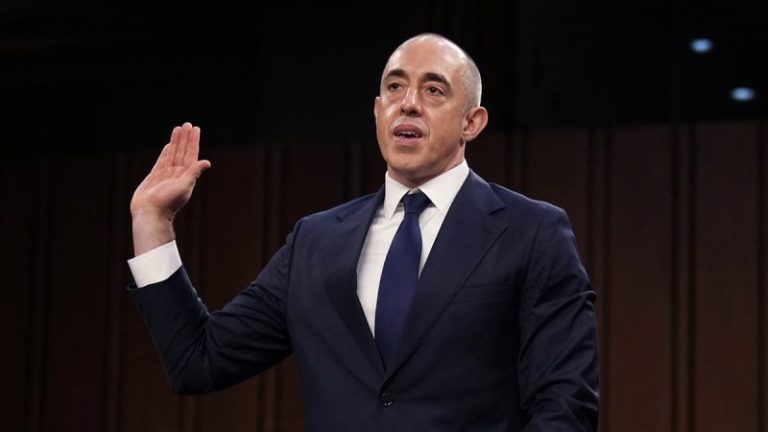
Longtime Democratic operative Steve Ricchetti is appearing before House investigators on Wednesday, the seventh former White House aide to be summoned for Oversight Committee Chairman James Comer’s probe.

Ricchetti most recently served as counselor to President Joe Biden during the vast majority of the Biden White House’s four-year term.

He’s now expected to sit down with House Oversight Committee staff for a closed-door transcribed interview that could last several hours.

Comer, R-Ky., is investigating whether Biden’s top White House aides concealed signs of mental decline in the president, and if that meant executive actions were signed via autopen without his knowledge.

Ricchetti first began working for Biden in 2012, when he was appointed as counselor to the vice president during the Obama administration. He was soon promoted to Biden’s chief of staff in late 2013.

Ricchetti, who made a living as both a lobbyist and a Democratic insider, chaired Biden’s 2020 presidential campaign as well.

The committee’s interest in him, however, lies in his alleged key role in managing the White House while aides reportedly worked to obscure signs of the president’s mental decline.

‘As Counselor to former President Biden, you served as one of his closest advisors. According to a report, you were part of a group of insiders who implemented a strategy to minimize ‘the president’s age-related struggles,’’ Comer wrote to Ricchetti in June, referencing a Wall Street Journal report.

‘The scope and details of that strategy cannot go without investigation. If White House staff carried out a strategy lasting months or even years to hide the chief executive’s condition—or to perform his duties—Congress may need to consider a legislative response.’

Axios reporter Alex Thompson, who co-wrote ‘Original Sin’ with CNN host Jake Tapper about Biden’s cognitive decline and his aides’ alleged attempts to cover it up, told PBS program Washington Week earlier this year that Ricchetti was part of a small group of insiders that some dubbed Biden’s ‘Politburo.’

He also played a key role in Biden’s legislative agenda, most notably as one of the Democratic negotiators working with then-House Speaker Kevin McCarthy, R-Calif., to avoid a full-blown fiscal crisis over the U.S. national debt in early 2023.

It comes after another close former aide, former White House Chief of Staff Ronald Klain, appeared before investigators for his own transcribed interview last week.

Like Klain, Ricchetti is appearing on voluntary terms—the fourth former Biden aide to do so.

Three of the previous six Biden administration officials who appeared before the House Oversight Committee did so under subpoena. Former White House physician Kevin O’Connor, as well as former advisers Annie Tomasini and Anthony Bernal, all pleaded the Fifth Amendment during their compulsory sit-downs.

But the three voluntary transcribed interviews that have occurred so far have lasted more than five hours, as staff for both Democrats and Republicans take turns in rounds of questioning.

This post appeared first on FOX NEWS

Senate Minority Leader Chuck Schumer, D-N.Y., has called on the FBI to conduct a counterintelligence threat assessment on the Jeffrey Epstein files.

Schumer said on the Senate floor on Tuesday that the FBI assessment should accomplish three things: determine if foreign intelligence agencies could gain access to the information ‘the president does not want to release in the Epstein files, through methods that include cyber intrusion;’ identify any vulnerabilities that could be exploited by foreign intelligence agencies with access to non-public information in the Epstein files, ‘including being able to gain leverage over Donald Trump, his family, or other senior government officials;’ and result in the FBI publicly showing that the bureau is ‘developing mitigation strategies to counter these threats and safeguard our national security.’ 

At his weekly Democratic leadership press conference afterward, Schumer condemned what he categorized as the Epstein ‘cover-up,’ further taking aim at President Donald Trump and House Speaker Mike Johnson, R-La.

‘Trump promised he’d release the Epstein files while he was on the campaign trail, yet he has yet to do it,’ Schumer told reporters. ‘Speaker Johnson quite literally preferred to shut down Congress, sending everyone home on an Epstein recess to avoid the topic. Americans are right to be angry over the lack of transparency, but there are also some very real questions about risks to national security.’

‘Given Trump’s total about-face on releasing files and given what we know from the FBI whistleblowers, it’s natural to ask, what happens if our adversaries use cyberattacks and other means to access files and materials into Epstein that are damaging or worse for President Trump and or those around him?’ Schumer continued. ‘What happens if the Epstein files end up in the hands of Russia or North Korea, or Chinese governments? Unless the Epstein files are fully released to the public, could our adversaries use that, Epstein, to use that information to blackmail someone like the president? 

Last Thursday, Schumer noted, the Department of Homeland Security and the Department of Health and Human Services were among several government agencies hacked as part of a breach to Microsoft SharePoint system. 

‘This was confirmed that it was Chinese actors. So we don’t need this happening again,’ Schumer said. ‘We have to ensure that it can’t happen. National security is not and should never be a partisan issue. We need to do everything we can to make sure we protecting the U.S. and American families. This report is vital in doing that. Beyond that, there is one more thing Donald Trump could do to quell people’s anger, confusion, frustration, and/or deep fears. That is, release the files.’ 

Last week, Johnson ended the House legislative session a day early, averting a potential vote on a resolution by Reps. Thomas Massie, R-Ky., and Ro Khanna, D-Calif., that would have compelled the Justice Department and the FBI to release the Epstein files. Johnson asserted on Sunday that House Republicans supported ‘maximum disclosure’ but argued that the resolution was ‘reckless’ and poorly drafted, arguing that it ignored federal rules protecting grand jury materials and ‘would require the DOJ and FBI to release information that they know is false, that is based on lies and rumors and was not even credible enough to be entered into the court proceedings.’ 

Johnson said he supported the Trump administration’s stance that ‘all credible evidence and information’ be released, but emphasized the need for safeguards to protect victims’ identities.

During a bilateral meeting with British Prime Minister Keir Starmer in Scotland on Monday, Trump was asked why he kicked Epstein out of his Mar-a-Lago club in West Palm Beach, Florida, years ago. 

‘That’s such old history. Very easy to explain, but I don’t want to waste your time by explaining it. But for years, I wouldn’t talk to Jeffrey Epstein. I wouldn’t talk because he did something that was inappropriate,’ Trump told reporters. ‘He hired help, and I said, ‘Don’t ever do that again.’ He stole people that worked for me. I said, ‘Don’t ever do that again.’ He did it again, and I threw him out of the place, persona non grata. I threw him out and that was it.’ 

Trump said he turned down an invitation to Epstein’s notorious island in the Caribbean and claimed former President Bill Clinton and former Harvard University President Larry Summers had gone. 

‘I never went to the island and Bill Clinton went there, supposedly 28 times. I never went to the island, but Larry Summers, I hear, went there. He was the head of Harvard and many other people that are very big people. Nobody ever talks about them,’ Trump said. ‘I never had the privilege of going to his island. And I did turn it down. But a lot of people in Palm Beach were invited to his island. In one of my very good moments, I turned it down.’ 

Fox News’ Tyler Olson contributed to this report.

This post appeared first on FOX NEWS

July 29 (Reuters) – Union Pacific said on Tuesday it would buy smaller rival Norfolk Southern in an $85-billion deal to create the country’s first coast-to-coast freight rail operator and reshape the movement of goods from grains to autos across the U.S.

If approved, the deal would be the largest-ever buyout in the sector and combine Union Pacific‘s stronghold in the western two-thirds of the United States with Norfolk’s 19,500-mile network that primarily spans 22 eastern states.

The two railroads are expected to have a combined enterprise value of $250 billion and would unlock about $2.75 billion in annualized synergies, the companies said.

The $320 per share price implies a premium of 18.6% for Norfolk from its close on July 17, when reports of the merger first emerged.

The companies said on Thursday they were in advanced discussions for a possible merger.

The deal will face lengthy regulatory scrutiny amid union concerns over potential rate increases, service disruptions and job losses. The 1996 merger of Union Pacific and Southern Pacific had temporarily led to severe congestion and delays across the Southwest.

The deal reflects a shift in antitrust enforcement under U.S. President Donald Trump’s administration. Executive orders aimed at removing barriers to consolidation have opened the door to mergers that were previously considered unlikely.

A Norfolk Southern freight train passes through Homestead, Pa.Gene J. Puskar / AP file

Surface Transportation Board Chairman Patrick Fuchs, appointed in January, has advocated for faster preliminary reviews and a more flexible approach to merger conditions.

Even under an expedited process, the review could take from 19 to 22 months, according to a person involved in the discussions.

Major railroad unions have long opposed consolidation, arguing that such mergers threaten jobs and risk disrupting rail service.

“We will weigh in with the STB (regulator) and with the Trump administration in every way possible,” said Jeremy Ferguson, president of the SMART-TD union‘s transport division, after the two companies said they were in advanced talks last week.

“This merger is not good for labor, the rail shipper/customer or the public at large,” he said.

The companies said they expect to file their application with the STB within six months.

The SMART-TD union‘s transport division is North America’s largest railroad operating union with more than 1,800 railroad yardmasters.

The North American rail industry has been grappling with volatile freight volumes, rising labor and fuel costs and growing pressure from shippers over service reliability, factors that could further complicate the merger.

Union Pacific‘s shares were down about 1.3%, while Norfolk fell about 3%.

The proposed deal had also prompted competitors BNSF, owned by Berkshire Hathaway BRKa.N, and CSX CSX.O, to explore merger options, people familiar with the matter said.

Agents at the STB are already conducting preparatory work, anticipating they could soon receive not just one, but two megamerger proposals, a person close to the discussions told Reuters on Thursday.

If both mergers are approved, the number of Class I railroads in North America would shrink to four from six, consolidating major freight routes and boosting pricing power for the industry.

The last major deal in the industry was the $31-billion merger of Canadian Pacific CP.TO and Kansas City Southern that created the first and only single-line rail network connecting Canada, the U.S. and Mexico.

That deal, finalized in 2023, faced heavy regulatory resistance over fears it would curb competition, cut jobs and disrupt service, but was ultimately approved.

Union Pacific is valued at nearly $136 billion, while Norfolk Southern has a market capitalization of about $65 billion, according to data from LSEG.

(Reuters reporting by Shivansh Tiwary and Sabrina Valle, additional reporting by Abhinav Parmar, Nathan Gomes and Mariam Sunny; Reuters editing by Sriraj Kalluvila, Pooja Desai, Dawn Kopecki and Cynthia Osterma)

This post appeared first on NBC NEWS

President Donald Trump said on Tuesday he may skip the G20 summit in South Africa in November over the nation’s ‘very bad policies,’ and instead send someone else to represent the United States.

Trump made the remarks aboard Air Force One in response to a reporter’s question as he returned from a trip to Scotland, where the president achieved a massive trade deal with the European Union.

‘I think maybe I’ll send somebody else because I’ve had a lot of problems with South Africa,’ Trump said. ‘They have some very bad policies.’

‘Very, very bad policies, like policies where people are being killed,’ Trump added.

In May, Trump confronted South African President Cyril Ramaphosa at the White House with news clippings and a video allegedly showing grave treatment of White farmers.

Trump has claimed that White Afrikaner South African farmers are being slaughtered and forced off their land. The Afrikaners are descendants of mostly Dutch settlers who first arrived in South Africa in 1652. 

South Africa and its president have denied claims of genocide and harassment. 

Secretary of State Marco Rubio already boycotted a G20 foreign ministers’ meeting in South Africa earlier this year over the government’s controversial land seizure policy.

Both the Trump and former Biden administrations have also criticized South Africa after the nation accused Israel of genocide in Gaza and brought a case to the International Court of Justice.

Fox News Digital’s Greg Norman contributed to this report.

This post appeared first on FOX NEWS

After spiking above US$20,000 per metric ton in May 2024, nickel prices have experienced a downward trend, mainly remaining in the US$15,000 to US$16,000 range.

Indonesia’s elevated production levels have been a primary factor contributing to low commodity prices, as sustained high output continues to oversupply the market. The supply surplus has had a knock-on effect, putting pressure on Western producers who have been forced to slash their production to maintain profitability.

Elevated output coincides with electric vehicle (EV) demand, which is under threat as market uptake has slowed, and policy changes in the United States are expected to increase costs for consumers and lower sentiment for the vehicles.

Nickel sinks to 2020 lows

Commodity prices crashed at the start of the quarter, with nickel falling to a five-year low, reaching US$14,150 per metric ton on April 8. However, prices quickly recovered from the rout and reached US$15,880 on April 24.

The end of April saw the price once again retreat to US$15,230 as downward trend indications began to take hold. The price through May was largely rangebound, starting the month rising to US$15,850 on May 9 before collapsing again to US$15,085 on May 27.

Nickel price chart, April 01 to July 24, 2025

via TradingEconomics

June started with a short-lived rebound to US$15,510 on June 2, before falling to below the US$15,000 mark to reach US$14,840 on June 24. Since then, the price experienced some upward momentum, reaching US$15,575 on July 23.

Supply surplus causing price pressures

In a presentation at the Indonesian Mining Conference on June 30, Ricardo Ferreira, Director of Market Research and Statistics at the International Nickel Study Group (INSG) outlined the current state of the nickel market.

He suggested that high output from Indonesian miners continued to exert downward price pressures on nickel over the last several years, resulting in a decline from an average price of US$30,425 per metric ton in 2022 to an average of US$15,000 per metric ton during the first five months of 2025.

Meanwhile, combined inventories on the London Metals Exchange (LME) and the Shanghai Futures Exchange (SHFE) have exploded from 38,200 metric tons at the end of May 2023 to 230,600 metric tons at the end of April 2025.

This coincides with a 15.1 percent increase in global nickel production in 2023 and a 2.3 percent increase in 2024. The expectation is that nickel output will surge an additional 8.5 percent in 2025, with a significant portion to come from Indonesia, whose share is forecast to grow to 63.4 percent from 61.6 percent in the previous year.

The demand outlook

However, demand has not kept pace with the increase in production. Ferreira stated that demand increased by 7.8 percent in 2023, 4.8 percent in 2024, and is expected to grow by 5.7 percent in 2025.

Stainless steel has been the primary driver of nickel demand for decades. Still, Olivier Masson, Principal Analyst for Battery Raw Materials at Fastmarkets, predicts a changing demand landscape over the next couple of years.

During his CAM Minerals Market Forecast at the Fastmarkets LBRM Las Vegas conference on June 22 to 25, Masson provided insight into why he believes the current oversupply situation will begin to shift by 2027.

Currently, nickel’s primary demand driver is in the production of stainless steel, accounting for just over 2 million metric tons per year. However, the expectation is that between now and 2035, total demand for nickel will increase by 2 million tons, with stainless production accounting for just 564,000 metric tons. A compound annual growth rate (CAGR) of 2 percent.

“We expect to see more end-of-life scrap being generated within China, and then that should start slowing down the growth requirements for primary nickel in the Chinese stainless-steel industry,” Masson explained.

The remaining demand is predicted to come from a 12.8 percent, or 1.4 million metric ton, increase from the EV sector.

“Most of this growth will come from pure EV, so pure battery electric vehicles, where we expect sales growth of over 30 million vehicles… But we still expect an increase in plug-in hybrids with an additional 11.5 million vehicle sales over the next decade,” Masson said.

He went on to say that over that time, supply is expected to grow at a slower rate, with the majority owed to increases in nickel sulphate destined for battery manufacturing.

“So what does that mean for the balance for the nickel market? Well, the nickel market has been oversupplied for the past couple of years. We expect that to continue this year and for the next few years. So we are in a state of structural oversupply. That said, its only by around 2027 or 2028 that we think the market will start to return to a semblance of Balance,” Masson explained

In the long term, he stated that an additional 750,000 metric tons will be needed by 2035, which he doesn’t see as a significant problem.

Production curtailments continue

With the market currently experiencing a supply glut, more producers have taken to curtailing production or shuttering operations.

Since 2024, there have been closures of significant operations, including First Quantum’s (TSX:FM,OTC:FQVLF) Ravensthorpe and Panoramic Resources’ Savannah operations in Australia and Glencore’s (LSE:GLEN,OTC Pink:GLCNF,OTC:GLCNF) Koniambo Nickel mine in New Caledonia.

Likewise, Refiners have also been under pressure as BHP (ASX:BHP,NYSE:BHP,LSE:BHP,OTC:BHPLF) suspended operations at its Nickel West refinery in Australia until 2027, and Sibanye Stillwater (NYSE:SBSW) repurposed its Sandouville nickel refinery in France to produce precursor cathode active material during the first half of 2025.

According to INSG data, 32 percent of global nickel production lines are currently offline.

One of the few companies to buck the trend was Vale (NYSE:VALE), which announced a 44 percent year-over-year increase in nickel production in its Q2 2025 report released on July 22. The report indicated that nickel output rose to 40,300 metric tons from 27,900 during the same quarter last year. The company said gains were driven by strong performance from its Canadian assets and the Onca Puma mine in Brazil.

While there was some speculation that Indonesia may reduce its output, no cuts have materialized, which has in part led Australian investment bank Macquarie to downgrade its nickel outlook to US$14,500 per metric ton by the end of the year, from the US$15,500 it predicted at the end of Q1.

The impact of trade uncertainty

Base metals were caught up as part of the fallout from Donald Trump’s “Liberation Day” announcement on April 2. The move applied a 10 percent across-the-board baseline tariff to all but a handful of countries and threatened to impose more significant retaliatory tariffs starting on April 9.

However, a steep US$6.6 trillion sell-off in equity markets and a squeeze in the bond market that sent yields for 10-year Treasuries up more than half a percent caused the US administration to walk back its plans. Instead, it announced a 90-day pause on the higher tariff rate and stated that it would work to negotiate new trade agreements.

The commodity price rout came as more analysts began to speculate about a recession later in 2025, which would reduce consumer spending on steel-dependent goods, such as light vehicles and new home builds.

In statements made during S&P Global’s State of the Market: Mining Q1’ 25 webinar on May 14, Naditha Manubag, Associate Research Analyst of Metals and Mining Research, suggested that nickel is likely to experience headwinds from the evolving trade policy in the United States.

“We expect nickel prices to remain volatile in the near term as the Trump administration’s trade policies continue to evolve. Forecast for 2025 global primary nickel demand is lowered to 2.8 percent year-over-year due to the expected slowdown in global economic activity,” she said.

Manubag said the slowdown would have a negative impact on demand for Chinese consumer goods, which would come alongside a rising Indonesian mining quota in 2025. Although prices spiked in March, she explained that it was due to tight supplies from the rainy season and increased royalty rates.

Manubag suggested that S&P’s overall expectation is that the nickel market will be in a surplus of 198,000 metric tons in 2025. As a result, the organization has lowered its nickel price forecast to US$15,730 per metric ton.

It’s more than just US tariffs that are expected to weigh on nickel prices in the short term. When Donald Trump signed the “One Big Beautiful” spending bill into law on July 4, it marked an end to the federal EV tax credit and other tax credits aimed at expanding charging infrastructure, a cornerstone of the Inflation Reduction Act.

The consumer credit was meant to provide a US$7,500 rebate toward the purchase of new EVs, and is expected to have an impact on overall demand when it expires on September 30.

Although the majority of nickel’s demand comes from the production of stainless steel, the growing demand from EV battery production has provided additional tailwinds; however, a decline in EV demand could impact future demand growth.

“If and when this bill is passed, a slowdown of EV uptake is expected to lead to higher EV prices and slower rollout of charging infrastructure,” Manubag said.

The big picture for investors

Currently, the easiest way to sum up the nickel market is that it’s widely disliked. The fundamentals aren’t there. A significant portion of nickel is being produced at a loss.

“You know, nickel is hated right now. I think there’s a decent case for nickel, just like when we went into platinum, right? Platinum did nothing for a decade; it just hung around US$900 to US$1,000, and now we’ve finally broken out… You have no idea when, but buy it when it’s boring. At US$900, no one cares, and then you get to ride the wave up. So I think that would be it. Pay attention to what’s unloved and hated and buy that,” he said.

Others in the investment community have expressed a similar sentiment. Although fundamentals for nickel are currently lacklustre, demand, especially from the automotive sector, is expected to grow over the next 10 years.

Securities Disclosure: I, Dean Belder, hold no direct investment interest in any company mentioned in this article.

This post appeared first on investingnews.com