Author

admin

Browsing

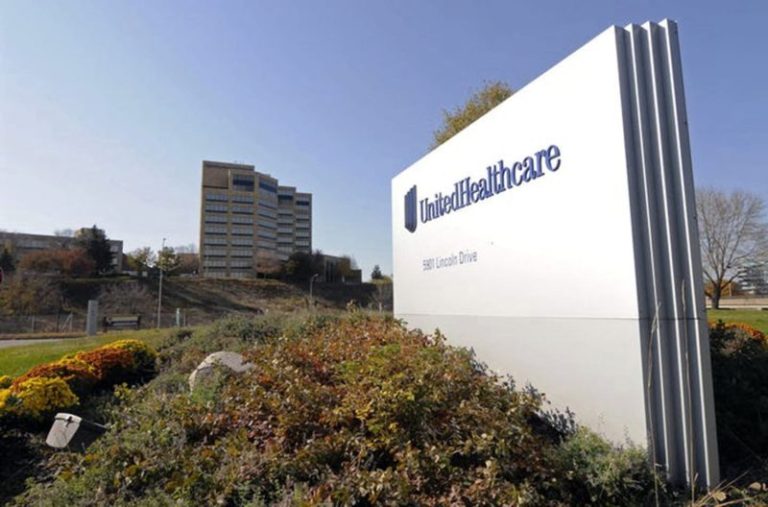
UnitedHealth Group revealed Thursday it is facing a Justice Department investigation over its Medicare billing practices.

It comes after the Wall Street Journal reported in May that the Department of Justice is conducting a criminal investigation into the health-care giant over possible Medicare fraud. In response at the time, the company said it stands “by the integrity of our Medicare Advantage program.”

In July, the Journal also reported that the DOJ interviewed several doctors about UnitedHealth’s practices and whether they felt pressured to submit claims for certain conditions that bolstered payments from the Medicare Advantage program to the company.

That marked the second time this year that the insurer’s Medicare Advantage business has come under federal scrutiny. The Journal also reported in February that the DOJ is conducting a civil investigation into whether the company inflated diagnoses to trigger extra payments to its Medicare Advantage plans.

But in March, UnitedHealth moved a step closer to ending a yearslong legal battle with the DOJ that began with a whistleblower who alleged the company illegally withheld at least $2 billion through the Medicare Advantage program. A special master assigned to the case by the judge issued a recommendation in favor of UnitedHealth, saying the DOJ lacked evidence.

UnitedHealthcare’s Medicare and retirement segment, which includes the Medicare Advantage business, is UnitedHealth Group’s largest revenue driver, raking in $139 billion in sales last year.

The update in the probe comes after a tumultuous last year for UnitedHealthcare, the nation’s largest and most powerful private health insurer. Shares of UnitedHealthcare’s parent company, UnitedHealth Group, are down more than 42% for the year after it suspended its 2025 forecast amid skyrocketing medical costs, announced the surprise exit of former CEO Andrew Witty and grappled with the reported probe into its Medicare Advantage business.

The company’s 2024 wasn’t any easier, marked by a historic cyberattack and the torrent of public blowback after the murder of UnitedHealthcare’s CEO, Brian Thompson.

This post appeared first on NBC NEWS

Uber announced a new feature Wednesday that pairs women drivers and riders, in its latest move to address safety on the ride-hailing platform.

The new tool, which the platform will begin piloting next month in the U.S., allows women passengers to match with women drivers when booking or pre-booking rides, and create a preference in their app settings. Women drivers can also choose to drive women.

“It’s about giving women more choice, more control, and more comfort when they ride and drive,” Camiel Irving, Uber’s vice president of U.S. and Canada operations, said in a release.

The company said the rider’s preference isn’t guaranteed but the feature increases the chances women will be paired in the app.

Uber will pilot the program in Los Angeles, San Francisco and Detroit. The company also said it tested the feature in countries such as France, Germany and Argentina.

This isn’t Uber’s first foray into gender preferences on its platform.

In 2019, Uber rolled out a women rider preference feature for female drivers in Saudi Arabia after women won the right to drive in 2018. That offering later expanded to about 40 countries. A survey from the company in 2015 found that about a fifth of its U.S. drivers were women.

Over the years, ride-hailing companies such as Uber and Lyft have faced safety concerns and questions over the roles these platforms have played in various sexual assault and harassment incidents.

Uber has rolled out several features in recent years to improve safety on the platform, including teen accounts and rider and pin verification.

Competitor Lyft launched an option in late 2023 that pairs women and nonbinary drivers and riders.

This post appeared first on NBC NEWS

Alphabet reported second-quarter results on Wednesday that beat on revenue and earnings, but the company said it would raise its capital investments by $10 billion in 2025.

Here’s how the company did, compared with estimates from analysts polled by LSEG:

Wall Street is also watching several other numbers in the report:

The company’s overall revenue grew 14% year over year, higher than the 10.9% Wall Street expected, but Alphabet is going to spend more on artificial intelligence in 2025 than it anticipated.

In February, the company said it expected to invest $75 billion in capital expenditures in 2025 as it continues to expand on its AI strategy. That was already above the $58.84 billion Wall Street expected at the time.

The company increased that figure on Wednesday to $85 billion, saying it was raising it due to “strong and growing demand for our Cloud products and services.” The company expects to further increase capital expenditures in 2026, Alphabet finance chief Anat Ashkenazi said on an earnings call.

The company reported revenue of $13.62 billion for its cloud computing business, which is a 32% increase from a year ago. Last week, OpenAI announced that it expected to use Google’s cloud infrastructure for its popular ChatGPT service. Alphabet CEO Sundar Pichai said “we are very excited to be partnering with them.”

Alphabet’s net income increased to $28.20 billion, up nearly 20% from the previous year.

The company’s search and advertising units still showed growth in the second quarter despite AI competition heating up. The company’s search unit brought in $54.19 billion during the quarter, and its advertising revenue grew to $71.34 billion — up about 10.4% from $64.61 billion the year prior.

YouTube advertising revenue came in at $9.8 billion, higher than Wall Street expected.

The company said its “Other Bets” segment, which includes its self-driving car unit Waymo and life sciences unit Verily, brought in $373 million — up from $365 million a year ago. Other Bets reported a loss of $1.25 billion, up from the $1.13 billion a year ago.

AI Overviews, Google’s AI search product that summarizes search results, now has upward of two billion monthly users across more than 200 countries and territories, Pichai said during Wednesday’s earnings call. That’s up from 1.5 billion monthly users last quarter.

The Gemini app, which has the company’s AI chatbot, now has more than 450 million monthly active users, Pichai said.

When asked about large spending on AI talent, Ashkenazi said Alphabet makes “sure that we invest appropriately to have the best and brightest minds in the industry.”

Google made a splash in the AI talent wars, announcing earlier in July that it would bring in Windsurf CEO Varun Mohan and other top researchers at the AI coding startup as part of a $2.4 billion deal that also includes licensing the company’s technology.

Total operating expenses increased 20% to $26.1 billion, Ashkenazi said on Wednesday. The biggest driver of growth was expenses for legal and other matters due in part to a $1.4 billion charge related to a settlement, she said on Wednesday’s earnings call. Texas Attorney General Ken Paxton in May announced a $1.37 billion settlement with Google related to a data privacy rights lawsuit it made against the company in 2022.

Ashkenazi said Alphabet’s third-quarter revenue “could see a tailwind” due to several reasons. That includes a negative impact for advertising, which benefited from “strong spend on U.S. elections” in late 2024, particularly on YouTube, she said.

This post appeared first on NBC NEWS

UnitedHealth Group revealed Thursday it is facing a Justice Department investigation over its Medicare billing practices.

It comes after the Wall Street Journal reported in May that the Department of Justice is conducting a criminal investigation into the health-care giant over possible Medicare fraud. In response at the time, the company said it stands “by the integrity of our Medicare Advantage program.”

In July, the Journal also reported that the DOJ interviewed several doctors about UnitedHealth’s practices and whether they felt pressured to submit claims for certain conditions that bolstered payments from the Medicare Advantage program to the company.

That marked the second time this year that the insurer’s Medicare Advantage business has come under federal scrutiny. The Journal also reported in February that the DOJ is conducting a civil investigation into whether the company inflated diagnoses to trigger extra payments to its Medicare Advantage plans.

But in March, UnitedHealth moved a step closer to ending a yearslong legal battle with the DOJ that began with a whistleblower who alleged the company illegally withheld at least $2 billion through the Medicare Advantage program. A special master assigned to the case by the judge issued a recommendation in favor of UnitedHealth, saying the DOJ lacked evidence.

UnitedHealthcare’s Medicare and retirement segment, which includes the Medicare Advantage business, is UnitedHealth Group’s largest revenue driver, raking in $139 billion in sales last year.

The update in the probe comes after a tumultuous last year for UnitedHealthcare, the nation’s largest and most powerful private health insurer. Shares of UnitedHealthcare’s parent company, UnitedHealth Group, are down more than 42% for the year after it suspended its 2025 forecast amid skyrocketing medical costs, announced the surprise exit of former CEO Andrew Witty and grappled with the reported probe into its Medicare Advantage business.

The company’s 2024 wasn’t any easier, marked by a historic cyberattack and the torrent of public blowback after the murder of UnitedHealthcare’s CEO Brian Thompson.

This post appeared first on NBC NEWS

The chart of Meta Platforms, Inc. (META) has completed a roundtrip from the February high around $740 to the April low at $480 and all the way back again.  Over the last couple weeks, META has now pulled back from its retest of all-time highs, leaving investors to wonder what may come next.

Is this the beginning of a new downtrend phase for META?  Or just a brief pullback before a new uptrend phase propels META to new all-time highs?

Today we’ll look at two potential scenarios, including the double top pattern and the cup and handle pattern, and share which technical indicators and approaches could help us determine which path plays out into August.

The double top scenario basically means that the late July retest of the previous all-time high was the end of the recent uptrend phase.  The double top pattern is literally when a major resistance level is set and then retested.  The implication is that a lack of willing buyers means the uptrend is exhausted, and there is nowhere to go but down.

While the 21-day exponential moving average is currently in play for META, I would say that a break below the 50-day moving average could confirm this as the correct scenario.  If that smoothing mechanism does not hold, then the price action would imply less of a pullback and more like the beginning of a real distribution phase.

What is META pulls back but then resumes an uptrend phase, leading META to another new all-time high?  That would result in a confirmed cup and handle pattern, created by a large rounded bottoming pattern followed by a brief pullback.  The key to this pattern is the “rim” of the cup, which sits right at $740 for META.

Given the pullback META has demonstrated so far in July, I would say that a break above the $740 level would basically confirm a bullish cup and handle pattern.  That would suggest much more upside potential for META, as the stock would literally go into previously uncharted territory.

So how can we determine which scenario is more likely to play out?  This is where we need to incorporate more technical indicators into the discussion, as a way to further validate and confirm our investment thesis.

Just to review, I think a break above $740 would confirm a bullish cup and handle pattern.  I would also say that a break below the $680 level, which would represent a move below the 50-day moving average as well as the June swing lows, would basically confirm a bearish double top pattern.

We can also use the Relative Strength Index (RSI) to help determine whether META remains in a bullish trend phase.  During bull phases, the RSI rarely gets below 40, because buyers usually step in to “buy the dips” and keep the momentum fairly constructive.  So if the price would break down, and the RSI would not hold that crucial 40 level, that could mean a bearish outlook is warranted.

Finally, we can use volume-based indicators to assess whether moves in the price are supported by stronger volume readings.  Here I’ve included the Accumulation/Distribution Line, which tracks the trend in daily volume readings over time.  We can see that the high in July resulted in a divergence, as the A/D line was trending lower.  If the A/D line would break below its June and July lows, marked by a dashed red line, that would represent a bearish volume reading for META.

Technical analysis is less about predicting the future, and more about determining the most probable scenarios based on our analysis of trend, momentum, and volume.  I hope this discussion shows how the outlook for META can be easily determined and tracked using the best practices of technical analysis!

RR#6,

Dave

PS- Ready to upgrade your investment process?  Check out my free behavioral investing course!

David Keller, CMT

President and Chief Strategist

Sierra Alpha Research LLC

marketmisbehavior.com

https://www.youtube.com/c/MarketMisbehavior

Disclaimer: This blog is for educational purposes only and should not be construed as financial advice.  The ideas and strategies should never be used without first assessing your own personal and financial situation, or without consulting a financial professional.  

The author does not have a position in mentioned securities at the time of publication.    Any opinions expressed herein are solely those of the author and do not in any way represent the views or opinions of any other person or entity.

Markets don’t usually hit record highs, risk falling into bearish territory, and spring back to new highs within six months. But that’s what happened in 2025.

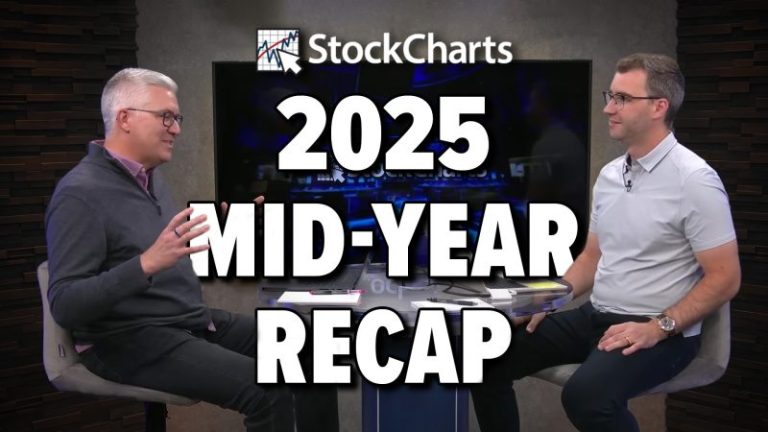
In this special mid-year recap, Grayson Roze sits down with David Keller, CMT, to show how disciplined routines, price-based signals, and a calm process helped them ride the whipsaw instead of getting tossed by it. You’ll see what really happened under the surface, how investor psychology drove the swings, and the exact StockCharts tools they leaned on to stay objective. 

If you’re focused on protecting capital, generating income, and sleeping well at night while still capturing the upside, this is a must-watch. Discover which charts deserve your attention now, what to ignore, and how to prep for the back half of 2025. 

This video premiered on July 23, 2025. Click on the above image to watch on our dedicated Grayson Roze page on StockCharts TV.

You can view previously recorded videos from Grayson at this link.


Walker Lane Resources Ltd. (TSX – V: WLR) (F r ankfurt:6YL ) (‘WLR’ o r t h e ‘ Comp a ny’) is pleased to announce, further to its news releases of June 10, 2025, that it has received TSX Venture Exchange approval to close the non-brokered private placement (the ‘ Private Placement ‘). On July 23, 2025, the Company issued 2,508,335 non-flow through Units (each a ‘ NFT Unit ‘) at a price of $0.12 per NFT Unit, for gross proceeds of $301,000, and 607,143 flow-through Units (each a ‘ FT Unit ‘) at a price of $0.14 per FT Unit, for gross proceeds of $85,000, for aggregate gross proceeds of $386,000. Each NFT Unit is composed of one common share and one common share purchase warrant (each whole warrant, a ‘ NFT Warrant ‘). Each FT Unit is composed of one common share and one common share purchase warrant (each whole warrant, a ‘ FT Warrant ‘), each NFT Warrant and each FT Warrant are exercisable for two (2) years at $0.16 per common share.


An insider of the Company subscribed for an aggregate of 1,178,571 Units, composed of 750,000 NFT Units and 428,571 FT Units. Such participation was considered to be a ‘related party transaction’ as this term is defined in Multilateral Instrument 61-101 – Protection of Minority Securityholders in Special Transactions (‘ MI 61-101 ‘). The Company relied on the exemption from valuation requirement and minority approval pursuant to subsection 5.5(a) and 5.7(a) of MI 61-101, respectively, for the insider participation in the Offering, as the securities do not represent more than 25% of the Company’s market capitalization, as determined in accordance with MI 61-101.


The Company intends to use the proceeds from the sale of FT Units to incur ‘Canadian exploration expenses’ and ‘flow through mining expenditures’ as these terms are defined in the Income Tax Act (Canada) and, in particular, the Company’s exploration program at its Amy and Silver Hart Properties in the Rancheria Silver District, (Yukon/British Columbia), and potentially limited activities at Logjam (Yukon). Such proceeds will be renounced to the subscribers with an effective date not later than December 31, 2025, in the aggregate amount of not less than the total amount of gross proceeds raised from the issue of FT Units. The Company intends to use the net proceeds from the sale of NFT units for its properties in Nevada including Tule Canyon, Cambridge and Silver Mountain and for general working capital. The FT and NFT Units issued under the financing are subject to a four-month hold.


   A     bout Walker Lane Resources Ltd.   


 Walker Lane Resources Ltd. is a growth-stage exploration company focused on the exploration of high-grade gold, silver and polymetallic deposits in the Walker Lane Gold Trend District in Nevada and the Rancheria Silver District in Yukon/B.C. and other property assets in Yukon. The Company intends to initiate exploration programs to advance the drill-ready Tule Canyon (Walker Lane, Nevada) and Amy (Rancheria Silver, B.C.) projects to resource definition stage through proposed drilling campaigns that the Company desires to undertake in the near future.


The company intends to conduct early stage exploration efforts on its Cambridge and Silver Mountain Properties in the Walker Lane Area, Nevada, evaluate its Silver Hart/Blue Heaven property for medium term development, and advancing exploration on its Logjam property in Yukon.


On behalf of the Board:
   ‘Kevin Brewer’    
Kevin Brewer, President, CEO and Director
Walker Lane Resources Ltd.

For Further Information and Investor Inquiries:  


Kevin Brewer, P. Geo., MBA, B.Sc. (Hons), Dip. Mine Eng.
President, CEO and Director
Tel: (709) 327 8013
  kbrewer80@hotmail.com   
 
Telephone (604) 602-0001   
  www.walkerlaneresources.com  
 
Suite 1600-409 Granville St.,
Vancouver, BC, V6C 1T2


   Ne     i     t     h     er     t     h     e     TS     X     Ven     t     ure     Exc     h     a     n     ge     n     o     r     its     Reg     u     l     a     ti     o     n     S     ervices     Prov     i     der     (as     t     h     at     term     is     de     fi     ned     in     t     h     e p     o     li     c     ies     of     the     T     SX     Vent     u     re     Excha     n     ge)     accepts     re     s     ponsi     b     ility     f     or     t     he     ade     q     u     acy     or     accuracy     of     this     release.   


  Cautionary and Forward-Looking Statements  


This press release and related figures, contain certain forward-looking information and forward-looking statements as defined in applicable securities laws (collectively referred to as forward-looking statements). These statements relate to future events or our future performance. All statements other than statements of historical fact are forward-looking statements. The use of any of the words ‘anticipate’, ‘plans’, ‘continue’, ‘estimate’, ‘expect’, ‘may’, ‘will’, ‘project’, ‘predict’, ‘potential’, ‘should’, ‘believe’ ‘targeted’, ‘can’, ‘anticipates’, ‘intends’, ‘likely’, ‘should’, ‘could’ or grammatical variations thereof and similar expressions is intended to identify forward-looking statements. These statements involve known and unknown risks, uncertainties and other factors that may cause actual results or events to differ materially from those anticipated in such forward-looking statements. These statements speak only as of the date of this presentation. These forward-looking statements include, but are not limited to, statements concerning: our strategy and priorities including certain statements included in this presentation are forward-looking statements within the meaning of Canadian securities laws, including statements regarding the Tule Canyon, Cambridge, Silver Mountain, and Shamrock Properties in Nevada (USA), and its Silverknife and Amy properties in British Columbia, the Silver Hart, Blue Heaven and Logjam properties in Yukon all of which now comprise the mineral property assets of WLR. WLR has assumed other assets of CMC Metals Ltd. including common share holdings of North Bay Resources Inc. and all conditions and agreements pertaining to the sale of the Bishop mill gold processing facility and remains subject to the condition of the option of the Silverknife Property with Coeur Silvertip Holdings Ltd. These forward-looking statements reflect the Company’s current beliefs and are based on information currently available to the Company and assumptions the Company believes are reasonable. The Company has made various assumptions, including, among others, that: the historical information related to the Company’s properties is reliable; the Company’s operations are not disrupted or delayed by unusual geological or technical problems; the Company has the ability to explore the Company’s properties; the Company will be able to raise any necessary additional capital on reasonable terms to execute its business plan; the Company’s current corporate activities will proceed as expected; general business and economic conditions will not change in a material adverse manner; and budgeted costs and expenditures are and will continue to be accurate. Actual results and developments may differ materially from results and developments discussed in the forward looking statements as they are subject to a number of significant risks and uncertainties, including: public health threats; fluctuations in metals prices, price of consumed commodities and currency markets; future profitability of mining operations; access to personnel; results of exploration and development activities, accuracy of technical information; risks related to ownership of properties; risks related to mining operations; risks related to mineral resource figures being estimates based on interpretations and assumptions which may result in less mineral production under actual conditions than is currently anticipated; the interpretation of drilling results and other geological data; receipt, maintenance and security of permits and mineral property titles; environmental and other regulatory risks; changes in operating expenses; changes in general market and industry conditions; changes in legal or regulatory requirements; other risk factors set out in this presentation; and other risk factors set out in the Company’s public disclosure documents. Although the Company has attempted to identify significant risks and uncertainties that could cause actual results to differ materially, there may be other risks that cause results not to be as anticipated, estimated or intended. Certain of these risks and uncertainties are beyond the Company’s control. Consequently, all of the forward-looking statements are qualified by these cautionary statements, and there can be no assurances that the actual results or developments will be realized or, even if substantially realized, that they will have the expected consequences or benefits to, or effect on, the Company. The information contained in this presentation is derived from management of the Company and otherwise from publicly available information and does not purport to contain all of the information that an investor may desire to have in evaluating the Company. The information has not been independently verified, may prove to be imprecise, and is subject to material updating, revision and further amendment. While management is not aware of any misstatements regarding any industry data presented herein, no representation or warranty, express or implied, is made or given by or on behalf of the Company as to the accuracy, completeness or fairness of the information or opinions contained in this presentation and no responsibility or liability is accepted by any person for such information or opinions. The forward-looking statements and information in this presentation speak only as of the date of this presentation and the Company assumes no obligation to update or revise such information to reflect new events or circumstances, except as may be required by applicable law. Although the Company believes that the expectations reflected in the forward-looking statements and information are reasonable, there can be no assurance that such expectations will prove to be correct. Because of the risks, uncertainties and assumptions contained herein, prospective investors should not read forward-looking information as guarantees of future performance or results and should not place undue reliance on forward looking information. Nothing in this presentation is, or should be relied upon as, a promise or representation as to the future. To the extent any forward-looking statement in this presentation constitutes ‘future-oriented financial information’ or ‘financial outlooks’ within the meaning of applicable Canadian securities laws, such information is being provided to demonstrate the anticipated market penetration and the reader is cautioned that this information may not be appropriate for any other purpose and the reader should not place undue reliance on such future-oriented financial information and financial outlooks. Future-oriented financial information and financial outlooks, as with forward-looking statements generally, are, without limitation, based on the assumptions and subject to the risks set out above. The Company’s actual financial position and results of operations may differ materially from management’s current expectations and, as a result, the Company’s revenue and expenses. The Company’s financial projections were not prepared with a view toward compliance with published guidelines of International Financial Reporting Standards and have not been examined, reviewed or compiled by the Company’s accountants or auditors. The Company’s financial projections represent management’s estimates as of the dates indicated thereon.



News Provided by GlobeNewswire via QuoteMedia

This post appeared first on investingnews.com

The White House on Wednesday (July 23) released a sweeping national strategy for artificial intelligence (AI), outlining over 90 federal actions designed to strengthen America’s position as the global leader in AI development.

The document fulfills a mandate laid out in President Donald Trump’s January 23 executive order, which called for the removal of what the administration described as “barriers to American leadership” in the field.

Titled “Winning the AI Race: America’s AI Action Plan,” the plan sets priorities across three core pillars: accelerating innovation, building domestic infrastructure and leading on global AI diplomacy and security.

The White House said parts of the strategy will be enacted via executive orders in the coming weeks.

Trump and senior officials are set to promote the initiative at an event on Thursday (July 2) night that will be hosted by the Hill and Valley Forum, a group of influential tech donors and investors.

“President Trump has prioritized AI as a cornerstone of American innovation,” said Michael Kratsios, director of the White House Office of Science and Technology Policy.

“This plan galvanizes federal efforts to turbocharge our innovation capacity, build cutting-edge infrastructure, and lead globally, ensuring that American workers and families thrive in the AI era.”

The new initiative marks a clear departure from previous federal policy, explicitly revoking the Biden-era Executive Order 14110, “Safe, Secure, and Trustworthy Development and Use of Artificial Intelligence,” which had emphasized caution, regulation and ethical oversight. In contrast, the Trump administration’s AI directive aims to remove what it describes as “onerous” federal restrictions and foster what it calls innovation free from “ideological bias.”

The goal, according to Trump administration officials, is to secure the global proliferation of US-made AI technologies and prevent the dominance of foreign alternatives. Domestically, the plan pledges to fast track the permitting process for building new data centers and semiconductor fabs, and to launch national workforce initiatives targeting technical trades essential to AI infrastructure, such as electricians and HVAC technicians.

David Sacks, White House special advisor for AI and crypto, framed the plan in strategic and geopolitical terms.

“Artificial intelligence is a revolutionary technology with the potential to transform the global economy and alter the balance of power in the world,” Sacks said, adding that in order to win the AI race, the US must center its innovation domestically and “avoid Orwellian uses of AI.”

In May, the Trump administration reached agreements with the United Arab Emirates to grant the country access to advanced AI chips — part of a broader US$200 billion cooperation deal announced alongside plans for a 5 gigawatt AI campus in the United Arab Emirates. .

As of now, the White House has not provided a timeline for the full rollout of the 90 outlined actions, but officials said implementation would begin “in the coming weeks.”

Securities Disclosure: I, Giann Liguid, hold no direct investment interest in any company mentioned in this article.

This post appeared first on investingnews.com

Joe Cavatoni, senior market strategist, Americas, at the World Gold Council, explains that market risk and uncertainty are driving gold, with H1 2025 seeing multiple record highs.

‘Think strategically when you think about gold, and keep that allocation in mind,’ he said.

He also shares thoughts on the importance of central bank allocations and the potential impact of tariffs and US economic conditions on gold during the second half of 2025.

Securities Disclosure: I, Georgia Williams, hold no direct investment interest in any company mentioned in this article.

This post appeared first on investingnews.com

Here’s a quick recap of the crypto landscape for Wednesday (July 23) as of 9:00 p.m. UTC.

Get the latest insights on Bitcoin, Ethereum and altcoins, along with a round-up of key cryptocurrency market news.

Bitcoin and Ethereum price update

Bitcoin (BTC) was priced at US$118,148, down by 0.7 percent over the last 24 hours. Its highest valuation on Wednesday was US$118,462, while its lowest valuation was US$117,583.

Bitcoin price performance, July 23, 2025.

Chart via TradingView.

Bitcoin traded lower over the past 24 hours, hovering between $117,000 and $120,000 amid several market pressures.

A major whale moved over US$1.2 billion in dormant BTC, sparking speculation of potential selling.

After a rotation into altcoins, investors took profits following recent highs, while outflows from spot exchange-traded funds (ETFs) signaled weaker institutional demand.

Ethereum (ETH) was priced at US$3,592.65, down by 1.9 percent over the past 24 hours. Its lowest valuation as of Wednesday was US$3,568.86, and its highest was US$3,657.02.

Altcoin price update

  • Solana (SOL) was priced at US$188.86, down by 5.5 percent over 24 hours. Its lowest valuation on Wednesday was US$186.95, and its highest was US$192.58.
  • XRP was trading for US$3.25, down 8.9 percent in the past 24 hours. Its lowest valuation of the day was US$3.18, and its highest valuation was US$3.36.
  • Sui (SUI) is trading at US$3.70, down 5.5 percent over the past 24 hours. Its lowest valuation of the day was US$3.67, and its highest was US$3.84.
  • Cardano (ADA) was trading at US$0.8152, down by 6.9 percent over 24 hours. Its lowest valuation on Wednesday was US$0.8058, and its highest was US$0.8370.

Today’s crypto news to know

PNC Bank and Coinbase partner to advance digital asset solutions

PNC Bank and Coinbase Global (NASDAQ:COIN) have announced a strategic partnership to broaden access to digital asset solutions for PNC’s clients and institutional investors.

The collaboration will leverage Coinbase’s crypto-as-a-service platform, enabling PNC to offer secure and scalable cryptocurrency access. PNC clients will be able to buy, hold and sell cryptocurrencies directly through PNC’s platform.

PNC will also provide essential banking services to Coinbase, signifying a mutual commitment to strengthening the digital financial system. Both companies emphasize that this partnership will meet the increasing demand for secure and streamlined digital asset access.

Goldman Sachs and BNY to launch tokenized money market funds

Goldman Sachs (NYSE:GS) and BNY (NYSE:BK) are preparing to offer institutional investors access to tokenized money market funds, aiming to enhance capital markets with real-time settlement, 24/7 access and increased efficiencies.

BNY clients will soon be able to invest in money market funds with ownership recorded on Goldman Sachs’ private blockchain, as per a Wednesday news release.

“As the financial system transitions toward a more digital, real-time architecture, BNY is committed to enabling scalable and secure solutions that shape the future of finance,” said Laide Majiyagbe, global head of liquidity, financing and collateral at BNY, adding that mirrored tokenization of money market funds is the first step.

This initiative involves major players such as BlackRock (NYSE:BLK), Fidelity Investments, Federated Hermes and the asset management divisions of Goldman and BNY.

Tokenized money market funds offer a contrast to interest-bearing stablecoins, which are specifically prohibited under the GENIUS Act, which was signed into law last week. They provide yield, which makes them a low-volatility tool for hedge funds, pensions and corporations.

SEC halts Bitwise crypto index ETF conversion for review

On Tuesday (July 22), the US Securities and Exchange Commission’s (SEC) Division of Trading and Markets approved the Bitwise 10 Crypto Index to convert to an ETF, only to immediately pause it for review.

In a letter issued later that day, SEC Assistant Secretary Sherry Haywood said that the order will remain “stayed until the Commission orders otherwise.” Bloomberg ETF analyst Eric Balchunas has suggested that the SEC might be delaying its approval until it establishes a listing standard for crypto ETFs.

Bitwise had applied for this conversion in November for its fund, which offers exposure to a range of cryptocurrencies.

Nate Geraci, president of NovaDius Wealth Management, described the situation as “bizarre,” drawing parallels to the Grayscale Digital Large Cap ETF conversion, which experienced a similar approval and subsequent pause on July 1.

Bitcoin millionaires surge by 16,000 in 2025, according to report

Nearly 16,000 new Bitcoin wallets have crossed the million-dollar threshold since Donald Trump assumed the presidency in January 2025, according to a Finbold report. The number of Bitcoin millionaires is up from 132,842 in November 2024 to 192,205 as of July 20, marking a 45 percent increase in just eight months.

Large holders with over US$10 million in BTC also saw gains exceeding 16 percent in the same period.

The surge has been linked to renewed investor optimism following Trump’s re-election, along with clear signals of regulatory support and clarity for digital assets.

A significant boost came this week when the US House passed the Genius Act. The legislation, expected to streamline compliance for institutions, is widely seen as the most comprehensive federal crypto framework to date.

The rapidly changing policy environment has encouraged capital inflows and bolstered confidence in US-based crypto markets, with the resulting daily average tallying to 88 new Bitcoin millionaires in 2025 alone.

South Korea warns fund managers to reduce exposure to crypto stocks

South Korea’s Financial Supervisory Service (FSS) has issued informal warnings to asset managers over their exposure to crypto-related stocks and ETFs. According to the Korea Herald, firms with significant holdings in US-listed crypto companies such as Coinbase and Strategy (NASDAQ:MSTR) were reportedly told to scale back.

The directive follows the FSS’s longstanding 2017 stance prohibiting direct investment in virtual assets by financial institutions, despite recent global shifts in crypto regulation. While the agency has been reviewing possible easing of crypto rules, officials reportedly said that licensed entities must continue observing current guidelines.

The FSS has not yet issued a formal statement regarding the report.

PayPal unveils cross-border wallet platform

PayPal (NASDAQ:PYPL) has launched PayPal World, a cross-border payments network that integrates several of the world’s largest digital wallets, aiming to simplify international commerce for billions.

The platform’s initial partners include India’s UPI (via NPCI International), China’s Weixin Pay (via Tenpay Global) and PayPal’s own services including Venmo.

A memorandum of understanding has also been signed with Mercado Pago in Latin America.

According to PayPal CEO Alex Chriss, the initiative allows users to pay with their native wallets regardless of location. Chriss called it a potential “game changer” for frictionless payments in travel and e-commerce.

“The challenge of moving money across borders is incredibly complex, and yet this platform will make it so simple for nearly two billion consumers and businesses,’ Chriss said a recent press release.

Securities Disclosure: I, Giann Liguid, hold no direct investment interest in any company mentioned in this article.

Securities Disclosure: I, Meagen Seatter, hold no direct investment interest in any company mentioned in this article.

This post appeared first on investingnews.com