Author

admin

Browsing

President Donald Trump said Wednesday it was ‘highly unlikely’ he would fire Jerome Powell as chair of the Federal Reserve.

His statements, made in the Oval Office, come less than 24 hours after telling a room full of Republican lawmakers that he was considering doing so.

“No, we’re not planning on doing anything,” Trump told reporters in response to a question about whether he wanted to fire Powell.

“I don’t rule out anything but I think it’s highly unlikely unless he has to leave for fraud,” Trump said, while criticizing Powell’s management of a Fed renovation project that the White House had recently floated as a pretext for removing the Fed chair.

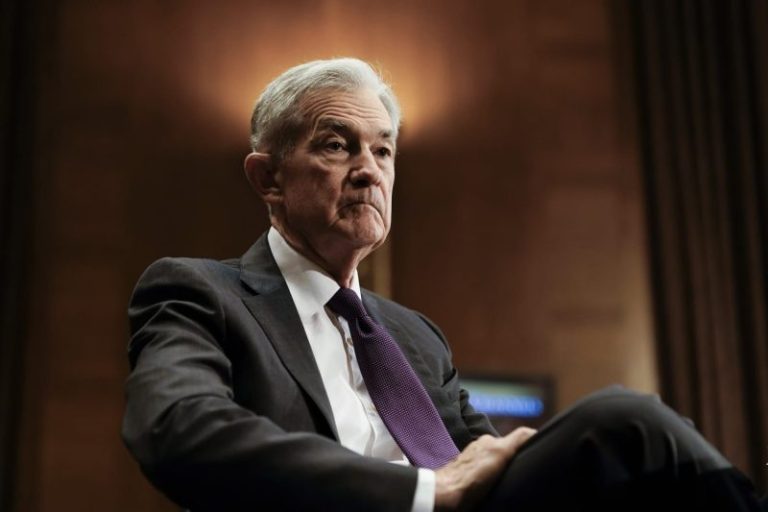
Fed Chair Jerome Powell testifies before the Senate Banking, Housing and Urban Affairs Committee on June 25. Kent Nishimura / Getty Images

The president had asked GOP lawmakers late Tuesday how they felt about firing the Fed chair, according to a senior White House official. They expressed approval for firing him. The president then indicated he likely would soon but that no final decision had been made.

Still, Rep. Anna Paulina Luna, R-Fla., posted on X on Tuesday night that Powell’s firing was ‘imminent,’ something that prompted a sell-off in stock futures before Wednesday’s market open. By noon Wednesday, major stock indexes had recovered to trade almost flat on the day.

CBS News first reported the meeting. A Fed official declined comment to CNBC on the report about the Trump meeting Tuesday, which came after Republicans blocked a procedural vote on crypto legislation that the president favors.

Trump and other White House figures have launched a multipronged attack on Powell to push the central bank to lower its key borrowing rate. Most recently, they have blasted Powell over renovations to the Fed’s Washington headquarters, raising suspicion that Trump could try to remove him for cause.

A recent Supreme Court decision indicated that the president does not have the authority to remove Fed officials at will.

In a CNBC interview Wednesday, Rep. French Hill, R-Ark., the chair of the House Financial Services Committee, repeated that “I don’t see” Trump firing Powell. Treasury Secretary Scott Bessent also told Bloomberg News on Tuesday that he didn’t expect Trump to move in that direction.

However, Luna, who on Tuesday joined with other party members in blocking the crypto initiative, said on X that a move against Powell is forthcoming.

“Hearing Jerome Powell is getting fired! From a very serious source,” she said, later adding, “I’m 99% sure firing is imminent.”

This post appeared first on NBC NEWS

Former Biden administration staffer Annie Tomasini is expected to appear before congressional investigators on Friday after being subpoenaed by House Oversight Committee Chairman James Comer, R-Ky.

Tomasini, former Assistant to the President and Deputy Chief of Staff for ex-President Joe Biden, was previously scheduled to appear for a voluntary transcribed interview on Friday.

A committee aide told Fox News Digital earlier this week that Tomasini’s counsel requested the subpoena, but did not say why. 

When she arrives for the 10 a.m. closed-door deposition on Friday, she will be the third ex-Biden administration aide to come under subpoena in Comer’s probe in recent weeks.

Comer is investigating allegations that Former President Joe Biden’s former top White House aides covered up signs of his mental and physical decline while in office, and whether any executive actions were commissioned via autopen without the president’s full knowledge. Biden allies have pushed back against those claims.

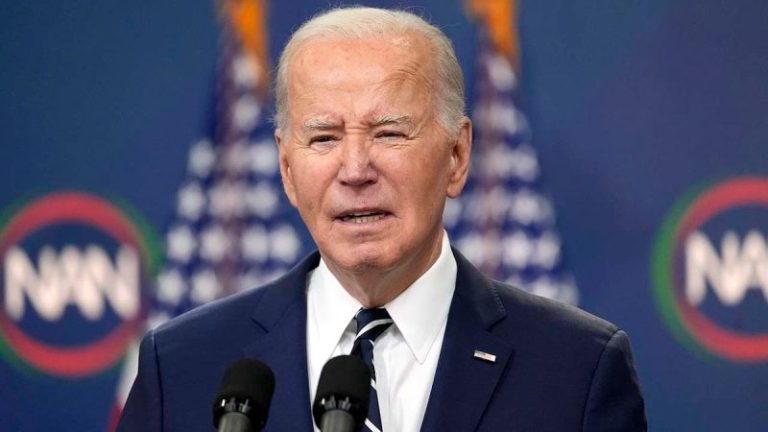
In an interview with The New York Times on Thursday, Biden affirmed he ‘made every decision’ on his own.

Just before Tomasini, House investigators heard from Anthony Bernal, a longtime aide to ex-first lady Jill Biden. 

Bernal pleaded the Fifth Amendment on all questions about Biden and was out of the committee room less than an hour after going in.

Lawmakers are largely not expected to attend the closed-door deposition, which is traditionally staff-led.

Comer has been to several so far, and progressive firebrand Rep. Jasmine Crockett, D-Texas, has made surprise appearances as well.

CNN anchor Jake Tapper and Axios political correspondent Alex Thompson revealed in their book, ‘Original Sin,’ that Tomasini and Bernal ‘loaded a written Q&A into a prompter ahead of a local interview – a document that the campaign had used in prep with Biden.’

Tomasini and Bernal brought out the teleprompter as his aides were trying to soften his blunders as Biden struggled to stay on message, according to the book. But the teleprompter fiasco became an easy attack line throughout Biden’s re-election campaign, as President Donald Trump ‘weaved’ through his myriad unscripted moments.

The book described how Tomasini and Bernal grew closer to Biden during the pandemic, eventually becoming Joe and Jill Biden’s most trusted aides. 

Tapper and Thompson describe the ‘intensely loyal’ duo – Tomasini and Bernal – as taking on an ‘older-brother-and-little-sister vibe’ among Biden’s inner circle.  

Bernal and Tomasini later took on some of the residence staffers’ roles in the White House. Tapper and Thompson said the aides ‘had all-time access to the living quarters, with their White House badges reading ‘Res’ – uncommon for such aides.’

‘The significance of Bernal and Tomasini is the degree to which their rise in the Biden White House signaled the success of people whose allegiance was to the Biden family – not to the presidency, not to the American people, not to the country, but to the Biden theology,’ the authors wrote. 

A source familiar with the Biden team’s thinking called House Republicans’ probe ‘dangerous’ and ‘an attempt to smear and embarrass.’

‘And their hope is for just one tiny inconsistency between witnesses to appear so that Trump’s DOJ prosecute his political opponents and continue his campaign of revenge,’ the source said.

This post appeared first on FOX NEWS

Congress is officially sending a package detailing $9 billion in spending cuts to President Donald Trump’s desk, minutes after midnight on Friday.

The bill, called a ‘rescissions package,’ was approved by the House of Representatives in a late-night 216 to 213 vote after intense debate between Republicans and Democrats. Just two Republicans, Reps. Brian Fitzpatrick, R-Pa., and Mike Turner, R-Ohio, voted in opposition.

Friday was also the deadline for passing the legislation, otherwise the White House would be forced to re-obligate those funds as planned.

It’s a victory for House Speaker Mike Johnson, R-La., but a mostly symbolic one – the spending cuts bill was largely seen by Trump allies as a test run of a fiscal claw-back process not used in more than two decades.

‘This bill tonight is part of continuing that trend of getting spending under control. Does it answer all the problems? No. $9 billion, I would say is a good start,’ House Majority Leader Steve Scalise, R-La., said during debate on the bill.

When signed by Trump, it will block $8 billion in funding to the U.S. Agency for International Development (USAID) and $1 billion to the Corporation for Public Broadcasting for the remainder of the fiscal year. The dollars had been allocated by Congress for the duration of fiscal year 2025.

Republicans celebrated it as a victory for cutting off the flow of U.S. taxpayer dollars to what they called ‘woke’ initiatives abroad, while Democrats accused the right of gutting critical foreign aid.

Rescissions packages are a way for the president to have input in Congress’ yearly appropriations process. The White House sends a proposal to block some congressionally obligated funds, which lawmakers have 45 days to get through the House and Senate.

Republicans have also been able to sideline Democrats so far, with the rescissions process lowering the Senate’s threshold for passage from 60 votes to 51.

The last time a rescissions package was signed into law was 1999.

Consideration of the bill began with a House Rules Committee hearing at 6 p.m. on Thursday evening.

Democrats attempted multiple times throughout the process to weaponize the ongoing inter-GOP fallout over the Jeffrey Epstein case, both in the House Rules Committee and on the chamber floor during debate on the bill. 

Multiple calls were made for votes to force the release of the so-called Epstein ‘files.’

‘If every Republican votes to block our attempt to release the records, they are telling Epstein’s victims, you don’t matter as much as our political convenience. And that should disgust every single one of us,’ said Rep. Jim McGovern, D-Mass.

Far-right GOP figures are demanding accountability, while Trump has called on his base to move on after the Department of Justice (DOJ) signaled the case was closed.

Initial plans to begin advancing the bill earlier in the day were quickly scuttled, with Republicans on the committee being concerned about being put into a difficult position with potential Epstein votes.

In the end, a compromise led to the House Rules Committee advancing a separate nonbinding measure dealing with Epstein transparency, on a parallel track to the rescissions bill.

‘All the credible evidence should come out. I’ve been very clear with members of the House Rules Committee. Republicans have been taking the incoming criticism because they voted to stop the Democrats’ politicization of this, and they’re trying to stick to their job and move their procedural rules to the floor so we can do our work and get the rescissions done for the American people,’ Johnson told reporters during negotiations earlier in the day.

Democrats nevertheless pressed on, mentioning Epstein multiple times on the House floor. McGovern even briefly led a chant of ‘release the files’ when closing debate on the bill.

Republicans, in turn, accused Democrats of hypocrisy.

‘Interesting how they talk about Jeffrey Epstein, because for four years, Mr. Speaker, President Joe Biden had those files, and not a single Democrat that you’re hearing tonight tried to get those files released,’ House Majority Leader Steve Scalise, R-La., said at one point during the House floor debate.

The House initially voted to advance a $9.4 billion rescissions package, but it was trimmed somewhat in the Senate after some senators had concerns about cutting funding for HIV/AIDS prevention research in Africa.

Trump is expected to sign the bill on Friday.

This post appeared first on FOX NEWS

What can you get for $9.4 billion?

3G Capital recently purchased footwear giant Skechers for $9.4 billion. 

$9.4 billion could cover your rent for a pretty nice apartment in New York City for more than 40,000 years. 

Yes, it will just be you and the cockroaches by then. 

Or, you could pay the cost of every major disaster in the past four decades – ranging from Chernobyl to Fukushima to Hurricane Sandy. 

But $9.4 billion isn’t a lot when cast against nearly $7 trillion in annual spending by the federal government. 

And it’s really not much money when you consider that the U.S. is about slip into the red to the tune of $37 trillion. 

Which brings us to the Congressional plan to cancel spending. That is, a measure from Republicans and the Trump Administration to rescind spending lawmakers already appropriated in March. The House and Senate are now clawing back money lawmakers shoved out the door for the Corporation for Public Broadcasting and foreign aid programs under USAID. The original proposal cut $9.4 billion. But that figure dwindled to $9 billion – after the Senate restored money for ‘PEPFAR,’ a President George W. Bush era program to combat AIDS worldwide. 

In other words, you may have a couple thousand years lopped off from your rent-controlled apartment in New York City. Of course that hinges on what Democratic mayoral nominee Zorhan Mamdani decides to do, should he win election this fall. 

Anyway, back to Congressional spending. Or ‘un-spending.’ 

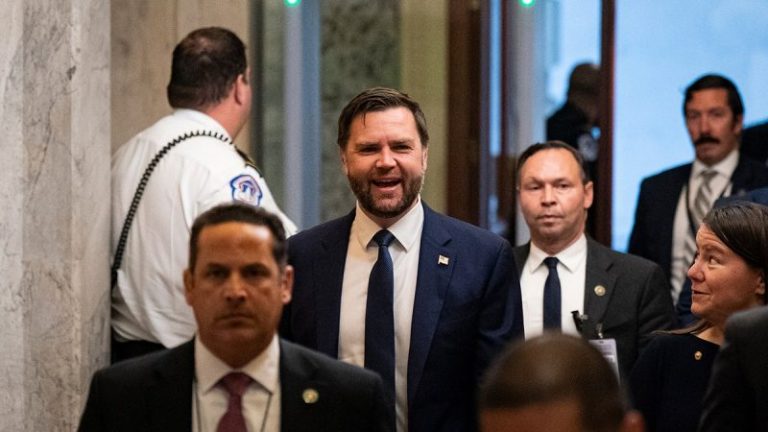
The House passed the original version of the bill in June, 216-214. Flip one vote and the bill would have failed on a 215-215 tie. Then it was on to the Senate. Republicans had to summon Vice President Vance to Capitol Hill to break a logjam on two procedural votes to send the spending cancellation bill to the floor and actually launch debate. Republicans have a 53-47 advantage in the Senate. But former Senate Majority Leader Mitch McConnell, R-Ky., along with Sens. Lisa Murkowski, R-Alaska and Susan Collins, R-Maine, voted nay – producing a 50-50 tie.

Fox is told some Senate Republicans are tiring of McConnell opposing the GOP – and President Trump – on various issues. That includes the nay votes to start debate on the spending cancellation bill as well as his vote against the confirmation of Defense Secretary Pete Hegseth in January.

‘He used to be the Leader. He was always telling us we need to stick together,’ said one GOP senator who requested anonymity. ‘Now he’s off voting however he wants? How time flies.’

Note that McConnell led Senate Republicans as recently as early January.

But McConnell ultimately voted for the legislation when the Senate approved it 51-48 at 2:28 am ET Thursday morning. 

Murkowski and Collins were the only noes. The services of Vice President Vance weren’t needed due to McConnell’s aye vote and the absence of Sen. Tina Smith, D-Minn. She fell ill and was admitted to George Washington Hospital for exhaustion. 

As for the senior senator from Alaska, one GOP senator characterized it as ‘Murkowski fatigue.’

‘She always asking. She’s always wanting more,’ groused a Senate Republican.

Murkowski secured an agreement on rural hospitals in exchange for her vote in favor of the Big, Beautiful Bill earlier this month. However, Murkowski did not secure more specificity on the DOGE cuts or help with rural, public radio stations in Alaska on the spending cut plan.

‘My vote is guided by the imperative of coming from Alaskans. I have a vote that I am free to cast, with or without the support of the President. My obligation is to my constituents and to the Constitution,’ said Murkowski. ‘I don’t disagree that NPR over the years has tilted more partisan. That can be addressed. But you don’t need to gut the entire Corporation for Public Broadcasting.’ 

In a statement, Collins blasted the Trump administration for a lack of specificity about the precision of the rescissions request. Collins, who chairs the Senate Appropriations Committee in charge of the federal purse strings, also criticized the administration a few months ago for a paucity of detail in the President’s budget. 

‘The rescissions package has a big problem – nobody really knows what program reductions are in it.  That isn’t because we haven’t had time to review the bill,’ said Collins in a statement. ‘Instead, the problem is that OMB (the Office of Management and Budget) has never provided the details that would normally be part of this process.’

Collins wasn’t the only Republican senator who worried about how the administration presented the spending cut package to Congress. Senate Armed Services Committee Chairman Roger Wicker, R-Miss.,  fretted about Congress ceding the power of the purse to the administration. But unlike Collins, Wicker supported the package.

‘If we do this again, please give us specific information about where the cuts will come. Let’s not make a habit of this,’ said Wicker. ‘If you come back to us again from the executive branch, give us the specific amounts in the specific programs that will be cut.’

DOGE recommended the cuts. In fact, most of the spending reductions targeted by DOGE don’t go into effect unless Congress acts. But even the $9.4 billion proved challenging to cut. 

‘We should be able to do that in our sleep. But there is looking like there’s enough opposition,’ said Sen. Rand Paul, R-Ky., on Fox Business.

So to court votes, GOP leaders salvaged $400 million for PEPFAR.

‘There was a lot of interest among our members in doing something on the PEPFAR issue,’ said Senate Majority Leader John Thune, R-S.D. ‘You’re still talking about a $9 billion rescissions package – even with that small modification.’

The aim to silence public broadcasting buoyed some Republicans.

‘North Dakota Public Radio – about 26% of their budget is federal funding. To me, that’s more of an indictment than it is a need,’ said Sen. Kevin Cramer, R-N.D. 

But back to the $9 billion. It’s a fraction of one-tenth of one percent of all federal funding. And DOGE recommended more than a trillion dollars in cuts.

‘What does this say for the party if it can’t even pass this bill, this piddling amount of money?’ yours truly asked Sen. John Kennedy, R-La.

‘I think we’re going to lose a lot of credibility. And we should,’ replied Kennedy.

But the House needed to sync up with the Senate since it changed the bill – stripping the cut for AIDS funding. House conservatives weren’t pleased that the Senate was jamming them again – just two weeks after major renovations to the House version of the Big, Beautiful Bill. But they accepted their fate.

‘It’s disappointing that we’re $37 trillion in debt. This to me was low-hanging fruit,’ said Rep. Eric Burlison, R-Mo. ‘At the end of the day, I’ll take a base hit, right? It’s better than nothing.’

White House Budget Director Russ Vought is expected to send other spending cancellation requests to Congress in the coming months. The aim is to target deeper spending reductions recommended by DOGE. 

But it doesn’t auger well for future rescissions bills if it’s this much of a battle to trim $9 trillion.

What can you get for that much money? For Republicans, it’s not much. 

Republicans were swinging for the fences with spending cuts.

But in the political box score, this is recorded as just a base hit.

This post appeared first on FOX NEWS

Join Grayson as he shares how to streamline your analysis using custom ChartStyles. He demonstrates how to create one-click ChartStyles tailored to your favorite indicators, use style buttons to quickly switch between clean, focused views, and build a chart-leveling system that reduces noise and helps you stay locked in on what matters most.

This video originally premiered on July 16, 2025. Click on the above image to watch on our dedicated Grayson Roze page on StockCharts TV.

You can view previously recorded videos from Grayson at this link.

This week, Joe analyzes all 30 Dow Jones Industrial Average stocks in a rapid-fire format, offering key technical takeaways and highlighting potential setups in the process. Using his multi-timeframe momentum and trend approach, Joe shows how institutional investors assess relative strength, chart structure, ADX signals, and support zones. From Boeing’s triple bottom to Nvidia’s powerful trend, not to mention Microsoft’s key pullback level, this session is packed with insights for traders looking to stay in sync with the market’s leaders and laggards.

Joe has been working with institutional portfolio managers for the past 35 years, and this video shows the type of reads he gives to them during their phone calls.

The video premiered on July 16, 2025. Click this link to watch on Joe’s dedicated page. 

Archived videos from Joe are available at this link. Send symbol requests to stocktalk@stockcharts.com; you can also submit a request in the comments section below the video on YouTube. Symbol Requests can be sent in throughout the week prior to the next show.

From the S&P 500’s pause within a bullish trend, to critical support levels in semiconductors, plus bullish breakouts in Ethereum and Bitcoin, Frank highlights how the market’s recent consolidation may lead to major upside. In this video, Frank explores how to use StockCharts to layer chart annotations, trend indicators, and pattern analysis for stronger evidence-based decisions. He also compares current chart structures to 2020-2021 in order to better understand what could be next.

This video originally premiered on July 16, 2025.

You can view previously recorded videos from Frank and other industry experts at this link.

Unlock the power of automated options trading with Tony Zhang, Chief Strategist at OptionsPlay. In this exclusive training, Tony reveals how the OptionsPlay Strategy Center, integrated with StockCharts.com, transforms the way traders find, analyze, and execute options strategies.

Follow along as Tony illustrates how to use OptionsPlay and StockCharts eliminate manual scans, reduce time spent digging through option chains, and zero in on high-probability trades with real-time, personalized insights. Throughout the video, Tony will explore how you can:

  • Automate strategy selection using technical scans.
  • Identify optimal call and put spreads with the best risk-reward ratios.
  • Generate income through conservative covered calls.
  • Integrate your scans with personalized watchlists and chartlists.

Whether you’re selling credit spreads, buying calls, or seeking income from covered calls, this tool will change the way you trade — forever.

Check out the OptionsPlay plugin for StockCharts here!

This video premiered on July 15, 2025.

Major miner Barrick Mining (TSX:ABX,NYSE:B) is reportedly in advanced talks to sell its last remaining Canadian mine, Hemlo, to Discovery Silver (TSX:DSV,OTCQX:DSVSF).

Citing people familiar with the matter, Bloomberg reported on Tuesday (July 15) that the discussions, which began in April, have reached the final stages, although a deal has not yet been finalized.

If completed, the sale of the Ontario-based asset would mark Barrick’s full exit from gold mining in its home country, continuing a broader strategy of offloading smaller, less profitable assets as gold re-enters the spotlight.

Gold has climbed to record highs this year, reaching the US$3,500 per ounce level as geopolitical shocks — including US President Donald Trump’s tariff campaign and ongoing global conflicts — have driven investors toward safe havens.

That rally has reignited consolidation in the mining sector, with large producers like Barrick and Newmont (TSX:NGT,NYSE:NEM) streamlining their portfolios and junior miners seeking to grow.

Discovery Silver has emerged as an active buyer during this time.

In January, the company acquired Newmont’s Porcupine gold mine in Ontario for up to US$425 million. Buying Hemlo would deepen its footprint in Canada at a time when investor interest in North American assets is rising.

Mali seizes more gold from Barrick

For Barrick, the possible sale comes as the company faces legal and political headwinds in Mali, where its Loulo-Gounkoto complex has been embroiled in a bitter standoff with the ruling military junta.

On July 10, helicopters operated by Mali’s military landed unannounced at the Loulo-Gounkoto site and removed over a metric ton of gold — worth over US$117 million at current prices — without Barrick’s consent. The gold was likely taken for sale by the government-appointed provisional administrator that now oversees the site, the company said.

This is the second such seizure this year, following a January incident in which 3 metric tons of gold were taken and all exports were blocked, forcing Barrick to suspend operations.

Barrick has since launched international arbitration proceedings at the International Center for Settlement of Investment Disputes (ICSID), citing “violations of its legal rights.”

“I want to reaffirm Barrick’s commitment to Mali, even as we navigate extraordinary and unprecedented challenges,” CEO Mark Bristow said on July 12. “While we continue to engage constructively with the government of Mali, the ICSID process provides the legal certainty and international oversight necessary to resolve this dispute definitively.”

Barrick maintains that the provisional administration of the mine, which came after a controversial local court order in June, is unlawful. The firm also says it was never formally notified of the administrator’s appointment and was merely told that Samba Touré, a former Barrick employee and advisor to the mining ministry, would act as a liaison.

The government’s moves coincide with President Assimi Goïta’s latest political maneuver — a new law granting him an indefinite mandate “until the country is pacified.” Goïta seized power in a 2021 coup, his second in less than a year, and has since tightened control over the judiciary and state institutions.

Securities Disclosure: I, Giann Liguid, hold no direct investment interest in any company mentioned in this article.

This post appeared first on investingnews.com

The gold price soared to new record highs during the second quarter of 2025, the most recent coming when it climbed to C$4,663.85, or US$3,433.47, on June 13.

Several factors fueled gold price momentum toward the end of the second quarter, including an escalation in Middle East tensions as Israel and Iran entered into direct conflict. Although a cease fire was announced, it came after the United States dropped several 30,000 pound bombs on key Iranian nuclear sites.

Additional support for gold has come from continued uncertainty in global financial markets as the US’s tariff strategy continues.

Since the beginning of the year, investors have sought the relative safety of gold and gold-backed investment products, which have pushed the price up more than 25 percent.

Against that backdrop, which TSX-listed gold stocks have performed the best? The companies listed below have been the top performers this year. Data was retrieved on July 2, 2025, using TradingView’s stock screener. Only companies with market capitalizations greater than C$50 million are included.

1. Belo Sun (TSX:BSX)

Year-to-date gain: 276.47 percent
Market cap: C$144.68 million
Share price: C$0.32

Belo Sun Mining is an exploration and development company focused on advancing its Volta Grande gold project in Brazil.

The property covers approximately 2,400 hectares within the Tres Palmeiras greenstone belt in Pará State, Brazil. The company has been working on the project since 2003, and acquired necessary development permits in 2014 and 2017.

A 2015 mineral reserve estimate demonstrated a proven and probable reserve of 3.79 million ounces of gold from 116 million metric tons of ore with an average gold grade of 1.02 per metric ton (g/t).

Development at the site stalled in 2018 after a federal judge ruled that the Federal Brazilian Institute of the Environment (IBAMA) would be the competent authority for issuing environmental permits. The decision was overturned in 2019, with the Secretariat of Environment and Sustainability of the State of Pará (SEMAS) reassuming its permitting authority. The decision was once again reversed in September 2023, returning authority to IBAMA.

On January 23, Belo Sun announced that the Federal Court of Appeals had reassigned SEMAS as the permitting authority for the Volta Grande project. The company said it was pleased with the decision, as the agency is familiar with the project and enjoys a constructive and transparent relationship with it.

The most recent news came on June 23, when the company announced that shareholders had approved a renewal of the company’s governance structure and elected four new directors to the board. Four of the board’s six members are now either Brazilian or have spent significant parts of their careers working in Brazil.

Shares in Belo Sun reached a year-to-date high of C$0.35 on June 16.

2. Euro Sun Mining (TSX:ESM)

Year-to-date gain: 200 percent
Market cap: C$53.71 million
Share price: C$0.135

Euro Sun Mining is a development-stage company advancing its Rovina Valley copper-gold project in Romania. The project’s mining license received full approval for 20 years in 2018, with the option to renew it in five year increments.

An updated feasibility study from March 2022 demonstrated the project’s economics, showing a post-tax net present value of US$512 million and an internal rate of return of 20.5 percent, assuming a base case gold price of US$1,675 per ounce and a copper price of US$3.75 per pound.

Proven and probable mineral reserve estimates for the site include 1.84 million ounces of gold and 197,522 metric tons of copper from 123.3 million metric tons of ore with an average grade of 0.47 g/t gold and 0.16 percent copper.

Shares in Euro Sun saw their most significant gains around the same time as a March 25 announcement that the EU included Rovina Valley on its first list of strategic assets. The inclusion, which Euro Sun applied for in May 2024, will enable the company to expedite permitting at Rovina Valley and shorten the development timeline.

On May 7, Euro Sun reported it met with Romania’s Minister of the Environment to discuss the advancement of the project. Both parties agreed that a single point of contact was needed to ensure compliance and fulfill requirements under the CRMA framework. The company plans to submit an updated environmental act in the near future.

On June 20, Euro Sun reported it signed a copper concentrates prepayment facility for up to US$200 million with private metals trader Trafigura, with the funding going towards the necessary permitting and investment to advance Rovina over the next 18 months.

Shares in Euro Sun reached a year-to-date high of C$0.145 on June 2.

3. Collective Mining (TSX:CNL)

Year-to-date gain: 165.05 percent
Market cap: C$1.26 billion
Share price: C$15.85

Collective Mining is a gold, copper and silver exploration company with focused interests in Caldas, Colombia.

Its two projects, Guayabales and San Antonio, consolidate large portions of a mineral belt that surrounds Aris Mining’s (TSX:ARIS,NYSE:ARMN)Marmato mine and within a region with 10 operating mines.

The Guayabales project comprises 26 claims spanning a total area of 4,780.98 hectares. Collective Mining has conducted extensive exploration at the property in 2025, with a primary focus on expanding the Apollo zone. The company also drilled multiple look-alike targets.

The most recent exploration report was released on June 30, when the company announced the discovery of a new high-grade vein system, with a highlighted assay of 534 g/t gold over 0.67 meters. However, the company stated that drilling was retargeted after results from a gravimetric survey indicated that the drill hole was outside the mineralized breccia body.

On June 23, Collective accelerated its agreement to acquire a 100 percent stake in the Guayabales property. Under the original agreement, Collective had until 2032 to make the required payments and incur the necessary exploration expenditures.

The company reported that the financial considerations remained the same under the amended agreement, but C$2 million would be paid immediately, with an additional C$2 million paid within one month of the title transfer request being filed and C$2.3 million after two months. The remaining C$3.5 million will now be paid out in six equal installments over a three-year period from the date of the amended agreement.

Shares in Collective Mining reached a year-to-date high of C$15.85 on July 2.

4. Starcore International (TSX:SAM)

Year-to-date gain: 150 percent
Market cap: C$19.06 million
Share price: C$0.325

Starcore International is a gold exploration and mining company with assets in Mexico, Canada and Côte d’Ivoire. Its primary asset is the San Martin mine in Queretaro, Mexico.

In the company’s fourth-quarter production results, released on May 13, it reported reaching a significant commissioning milestone in the new processing circuit and milling 5,000 metric tons of stockpiled ore.

The mine produced 3,242 gold-equivalent ounces during the quarter, up 3 percent from 2,268 ounces during the previous quarter. The company added that it was continuing to explore and develop a new area in the southern section of the mine.

Outside its Mexican operations, the main focus throughout 2025 has been its Kimoukro gold project in Côte d’Ivoire.

On April 9, Starcore reported results from 2024 exploration work at the project and an update on its activities at the project. In 2024, the company completed 55 line kilometers of induced polarization geophysical and ground magnetic surveying, along with a 355 hole, 2,988 meter auger drilling campaign.

Based on the results from the drilling, which aimed to confirm an identified gold anomaly in the topsoil, the anomaly is about 2.5 kilometers long and 500 to 800 meters wide, with an average grade of more than 20 parts per billion gold.

In the update, Starcore reported it established a field office during Q1 2025 and is completing a soil sampling program covering 5.5 square kilometers and 1,300 samples up to a depth of 1 meter.

Shares in Starcore reached a year-to-date high of C$0.325 on June 4.

5. Troilus Gold (TSX:TLG)

Year-to-date gain: 139.9 percent
Market cap: C$272.7 million
Share price: C$0.69

Troilus Gold is advancing its namesake property in Northern Québec, Canada.

The project is situated within the region covered by Plan Nord, a 25 year, C$80 billion development initiative focused on mining launched by the Government of Québec.

A May 2024 feasibility study revealed financials with a post-tax net present value of US$884.5 million, an internal rate of return of 14 percent and a payback period of 5.7 years based on a gold price of US$1,975 per ounce.

The included mineral resource estimate reports a probable mineral reserve of 6.02 million ounces of gold from 380 million metric tons of ore at an average grade of 0.49 g/t gold. It also hosts probable copper and silver reserves of 484 million pounds and 12.15 million ounces respectively.

Troilus has spent much of 2025 raising funds for the project’s development. The most significant came on March 13, when the company announced that it executed a mandate letter for a non-binding term sheet for a debt financing package of up to US$700 million.

The company noted that it had followed up on four letters of intent, resulting in a total potential funding of up to US$1.3 billion.

More recently, Troilus announced on June 18 that it had entered into an offtake agreement for gold-copper concentrate with German smelting company Aurubis (OTC Pink:AIAGF,XETRA:NDA).

The agreement is being executed in connection with the previously announced letter of intent for US$700 million in funding. According to Troilus, this includes a loan guarantee of up to US$500 million from a firm representing the German Federal Ministry of Economic Affairs and Climate Action.

Shares in Troilus reached a year-to-date high of C$0.73 on June 17.

Securities Disclosure: I, Dean Belder, hold no direct investment interest in any company mentioned in this article.

This post appeared first on investingnews.com