
Author

admin

Browsing

/NOT FOR DISSEMINATION IN THE UNITED STATES OR THROUGH U.S. NEWSWIRE SERVICES/

finlay minerals ltd. (TSXV: FYL) (OTCQB: FYMNF ) (‘Finlay’ or the ‘Company’) is pleased to announce that it intends to complete a non-brokered private placement (the ‘ Private Placement ‘) consisting of the issuance of any combination of: (i) common shares of the Company to be issued on a flow-through basis under the Income Tax Act ( Canada ) (each, a ‘ FT Share ‘) at a price of $0.11 per FT Share, and (ii) non-flow-through units of the Company (each, a ‘ NFT Unit ‘) at a price of $0.10 per NFT Unit, for aggregate gross proceeds to the Company of up to $1,000,000 . The Private Placement is subject to a minimum offering amount of $500,000 to be raised through any combination of FT Shares and NFT Units.

Each NFT Unit will be comprised of one non-flow-through common share of the Company (each, a ‘ NFT Share ‘) and one non-flow-through common share purchase warrant (a ‘ Warrant ‘). Each Warrant will be exercisable by the holder thereof to acquire one NFT Share at an exercise price of $0.20 per NFT Share for a period of two years from the date of issuance of the Warrant (the ‘ Warrant Expiry Date ‘), subject to acceleration. The Warrant Expiry Date may, at the Company’s sole discretion, be accelerated if at any time following the Closing Date (as defined herein), the common shares of the Company trade at a daily volume-weighted average trading price above $0.30 per common share for a period of 30 consecutive trading days on the TSX Venture Exchange (the ‘ TSXV ‘) or on such other stock exchange where the majority of the trading occurs (the ‘ Trading Target ‘) and the Company provides notice to the Warrant holders by way of press release announcing that such Trading Target has been achieved, provided that the accelerated expiry date of the Warrants falls on the earlier of (unless exercised by the holder prior to such date) (the ‘ Accelerated Expiry Date ‘): (i) the 30th day after the Company provides notice to the Warrant holders of its intention to accelerate the Warrant Expiry Date; and (ii) the Warrant Expiry Date. The failure of the Company to give notice in respect of a Trading Target will not preclude the Company from giving notice of any subsequent Trading Target. All Warrants that remain unexercised following the Accelerated Expiry Date shall immediately expire and all rights of holders of such Warrants shall be terminated without any compensation to such holders.

The Company intends to use the gross proceeds of the Private Placement for exploration of the Company’s SAY, JJB and Silver Hope properties, and for general working capital purposes. The Company will use the gross proceeds from the issuance of FT Shares to incur ‘Canadian exploration expenses’ and qualify as ‘flow-through mining expenditures’, as such terms are defined in the Income Tax Act ( Canada ).

Subject to compliance with applicable regulatory requirements, the Private Placement is being conducted pursuant to the listed issuer financing exemption under Part 5A of National Instrument 45-106 – Prospectus Exemptions and in reliance on the Coordinated Blanket Order 45-935 – Exemptions from Certain Conditions of the Listed Issuer Financing Exemption . The securities issued to purchasers in the Private Placement will not be subject to a hold period under applicable Canadian securities laws. There is an offering document related to the Private Placement that can be accessed under the Company’s profile at www.sedarplus.ca and on the Company’s website at www.finlayminerals.com . Prospective investors should read this offering document before making an investment decision.

The closing of the Private Placement is expected to occur on or about June 9, 2025 (the ‘ Closing Date ‘). The closing of the Private Placement is subject to certain closing conditions, including the approval of the TSXV. The Company may pay finder’s fees in cash and securities to certain arm’s length finders engaged in connection with the Private Placement, subject to the approval of the TSXV.

This press release shall not constitute an offer to sell or the solicitation of an offer to buy nor shall there be any sale of the securities in the United States or in any other jurisdiction in which such offer, solicitation or sale would be unlawful. The securities have not been registered under the United States Securities Act of 1933 , as amended, and may not be offered or sold in the United States absent registration or an applicable exemption from the registration requirements thereunder.

About finlay minerals ltd.

Finlay is a TSXV company focused on exploration for base and precious metal deposits through the advancement of its ATTY, PIL, JJB, SAY and Silver Hope Properties; these properties host copper-gold porphyry and gold-silver epithermal targets within different porphyry districts of northern and central BC. Each property is located in areas of recent development and porphyry discoveries with the advantage of hosting the potential for new discoveries.

Finlay trades under the symbol ‘FYL’ on the TSXV and under the symbol ‘FYMNF’ on the OTCQB. For further information and details, please visit the Company’s website at www.finlayminerals.com

On behalf of the Board of Directors,

Robert F. Brown ,
Executive Chairman of the Board & Director

Neither the TSXV nor its Regulation Services Provider (as that term is defined in the policies of the TSXV) accepts responsibility for the adequacy or accuracy of this release.

Forward-Looking Information: This news release includes certain ‘forward-looking information’ and ‘forward-looking statements’ (collectively, ‘forward-looking statements’) within the meaning of applicable Canadian securities legislation. All statements in this news release that address events or developments that we expect to occur in the future are forward-looking statements. Forward-looking statements are statements that are not historical facts and are generally, although not always, identified by words such as ‘expect’, ‘plan’, ‘anticipate’, ‘project’, ‘target’, ‘potential’, ‘schedule’, ‘forecast’, ‘budget’, ‘estimate’, ‘intend’ or ‘believe’ and similar expressions or their negative connotations, or that events or conditions ‘will’, ‘would’, ‘may’, ‘could’, ‘should’ or ‘might’ occur. All such forward-looking statements are based on the opinions and estimates of management as of the date such statements are made. Forward-looking statements in this news release include statements regarding, among others, the terms and completion of the Private Placement, raising the minimum and maximum amounts of the Private Placement, the payment of finder’s fees and issuance of finder’s securities, the anticipated closing date and the planned use of proceeds for the Private Placement. Although Finlay believes the expectations expressed in such forward-looking statements are based on reasonable assumptions, such statements are not guarantees of future performance and actual results or developments may differ materially from those forward-looking statements. Factors that could cause actual results to differ materially from those in forward-looking statements include the ability to obtain regulatory approval for the Private Placement, the state of equity markets in Canada and other jurisdictions, market prices, exploration successes, and continued availability of capital and financing and general economic, market or business conditions. These forward-looking statements are based on a number of assumptions including, among other things, assumptions regarding general business and economic conditions, the timing and receipt of regulatory and governmental approvals, the ability of Finlay and other parties to satisfy stock exchange and other regulatory requirements in a timely manner, the availability of financing for Finlay’s proposed transactions and programs on reasonable terms, and the ability of third-party service providers to deliver services in a timely manner. Investors are cautioned that any such statements are not guarantees of future performance and actual results or developments may differ materially from those projected in the forward-looking statements,   and accordingly undue reliance should not be put on such statements due to the inherent uncertainty therein. Finlay does not assume any obligation to update or revise its forward-looking statements, whether as a result of new information, future or otherwise, except as required by applicable law.

SOURCE finlay minerals ltd.

View original content to download multimedia: http://www.newswire.ca/en/releases/archive/May2025/26/c7629.html

News Provided by Canada Newswire via QuoteMedia

This post appeared first on investingnews.com

Oil Prices Rebound After Trump’s Criticism of Fed Chair Powell

On April 22, 2025, oil prices rebound experienced a modest rebound following a significant drop the previous day. The initial decline was triggered by President Donald Trump’s renewed criticism of Federal Reserve Chair Jerome Powell, which unsettled financial markets and raised concerns about the central bank’s independence.

Market Reaction to Political Commentary

President Trump’s comments on Monday intensified investor fears regarding the Federal Reserve’s autonomy in setting monetary policy. The criticism led to a broad sell-off in equities and commodities, with oil prices bearing the brunt of the market’s anxiety.

Short-Covering Leads to Price Recovery

Despite the initial plunge, oil prices rebound edged higher on Tuesday as investors engaged in short-covering. Brent crude futures rose 0.5% to $66.62 per barrel, while West Texas Intermediate (WTI) crude for May delivery increased by 1% to $63.73 per barrel. The more actively traded WTI June contract also gained 0.7% to $62.84 per barrel.

Ongoing Economic Concerns

Market participants remain cautious amid ongoing fears of a potential recession linked to U.S. tariff policies and concerns over Federal Reserve independence. These factors have increased worries about the U.S. economy and crude demand. Additionally, progress in U.S.-Iran nuclear deal talks has eased supply concerns, potentially impacting oil prices further.

As the situation evolves, investors will closely monitor geopolitical developments and central bank communications to assess the potential long-term impacts on the energy markets.

Source: BloomBurg

The post Oil Prices Rebound After Trump’s Criticism of Powell appeared first on FinanceBrokerage.

Trump’s Fed Criticism Sparks Investor Concerns

The recent spotlight on Trump’s Fed Criticism has sparked unease among investors and financial analysts alike. President Donald Trump’s repeated public attacks on Federal Reserve Chair Jerome Powell have amplified concerns over the central bank’s independence. As a result, markets have reacted with volatility, and investor sentiment has taken a noticeable hit.

Market Reactions to Political Pressure

Wall Street’s response to Trump’s Fed Criticism was swift. Major stock indices, including the S&P 500 and Nasdaq, posted losses amid uncertainty over future monetary policy decisions. Investors fear that political attempts to sway the Federal Reserve’s agenda may undermine its objectivity. If monetary policy is dictated by short-term political goals rather than long-term economic data, the implications could be severe for inflation, interest rates, and overall economic health.

Why Federal Reserve Independence Matters

One of the cornerstones of a stable economy is a politically neutral central bank. Trump’s Fed Criticism has called that neutrality into question. The Federal Reserve must be able to act without external pressure to maintain credibility in the eyes of global markets. Political interference could compromise its ability to control inflation or manage unemployment rates effectively.

Investor Sentiment and Future Outlook

Investor confidence remains fragile. Many market participants have shifted assets into safer investments such as gold and U.S. treasuries, seeking shelter from potential turmoil. Economic advisors stress the importance of maintaining clear, data-driven policy guidance, especially as the U.S. navigates ongoing trade issues and inflation concerns.

In the coming weeks, the Federal Reserve’s actions will be closely watched. Should Trump’s Fed Criticism intensify, it could further erode market stability and investor trust in U.S. monetary policy.

Source: Yahoo Finance


The post Trump’s Fed Criticism Sparks Investor Concerns appeared first on FinanceBrokerage.

Buy Bitcoin Under $100K Before The Next Bull Run

The opportunity to buy Bitcoin under $100K may not last much longer. On April 21, 2025, Bitcoin (BTC) traded just below the $100,000 mark, a price level many analysts believe could be the last stop before a massive new rally begins. With institutional adoption rising and macroeconomic pressures easing, the case for long-term BTC growth is strengthening.

Why Now Might Be the Time to Buy Bitcoin Under $100K

Market experts point to several factors fueling the bullish sentiment. Firstly, Bitcoin’s halving event earlier this year significantly reduced block rewards, cutting daily supply by half. Historically, halving events have preceded major bull runs. Secondly, growing interest from ETFs and institutional players is creating steady buying pressure. Lastly, declining inflation and improved global liquidity conditions are encouraging investment in risk assets like Bitcoin.

According to Bitwise CIO Matt Hougan, “It’s not too late to buy Bitcoin under $100K. This could be one of the last best opportunities before we see a surge well beyond six figures.”

Long-Term Outlook for BTC Investors

Looking ahead, many analysts predict that Bitcoin could exceed $150,000 by the end of the year. While this isn’t guaranteed, trends in institutional adoption, limited supply, and rising use cases for Bitcoin suggest that prices may continue climbing.

Although short-term volatility persists, long-term investors remain focused on fundamentals. If history repeats itself, buying Bitcoin at sub-$100K levels may prove to be a decision rewarded in the coming cycle.

Final Thoughts

If you’ve been on the sidelines, now could be your moment to enter the market. The chance to buy Bitcoin under $100K might not last much longer. As always, do your research and consider your financial goals before investing.

Source: Yahoo Finance

Related: Bitcoin News | Crypto Analysis

The post Buy Bitcoin Under $100K Before The Next Bull Run appeared first on FinanceBrokerage.

BNB Price Surge Leads Crypto Gains as Bitcoin Climbs

The BNB price surge on April 21, 2025, stole the spotlight as Binance Coin jumped over 3.2% to cross the $600 mark. This move came as Bitcoin soared past $87,000, reigniting investor interest in altcoins. The bullish wave didn’t stop with BNB—SOL and XRP also made strong moves, reflecting a positive trend across the cryptocurrency market.

BNB Price Surge Driven by Token Burn and Momentum

Fueling the BNB price surge was Binance’s recent $1 billion token burn, which reduced the circulating supply. Additionally, increased trading volumes and renewed faith in Binance’s ecosystem helped BNB regain upward momentum. Investors are optimistic that Binance’s expansion and focus on compliance could drive long-term growth.

SOL Rally and XRP Breakout Add to Market Optimism

Solana (SOL) saw a 10.2% rally, breaking above the $135 resistance level with strong volume and technical confirmation. XRP, on the other hand, climbed past $2.10, setting the stage for a potential breakout above $2.15. These moves indicate bullish setups that are gaining attention from both traders and long-term holders.

Bitcoin Reinforces Its Role as Digital Gold

Bitcoin’s rise above $87,000 reflects renewed demand for a digital safe-haven. With increasing global economic uncertainty and inflation concerns, many investors view Bitcoin as “digital gold.” This sentiment is spilling over into altcoins, triggering the current crypto rally.

Conclusion and Market Outlook

The BNB price surge highlights growing investor confidence in altcoins. Alongside Bitcoin’s strength, tokens like SOL and XRP are enjoying increased attention. If this trend continues, more gains could be ahead for altcoin markets. Investors should monitor resistance levels and trading volumes closely for signs of sustained momentum.

Source: Yahoo Finance

Related: Crypto Updates | Market Trends

The post BNB Price Surge Leads Crypto Gains as Bitcoin Climbs appeared first on FinanceBrokerage.

Gold Price Surge Hits $3,385 Amid Trade Tensions

The gold price surge continued on April 21, 2025, as gold hit a record high of $3,385 per ounce. This milestone came amid a weakening U.S. dollar and renewed global trade tensions. Investors are increasingly turning to gold as a safe-haven asset, signaling market uncertainty and shifting investment strategies.

Gold Price Increase Driven by Dollar Weakness

The U.S. dollar index fell sharply, hitting its lowest level since January 2024. A weaker dollar typically boosts gold prices, as it makes the metal more attractive to international buyers. This contributed significantly to the ongoing gold price surge seen in recent weeks.

In addition, economic data indicating slower growth in key global markets has prompted investors to reduce their exposure to riskier assets. Gold’s long-standing reputation as a hedge against economic uncertainty has once again proven true.

Trade Tensions Fuel Demand for Safe-Haven Assets

Ongoing trade friction between major economies—particularly the U.S. and China—has triggered market anxiety. Announcements related to new tariffs and supply chain risks are further motivating the shift from equities to gold. This environment is ideal for a gold price surge to gain momentum.

Analysts Predict Continued Gold Price Growth

Market analysts suggest that the upward trend is far from over. If inflation persists and interest rates remain steady or fall, the gold price could climb even higher. Some predict that the next psychological barrier of $3,500 per ounce may soon be tested.

As the global economic landscape continues to evolve, gold is expected to remain a central pillar in investor portfolios. Whether as a hedge against inflation or a response to geopolitical unrest, the gold price surge is being closely monitored by financial experts.

Source: Yahoo Finance

Related: Market Insights | Commodity News

The post Gold Price Surge Hits $3,385 Amid Trade Tensions appeared first on FinanceBrokerage.

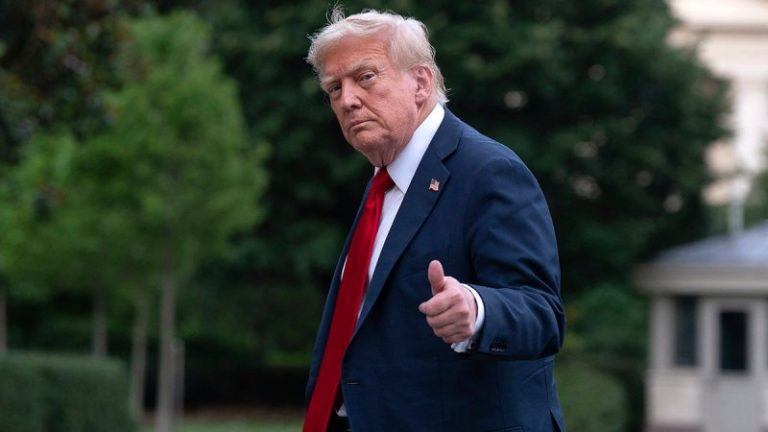
The once-solid relationship between President Donald Trump and Apple CEO Tim Cook is breaking down over the idea of a U.S.-made iPhone.

Last week, Trump said he “had a little problem with Tim Cook,” and on Friday, he threatened to slap a 25% tariff on iPhones in a social media post.

Trump is upset with Apple’s plan to source the majority of iPhones sold in the U.S. from its factory partners in India, instead of China. Cook confirmed this plan earlier this month during earnings discussions.

Trump wants Apple to build iPhones for the U.S. market in the U.S. and has continued to pressure the company and Cook.

“I have long ago informed Tim Cook of Apple that I expect their iPhone’s that will be sold in the United States of America will be manufactured and built in the United States, not India, or anyplace else,” Trump posted on Truth Social on Friday.

Analysts said it would probably make more sense for Apple to eat the cost rather than move production stateside.

“In terms of profitability, it’s way better for Apple to take the hit of a 25% tariff on iPhones sold in the US market than to move iPhone assembly lines back to US,” Apple supply chain analyst Ming-Chi Kuo wrote on X.

UBS analyst David Vogt said that the potential 25% tariffs were a “jarring headline” but that they would only be a “modest headwind” to Apple’s earnings, dropping annual earnings by 51 cents per share, versus a prior expectation of 34 cents per share under the current tariff landscape.

Experts have long held that a U.S.-made iPhone is impossible at worst and highly expensive at best.

Analysts have said that iPhones made in the U.S. would be much more expensive, CNBC previously reported, with some estimates ranging between $1,500 and $3,500 to buy one at retail. Labor costs would certainly rise.

But it would also be logistically complicated.

Supply chains and factories take years to build out, including installing equipment and staffing up. Parts that Apple imported to the United States for assembly might be subject to tariffs as well.

Apple started manufacturing iPhones in India in 2017 but it was only in recent years that the region was capable of building Apple’s latest devices.

“We believe the concept of Apple producing iPhones in the US is a fairy tale that is not feasible,” wrote Wedbush analyst Dan Ives in a note on Friday.

Other analysts were wary about predicting how Trump’s threat ultimately plays out. Apple might be able to strike a deal with the administration — despite the eroding relationship — or challenge the tariffs in court.

For now, most of Apple’s most important products are exempt from tariffs after Trump gave phones and computers a tariff waiver — even from China — in April, but Apple doesn’t know how the Trump administration’s tariffs will ultimately play out beyond June.

“We’re skeptical” that the 25% tariff will materialize, wrote Wells Fargo analyst Aaron Rakers.

He wrote that Apple could try to preserve its roughly 41% gross margin on iPhones by raising prices in the U.S. by between $100 and $300 per phone.

It’s unclear how Trump intends to target Apple’s India-made iPhones. Rakers wrote that the administration could put specific tariffs on phone imports from India.

Apple’s operations in India continue to expand.

Foxconn, which assembles iPhones for Apple, is building a new $1.5 billion factory in India that could do some iPhone production, the Financial Times reported Thursday.

Apple declined to comment on Trump’s post.

This post appeared first on NBC NEWS

President Donald Trump on Friday cleared the merger of U.S. Steel and Nippon Steel, after the Japanese steelmaker’s previous bid to acquire its U.S. rival had been blocked on national security grounds.

“This will be a planned partnership between United States Steel and Nippon Steel, which will create at least 70,000 jobs, and add $14 Billion Dollars to the U.S. Economy,” Trump said in a post on his social media platform Truth Social.

U.S. Steel’s headquarters will remain in Pittsburgh and the bulk of the investment will take place over the next 14 months, the president said. U.S. Steel shares surged more than 20% to close at $52.01 per share after Trump’s announcement.

Pennsylvania Gov. Josh Shapiro applauded the agreement, saying he worked with local, state and federal leaders ‘to press for the best deal to keep U.S. Steel headquartered in Pittsburgh, protect union jobs, and secure the future of steelmaking in Western Pennsylvania.’

In his own statement, Lieutenant Gov. Austin Davis called the announcement ‘promising,’ but added: ‘I want to make sure everyone involved in the deal holds up their end of the bargain. I look forward to seeing the promised investments become a reality and the workers receive everything they’ve fought for.’

President Joe Biden blocked Nippon Steel from purchasing U.S. Steel for $14.9 billion in January, citing national security concerns. Biden said at the time that the acquisition would create a risk to supply chains that are critical for the U.S.

Trump, however, ordered a new review of the proposed acquisition in April, directing the Committee on Foreign Investment in the United States to determine “whether further action in this matter may be appropriate.”

Trump said he would hold a rally at U.S. Steel in Pittsburgh on May 30.

This post appeared first on NBC NEWS

United Airlines reached an “industry-leading” tentative labor deal for its 28,000 flight attendants, their union said Friday.

The deal includes “40% of total economic improvements” in the first year and retroactive pay, a signing bonus, and quality of life improvements, like better scheduling and on-call time, the Association of Flight Attendants-CWA said.

The union did not provide further details about the deal.

United flight attendants have not had a raise since 2020.

The cabin crew members voted last year to authorize the union to strike if a deal wasn’t reached. They had also sought federal mediation in negotiations.

U.S. flight attendants have pushed for wage increases for years after pilots and other work groups secured new labor deals in the wake of the pandemic. United is the last of the major U.S. carriers to get a deal done with its flight attendants.

The deal must still face a vote by flight attendants, and contract language will be finalized in the coming days, United said.

This post appeared first on NBC NEWS

The Federal Trade Commission voted to dismiss a lawsuit filed in the last days of the Biden administration that accused PepsiCo of offering sweetheart pricing to big retailers.

FTC Chair Andrew Ferguson dissented to the suit when it was filed in January, when he was one of the regulator’s commissioners. Now the agency’s leader, Ferguson on Thursday again criticized the case as “a nakedly political effort to commit this administration to pursuing little more than a hunch that Pepsi had violated the law.”

“The FTC’s outstanding staff will instead get back to work protecting consumers and ensuring a fair and competitive business environment,” he said in a statement.

The FTC voted 3-0 to drop the suit. The panel is supposed to be made up of five commissioners, no more than three of whom can share the same political party. But it is currently led by three Republicans after President Donald Trump fired its two Democratic commissioners in March. The two ousted officials have slammed their removals as illegal and are urging a judge to reinstate them.

Pepsi welcomed the FTC decision Thursday. “PepsiCo has always and will continue to provide all customers with fair, competitive, and non-discriminatory pricing, discounts and promotional value,” a spokesperson said in a statement. Beyond its namesake soda, the company makes an array of snacks and other food products, including Doritos, Rold Gold pretzels and Sabra hummus.

Former FTC Chair Lina Khan, who led the commission when the agency brought its case against Pepsi, criticized the move Thursday as “disturbing behavior” by the agency.

“This lawsuit would’ve protected families from paying higher prices at the grocery store and stopped conduct that squeezes small businesses and communities across America,” she wrote on X Thursday evening. “Dismissing it is a gift to giant retailers as they gear up to hike prices.”

The decision comes little more than a week after top-ranking Democrats on Capitol Hill sent a letter to Pepsi demanding more information about its pricing strategy. They sought to revive a Biden-era focus on price-gouging as a driver of inflation, an argument that has taken a back seat to the Trump administration’s attention on purportedly unfair trade arrangements.

But major corporations continue to draw scrutiny from the White House over pricing in other ways. Last weekend, Trump slammed Walmart for warning that it was likely to raise prices to offset the costs of his import taxes, demanding on social media that it “EAT THE TARIFFS.”

In the days since then, other major consumer brands have appeared to tread cautiously around pricing. Target said Wednesday that charging customers more would be its “very last resort.” Home Depot virtually ruled out price hikes this week, and Lowe’s barely mentioned tariff impacts in its Wednesday earnings call at all.

CORRECTION (May 22, 2025, 8:45 p.m. ET): Due to an editing error, a previous version of this article misstated when congressional Democrats sent their letter to Pepsi. It was on May 11, not last weekend.

This post appeared first on NBC NEWS