Author

admin

Browsing

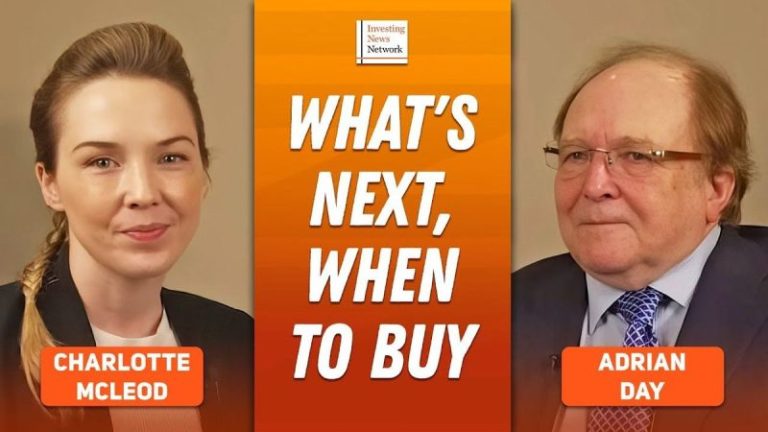
Adrian Day, president of Adrian Day Asset Management, shares his latest thoughts on gold.

He also discusses the opportunity in gold stocks, saying that while as a group they’re up 55 percent in last year, valuation metrics are lower than they were two years ago.

Securities Disclosure: I, Charlotte McLeod, hold no direct investment interest in any company mentioned in this article.

This post appeared first on investingnews.com

The Federal Reserve has brought in its inspector general to review a building expansion that has drawn fire from the White House, according to a source familiar with the issue.

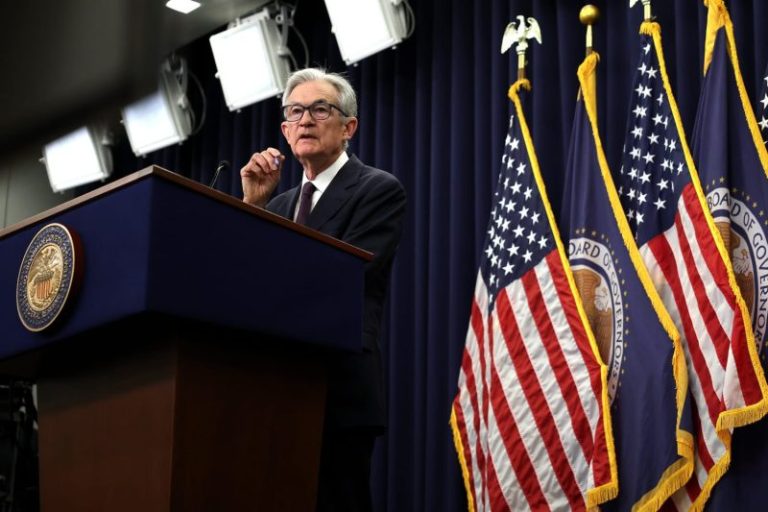
Fed Chair Jerome Powell asked for the review, following blistering criticism of the project, initially pegged at $2.5 billion but hit by cost overruns that have brought accusations from President Donald Trump and other administration officials of “fundamental mismanagement.”

“The idea that the Fed could print money and then spend $2.5 billion on a building without real congressional oversight, it didn’t occur to the people that framed the Federal Reserve Act,” Kevin Hassett, director of the National Economic Council, said Monday on CNBC’s “Squawk Box.” “We’ve got a real problem of oversight and excess spending.”

The inspector general serves the Fed and the Consumer Financial Protection Bureau and is responsible for looking for fraud, waste and abuse. Powell’s request was reported first by Axios.

In a letter posted to social media last week, Russell Vought, head of the Office of Management and Budget, also slammed the project, which involves two of the Fed’s three Washington, D.C., buildings including its main headquarters known as the Eccles Building.

Vought, during a CNBC interview Friday, likened the building to the Palace of Versailles in France and charged that Powell was guilty of “fiscal mismanagement” at the Fed.

For its part, the central bank has posted a detailed frequently asked questions page on its site, highlighting key details and explaining why some of the specifications were changed or “scaled back or eliminated” at least in part due to higher-than-expected construction costs.

“The project also remediates safety issues by removing hazardous materials such as asbestos and lead and will bring the buildings up to modern code,” the page explains. “While periodic work has been done to keep the buildings occupiable, neither building has seen a comprehensive renovation since they were constructed.”

The Fed is not a taxpayer-funded institution and is therefore not under the OMB’s supervision. It has worked with the National Capital Planning Commission in Washington on the project, but also noted on the FAQ page that it “does not regard any of those changes as warranting further review.”

In separate comments, former Fed Governor Kevin Warsh, speaking Sunday on Fox News, called the renovation costs “outrageous” and said it was more evidence the central bank “has lost its way.” Warsh is considered a strong contender to succeed Powell when the latter’s term as chair expires in May 2026.

This post appeared first on NBC NEWS

Former National Security Advisor Mike Waltz is poised to face members of the Senate on Tuesday to get the ball rolling on his nomination to represent the U.S. at the United Nations.

Waltz’s appearance before the Senate Foreign Relations Committee comes months after he exited his job at the White House amid controversy surrounding his role in a Signal group chat with other top administration officials. 

Democrats vowed to grill Waltz during his confirmation process in the aftermath of The Atlantic magazine’s reporting about a Signal group chat that his team had set up to discuss strikes against the Houthis in March.

Even so, the tough questioning from Democrats on the so-called ‘Signalgate’ issue isn’t expected to derail Waltz’s confirmation to the post, given that Republicans hold a 53–47 majority in the Senate. 

‘It’s all theater — you know he’s going to get confirmed,’ a GOP foreign relations source told Fox News Digital. ‘If Signalgate’s a big thing against him, it wasn’t enough to get anyone else fired or impeached or anything like that.’ 

Waltz, a former congressman who represented Florida’s 6th congressional district, is a retired Army National Guard colonel and former Green Beret. During his time in uniform, he served four deployments to Afghanistan and earned four Bronze Stars — the fourth-highest military combat award, issued for heroic service against an armed enemy.

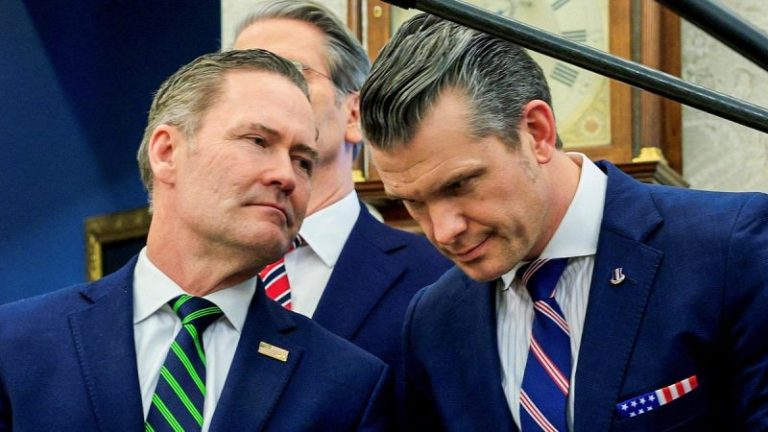
Waltz and Secretary of Defense Pete Hegseth were both entangled in the Signal chat that Waltz’s team created where members of the Trump administration discussed strike plans against the Houthis. 

Waltz in March said he took ‘full responsibility’ for the Signal group chat, and the Trump administration has maintained that no war plans were shared in the chat. The Atlantic published the full exchange of messages, which included certain attack details such as specific aircraft and times of the strikes from Hegseth. 

On May 1, President Donald Trump announced Waltz’s departure from his role as national security advisor and hours later unveiled the former Florida congressman’s nomination to represent the U.S. at the U.N. 

Democrats called for Hegseth’s resignation as a result of the chat and warned that Waltz would face the heat during the confirmation process for U.N. ambassador. 

Democratic Sen. Tammy Duckworth of Illinois said in a May interview with CBS News that Waltz could count on a ‘brutal, brutal hearing’ from senators, and described his nomination as ‘failing up.’ 

‘He’s not qualified for the job, just by nature of the fact that he participated in this Signal chain,’ Duckworth, a member of the Senate Foreign Relations Committee, told CBS News. 

Duckworth, who served in the Illinois Army National Guard as a Blackhawk helicopter pilot and lost both of her legs during a 2004 deployment to Iraq, told Fox News Digital Monday that Waltz’s involvement in the group chat should disqualify him from serving as U.N. ambassador. She also said that every official included in the chat should be fired. 

‘As a retired Soldier, Waltz should have shut the unclassified chain down as soon as he saw Hegseth share such classified information that could’ve gotten our pilots killed,’ Duckworth said in a statement. ‘It’s clear Waltz cannot be trusted to make critical and sensitive national security decisions, and I look forward to pressing him on his conduct and holding him accountable.’


Duckworth has pinned most of the blame on Hegseth for Signalgate. Prior to Trump’s announcement on Waltz’s U.N. ambassador nomination, Duckworth said in a May post on X that of ‘all the idiots in that chat, Hegseth is the biggest security risk of all — he leaked the info that put our troops in greater danger.’ 

In addition to Waltz and Hegseth, administration officials including Vice President JD Vance, Secretary of State Marco Rubio and CIA Director John Ratcliffe were part of the group chat. 

Additionally, ranking member of the Senate Foreign Relations Committee Sen. Chris Coons, D-Conn., said that Waltz could brace for a meticulous confirmation hearing before the committee’s members. 

‘I look forward to a thorough confirmation hearing,’ Coons said in a post on X in May. 

A spokesperson for Coons did not respond to a request for comment from Fox News Digital. 

The GOP foreign relations source described the fallout from Signalgate a ‘huge nothing burger,’ and pointed out that Democrats’ previous efforts to use Signalgate against Waltz and Hegseth have proven unsuccessful. 

‘If this was their deathly bullet, it would have killed Hegseth, and it would have killed Waltz, but they’re both left standing,’ the source told Fox News Digital. 

A Senate aide told Fox News Digital that while Waltz took the brunt of the blame for Signalgate because his team created the chat, Democrats’ expected questioning of the group chat during the hearing is actually about finding a new avenue to go after Trump. 

‘I don’t think he’s the target. He’s just the mechanism to go after the target,’ the Senate aide said. ‘At the end of the day, Democrats want to criticize and go after the president, so these guys are just a mechanism to get there.’ 

Meanwhile, Republican lawmakers have voiced support for Waltz, with Senate Foreign Relations Committee Chairman Sen. Jim Risch, R-Idaho, calling him a ‘great choice’ for the position in a post on X in May. Additionally, Sen. Lindsey Graham, R-S.C., said at the time that the Senate would ‘for sure’ confirm Waltz. 

‘Some things I know for sure: the sun rises in the East, sets in the West and Mike Waltz will be confirmed as the next UN Ambassador,’ Graham said in an X post in May. ‘He is highly qualified, well-positioned, and will be a strong voice for our nation at the UN.’

Since Waltz’s departure as serving as national security advisor, Rubio has stepped in to fill that role. 

Trump previously nominated Rep. Elise Stefanik, R-N.Y., to represent the U.S. at the U.N. However, her nomination was pulled in March, and Trump claimed at the time that the House could not give up another Republican seat with its slim 220–212 Republican majority. 

If confirmed as U.N. ambassador, Waltz would be responsible for representing U.S. interests at the U.N.’s New York headquarters, weighing in on resolutions, treaties and other global matters.  

Waltz could not be reached for comment by Fox News Digital. 

The 80th session of the U.N. General Assembly is scheduled for Sept. 9, providing a window of time for Waltz’s nomination to make it through the entire confirmation process beforehand. 

‘The hope is to have him in place before the U.N. General Assembly is in session,’ the GOP foreign relations source told Fox News Digital. 

This post appeared first on FOX NEWS

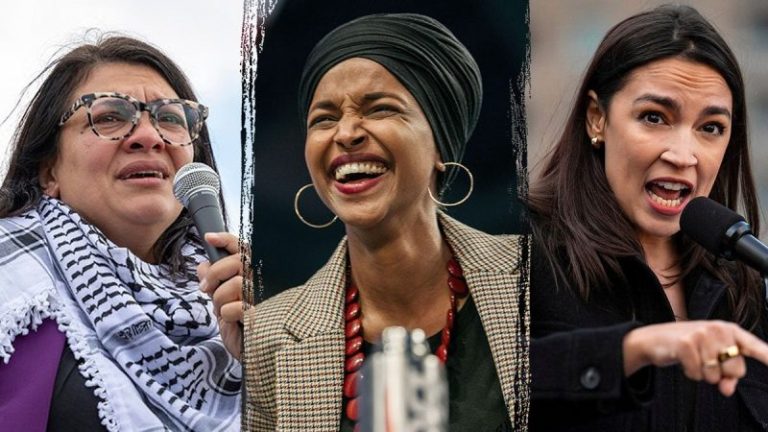
Members of the ‘Squad’ are undermining coexistence between Arabs and Jews in the Middle East, Israeli-Arab activist Yoseph Haddad told Fox News Digital.

‘Representatives of the Squad are trying to harm the coexistence and partnership that exist in the region between Arabs and Jews,’ Haddad said. ‘I think it was [Alexandria] Ocasio-Cortez herself who said she had no idea about the geopolitics of this region—she’s right. Ilhan Omar and Rashida Tlaib know exactly what’s going on here, but they decide to lie and twist the facts.’

Haddad, the CEO of Together Vouch for Each Other — an organization founded in 2018 by young Israeli Arabs to bridge cultural and religious divides — has emerged as a prominent voice in Israel’s public diplomacy efforts following Hamas’ Oct. 7, 2023 massacre. 

Since the attack, Jewish communities across the United States and Europe have faced a sharp rise in antisemitic incidents, with pro-Hamas demonstrations appearing on college campuses as early as October 8.

‘The first group is what I call the useful idiots — people who have no idea what’s going on but joined because it felt like the cool thing to do,’ Haddad said. ‘Then there are the paid protesters. You see the same faces at different rallies holding different signs — sometimes it’s about LGBTQ issues, sometimes it’s pro-Palestinian, sometimes it’s about internal American problems.’

‘It’s always the same person, just a different outfit and a different sign,’ he continued. ‘And the third group — the most dangerous—are the extremists who’ve come from the Middle East. Those are the ones we should be most concerned about.’

Haddad traced the rise of extremist voices in the West to waves of immigration and population displacement from conflict zones in the Middle East. While the majority of Muslim immigrants fled persecution in search of a better life, he said, a vocal minority brought with them the ideology of the Muslim Brotherhood, effectively holding their communities hostage.

‘When you have so many immigrants all around the world, it’s enough for 10 or 20 percent of them to be extremists — and suddenly, you’re dealing with millions of extremists,’ he said.

‘Ostriches, when there is a danger and there is a problem, what they do is they stick their head in the sand thinking the problem will just pass because nobody will notice them,’ he added. ‘And this is what the weak governments are doing right now, becoming like an ostrich. The only problem is that no one will skip them over, it will make it easier to chop their heads off.’

Addressing accusations that Israel enforces an apartheid system between Jews and Arabs, Haddad rejected the comparison outright.

‘In real apartheid, like in South Africa, everything was segregated — transportation, hospitals, courts, sports, even walking on the sidewalks,’ Haddad said. ‘But if you actually come to Israel and see life here, it’s the complete opposite — 180 degrees different.’

‘Stop speaking from a place of emotion — that’s exactly what The Squad is doing,’ he continued. ‘Start talking about facts. Then you’ll realize that anyone who concludes Israel is an apartheid state is an imbecile.’

He also mentioned a run-in he had with a protester, who he refers to as ‘the useful idiots.’

They have no clue … One time, I read the charter of Hamas to some pro-Palestinian useful idiot, I read it to them, and I said you agree to this, and they said no, no, no I didn’t know that. And I said yes, but this is what you are supporting, and he had the headband of Hamas on his head. You understand that this is what you are supporting.

‘He literally took the band off after that. Such useful idiots like this you have a lot, not just in the United States, you can see it in Europe as well.’

When asked what he believes the Palestinians ultimately want, Haddad pointed to slogans often heard at anti-Israel and antisemitic protests, such as ‘From the river to the sea, Palestine will be free’ and ‘There is only one solution: Intifada revolution.’

‘The majority of Palestinians do not want to live side by side with Israel,’ Haddad said. ‘So when people talk about a two-state solution and question Israel’s commitment, I say: Don’t ask the Israelis — ask the Palestinians. You’ll be shocked to find that many of them aren’t willing to accept it.’

Haddad pointed out that history can be approached in multiple ways — through religious texts like the Torah for Jews, the Bible for Christians and the Quran for Muslims. Even those who are atheists can look to history books for evidence of the deep-rooted connection of the Jewish people to the land of Israel.

Haddad argued that the Torah explicitly mentions the presence of Jews in Israel, tracing their presence back thousands of years. He also highlighted the Biblical reference to the birthplace of Jesus in Jewish Bethlehem, challenging the notion that Palestinian Muslims have a historical claim to the land before the Jews.

Haddad noted that while Jerusalem is never mentioned in the Quran, the term ‘sons of Israel’ appears more than 43 times. He also emphasized that the name ‘Palestine’ was imposed by the Romans as a punishment for the Bar Kokhba revolt.

Haddad highlighted that in 1947, Arabs had the opportunity to establish a Palestinian state through the U.N. Partition Plan, which the Jews accepted despite receiving less land and fewer resources. However, the Arabs rejected the plan and opted to wage war. When the Jews emerged victorious, 156,000 Arabs remained within what became Israel. Sharing his personal connection to this history, Haddad explained that his grandfather was one of those Arabs who stayed and eventually became part of the Arab Israeli identity.

‘It’s either you accept the fact that Israel exists and is here to stay, or you continue with this cycle of bloodshed and death that we are trying to escape,’ said Haddad. ‘But the ones who will suffer the most are you, the Palestinians, whether in the West Bank or Gaza.’

Several requests for comment sent to Reps. Ocasio-Cortez, Tlaib and Omar were not returned.

This post appeared first on FOX NEWS
The US Department of Defense (DoD) will become the largest shareholder in MP Materials (NYSE:MP) after agreeing to purchase US$400 million worth of preferred stock in the company.

MP Materials is known for owning and operating the only US rare earths mine.

The rare earths producer said the proceeds from the investment will fund the expansion of its processing capabilities at the Mountain Pass mine in California and support the construction of a second magnet manufacturing facility in the US.

The materials mined and processed by MP Materials are critical to the production of permanent magnets used in military systems, including the F-35 fighter jet, drones, and submarines.

The US has depended heavily on foreign imports for these materials — primarily from China, which accounted for about 70 percent of rare earth imports in 2023, according to the US Geological Survey.

In a press release issued on Thursday (July 10), MP Materials described the agreement as a ‘transformational public-private partnership.’ The company also said the deal will ‘dramatically accelerate the build-out of an end-to-end US rare earth magnet supply chain and reduce foreign dependency.’

The investment gives the Pentagon newly created preferred stock convertible into common shares, along with a 10-year warrant to buy additional stock at US$30.03 per share. If fully converted and exercised, the DoD would own 15 percent of MP Materials, based on current share counts as of Wednesday (July 9). That would exceed the 8.61 percent stake held by CEO James Litinsky and the 8.27 percent stake held by BlackRock Fund Advisors.

Litinsky emphasized that the deal does not equate to government control of the company. “This is not a nationalization,” he told CNBC. “We remain a thriving public company. We now have a great new partner in our economically largest shareholder, DoD, but we still control our company. We control our destiny. We’re shareholder driven.”

MP’s new magnet facility, called 10X, will increase the company’s magnet manufacturing capacity to 10,000 metric tons annually once it begins commissioning in 2028. The exact location of the facility has not yet been disclosed.

The Pentagon has committed to purchasing 100 percent of the magnets produced at the 10X facility for 10 years.

Additionally, the DoD will guarantee a minimum price of US$110 per kilogram for MP’s neodymium-praseodymium oxide, a key material for magnet production.

If market prices fall below that level, the Pentagon will pay the difference quarterly. In return, once the new facility is operational, the government will receive 30 percent of any upside above US$110 per kilogram.

To further support the buildout, MP Materials expects to receive a US$150 million loan from the Pentagon within 30 days to expand its heavy rare earth separation capabilities at Mountain Pass, the only active rare earth mine in the US.

It is also commissioning a magnetics facility in Texas, known as Independence, to bolster its downstream processing capabilities.

As the only domestic miner with vertically integrated capabilities and a clear path to rare earth magnet production at scale, MP Materials now sits at the center of the Biden-to-Trump era effort to bring critical minerals supply chains back to American soil.

Securities Disclosure: I, Giann Liguid, hold no direct investment interest in any company mentioned in this article.

This post appeared first on investingnews.com

Here’s a quick recap of the crypto landscape for Wednesday (July 9) as of 9:00 p.m. UTC.

Get the latest insights on Bitcoin, Ethereum and altcoins, along with a round-up of key cryptocurrency market news.

Bitcoin and Ethereum price update

Bitcoin’s (BTC) price peaked at US$111,744 as the market wrapped, a 2.7 percent increase in the last 24 hours. The day’s range for the cryptocurrency also brought a low of US$108,644.

Crypto analyst TradingShot believes Bitcoin may not experience another rally this cycle, despite projections exceeding US$160,000. This assessment is based on Bitcoin’s historical four year patterns.

According to TradingShot, Bitcoin has not broken out of its current upward channel to trigger the explosive rallies seen in 2017 and 2021. If the four year cycle holds, time is running out for such a breakout.

Ethereum (ETH) is priced at US$2,772.50, up by 6.3 percent over the past 24 hours. On Wednesday, the cryptocurrency hit a low of US$2,635.74 before rallying to finish the day at its peak, mirroring a broader market trend.

Altcoin price update

Bitcoin price performance, July 9, 2025.

Chart via TradingView.

  • Solana (SOL) was priced at US$157.12, up by 3.7 percent over 24 hours. Its lowest valuation as of Wednesday was US$153.45.
  • XRP was trading for US$2.42, up 4.5 percent in the past 24 hours. The cryptocurrency’s lowest valuation was US$2.36
  • Sui (SUI) was trading at US$3.05, up by 4.9 percent over the past 24 hours. Its lowest valuation was US$2.93.
  • Cardano (ADA) is priced at US$0.6217, up by 5.6 percent in the last 24 hours. Its lowest valuation as of Wednesday was US$0.6027

Today’s crypto news to know

US Senate committee gathers for hearing on digital assets

The US Senate Banking Committee held a hearing on Wednesday dubbed ‘From Wall Street to Web3’ to discuss proposed legislation regarding digital assets, including the Clarity Act.

Massachusetts Democrat Elizabeth Warren, a longtime crypto critic, said she is in favor of laws regulating digital assets that strengthen the financial system in the US, but criticized aspects of the Clarity Act that she said would allow non-crypto companies to “put their stocks on the blockchain,’ evading US Securities and Exchange Commission guidelines.

“That is a serious problem for our country,” she warned.

Ahead of the hearing, Warren sent a statement to analytical publication the Block, accusing Republicans of enabling “industry handouts” to crypto lobbyists. Other vocal critics of the bill include New York Attorney General Letitia James and the ranking member of the House Financial Services Committee Maxine Waters.

Both she and Warren have questioned the ethics of US President Donald Trump’s business ties to the industry. At the hearing, former chief White House ethics lawyer Richard Painter, who was invited to speak by Warren, said:

“We cannot have the people who are in charge of passing legislation and enforcing legislation, implementing legislation, have conflicts of interest with their official responsibilities. You should be divesting from crypto if you’re going to be regulating crypto.”

Lawmakers are now facing a September 30 deadline to define cryptocurrencies, address Trump’s crypto interests and finalize industry rules.

RLUSD gains traction via Transak integration and BNY Mellon custody

Transak, a Web3 onboarding infrastructure provider allowing users to buy and sell digital assets using traditional payment methods, officially integrated Ripple’s US-dollar pegged stablecoin, RLUSD.

The move expands the token’s reach to 8.3 million additional users across 64 countries.

“Transak has always strived to make finance truly accessible and that includes bringing on assets like RLUSD that balance blockchain ethos with compliance requirements,” said Sami Start, CEO and co-founder of Transak.

“With this integration, users gain access to one of the most thoughtfully designed stablecoins in the market, now available through a seamless and trusted fiat-to-crypto experience.”

The news was announced the same day Ripple chose Bank of New York Mellon to custody its USD reserves. This move by a traditional financial giant lends significant institutional credibility to Ripple’s stablecoin, which was built as an enterprise-grade stablecoin to improve the efficiency of cross-border transactions.

“As primary custodian for RLUSD, we’re proud to support the growth of digital assets by providing a differentiated platform, designed to meet the evolving needs of institutions in the digital assets ecosystem,” said Emily Portney, global head of asset servicing at Bank of New York Mellon.

South Korea to reclassify crypto businesses as venture companies

South Korea’s Ministry of SMEs and Startups announced Wednesday that it will lift current restrictions preventing crypto-related businesses from qualifying as venture companies. Firms in the virtual asset sector are currently restricted in their eligibility for various tax breaks and financial support due to crypto regulations implemented last year.

However, the minister said that the proposed amendment reflects “a shift in perception” regarding the industry.

“It is expected that the virtual asset business operators based on new technologies with innovation and business viability will be newly recognized as venture companies, and existing venture companies will also be able to promote virtual asset-related businesses,” the statement explains, “which will lead to the activation and expansion of the venture ecosystem and promote the fostering of the virtual asset industry.”

This change will be supported by the establishment of “legal and institutional safeguards” designed to protect users. Public comments on the proposal will be accepted by the ministry until August 18.

Tether reveals it holds US$8 billion in gold in private Swiss vault

Tether, the issuer behind the world’s largest stablecoin, USDT, has disclosed it holds nearly 80 metric tons of gold worth US$8 billion in a private Swiss vault, according to a Bloomberg report.

The company, which manages over US$159 billion in circulating stablecoins, says most of the gold is directly owned by Tether, making it one of the world’s largest private gold holders outside of sovereign institutions.

CEO Paolo Ardoino confirmed the gold is stored in a highly secure location in Switzerland, though he declined to disclose the exact facility for safety reasons.

The firm also operates a gold-backed token called XAUT, with each coin redeemable for one ounce of physical gold.

Tether’s increasing exposure to gold comes amid rising demand for safe-haven assets and ongoing concerns about US debt sustainability. However, new regulations in the US and EU may force the company to divest gold from USDT’s reserves if it seeks formal approval in those markets.

Trump Media files for Crypto Blue Chip ETF

Trump Media & Technology Group (NASDAQ:DJT) has filed to launch its third crypto-focused exchange-traded fund (ETF) under the Truth Social brand. Called the “Crypto Blue Chip ETF,’ the fund will aim to allocate 70 percent to Bitcoin, 15 percent to Ether and the remainder to Solana, Cronos and XRP.

This marks the latest move by the Trump-affiliated media company to expand its crypto investment footprint following two prior filings focused more narrowly on Bitcoin and Ether.

The ETF is set to trade on NYSE Arca, and is being developed in partnership with Crypto.com.

The company had earlier disclosed plans to raise US$2.5 billion to directly acquire Bitcoin. While Trump Media shares rose nearly 3 percent on the day of the announcement, it remains down over 40 percent year-to-date.

Sequans soars 43 percent on Bitcoin treasury strategy

Chipmaker Sequans Communications (NYSE:SQNS) saw its share price jump 43 percent after announcing a major pivot to a Bitcoin-based treasury reserve strategy. The firm raised US$384 million through equity and debt instruments to begin acquiring Bitcoin as a long-term corporate asset, emphasizing Bitcoin’s scarcity and independence from central banks as reasons behind the move and its potential to strengthen the company’s financial footing.

More than 40 institutional investors backed the fundraising, including convertible debentures and warrants that could bring in another US$57 million. The company plans to allocate future cash flows toward Bitcoin purchases.

Securities Disclosure: I, Giann Liguid, hold no direct investment interest in any company mentioned in this article.

Securities Disclosure: I, Meagen Seatter, hold no direct investment interest in any company mentioned in this article.

This post appeared first on investingnews.com

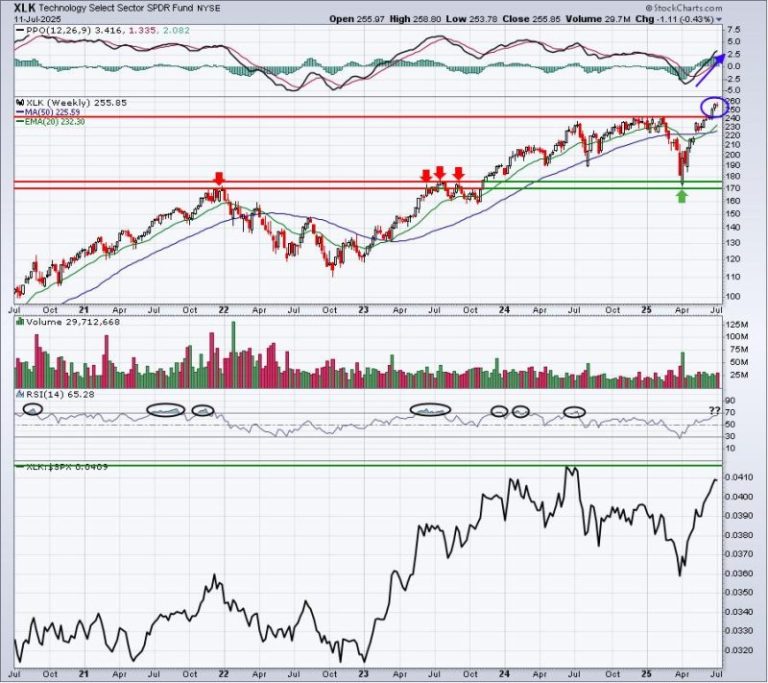
I remain very bullish and U.S. stocks have run hard to the upside off the April low with growth stocks leading the way. I expect growth stocks to remain strong throughout the summer months, as they historically do, but we need to recognize that they’ve already seen tremendous upside. Could technology (XLK) names, in particular, use a period of consolidation? Well, if we look at a 5-year weekly chart, the XLK really isn’t that overbought just yet:

The weekly PPO has crossed its centerline and is gaining bullish momentum. The recent price breakout suggests to me that we likely have further to run. And if you look at the weekly RSI, you’ll note that we’ve seen the weekly RSI move well into the 70s and even close to 80 before witnessing a market top or pause. Outside a bit of profit taking, I really don’t see the likelihood of a big selloff here. Keep in mind that the XLK represents 31% of the S&P 500. If the XLK doesn’t slow down, it’s very unlikely that we’ll see any type of meaningful decline in the S&P 500 either.

Growth vs. Value

Growth stocks have historically performed well over the summer months. One way to visualize this is to compare large-cap growth (IWF) to large-cap value (IWD) using a seasonality chart. Check this out:

The average monthly outperformance since 2013 is reflected at the bottom of each month’s column. If you add those numbers for May through August, you get +5.4%. If you add those numbers for the other 8 months combined, you get +0.6%. Clearly, large-cap growth has the tendency to outperform value from May through August. We’re in the growth “sweet spot” right now.

So Should We Lower Our Market Expectations?

I say absolutely not. Yes, we’ve run substantially higher off that April low, but I see more left in the tank. Will we see profit taking from time to time and could we see a period of consolidation? Sure. But I still believe that remaining on the sidelines is a big mistake as plenty of market upside remains. In fact, I see another somewhat forgotten asset class that’s poised to scorch 50% higher or more, possibly over the next 6 months. I’m investing in this area now, as I believe it’s in the early stages of a significant rally, and believe it would be prudent for you to take a look as well. For more information, simply CLICK HERE, provide your name and email address, and I’ll send you a video that explains exactly why I’m favoring this group right now!

Happy trading!

Tom

NVIDIA (NASDAQ:NVDA) became the first publicly traded company to hit a US$4 trillion market cap this week.

Meanwhile, Apple (NASDAQ:AAPL) made headlines with a major leadership change as rumors of a lineup of upcoming product releases circulated, and Meta Platforms (NASDAQ:META) deepened ties with one of its hardware partners.

In the chip market, Huawei is trying to capitalize on the gap left by NVIDIA’s chips in China, while a startup is stepping up its efforts to help meet its ambitious plans to expand artificial intelligence (AI) chip delivery to Saudi Arabia.

1. Apple announces leadership shift

On Tuesday (July 8), Apple announced that Jeff Williams, its longtime chief operating officer, will retire at the end of 2025, ending a tenure that spanned decades and included overseeing hardware, software and operations.

“Jeff and I have worked alongside each other for as long as I can remember, and Apple wouldn’t be what it is without him,” said Apple CEO Tim Cook in a press release. “He’s helped to create one of the most respected global supply chains in the world; launched Apple Watch and overseen its development; architected Apple’s health strategy; and led our world-class team of designers with great wisdom, heart, and dedication.’

Williams will be succeeded by Sabih Khan, Apple’s senior vice president of operations, who has played a key role in managing Apple’s global supply chain.

In other Apple news, Bloomberg reported on Wednesday (July 9) that Apple plans to release its first hardware upgrade to the Vision Pro headset later this year. Anonymous sources say the upgrades will include a a new strap for added comfort, will incorporate the same M4 processor powering newer versions of the iPad Pro, MacBook Pri and iMac, and will incorporate a great number of cores in the neural engine to run AI more effectively.

The company is also working on a lighter version slated for release in 2027, according to the people.

The company is planning a series of product upgrades for the first half of 2026, including a new entry-level iPhone 17e, refreshed MacBook Pros and MacBook Airs with M5 chips and potentially a new external display, according to multiple reports this week. Entry-level iPad and iPad Air will reportedly also receive updates.

2. Meta makes eyewear bet

Meta acquired a nearly 3 percent stake in luxury eyewear maker EssilorLuxottica (EPA:EL), the creator of Ray-Bans and the manufacturing partner for Meta’s smart glasses, including the Ray-Ban Meta and Oakley Meta lines. This is according to a Tuesday report from Bloomberg that cites unnamed sources with knowledge of the matter.

The stake is reportedly worth around 3 billion euros. According to the people, Meta is considering increasing its stake to approximately 5 percent “over time,” but noted that the plans could change.

3. Huawei seeks to step in amid US restrictions

Huawei is reportedly developing a new class of AI chips designed to support more generalized AI workloads, according to the Information, which broke the news on July 5.

According to the report, Huawei’s chip will be built around an architecture resembling that of NVIDIA’s GPU architecture (like Hopper or Blackwell) and Advanced Micro Devices’ CDNA architecture (used in their Instinct GPUs), which would allow Chinese developers to seamlessly incorporate the alternative.

Huawei’s pivot reflects China’s broader effort to bolster domestic chip capabilities as export restrictions from the US limit its access to advanced semiconductors. NVIDIA’s highly sought-after Blackwell GPUs are difficult for Chinese developers to legally acquire, leading to the development of downgraded, China-specific versions and a drive by Chinese firms to secure the chips through other means or source high-end alternatives.

Illustrating these efforts, recent Bloomberg analysis reveals ambitious plans by Chinese companies to acquire over 115,000 high-end NVIDIA chips for dozens of new AI data centers rising in the remote desert regions of Yiwu.

4. Harmonic raises US$100 million for ‘Superintelligence’

Harmonic AI, a stealth-mode AI company co-founded by Robinhood (NASDAQ:HOOD) CEO Vlad Tenev, has raised US$100 million in a Series B funding round led by Kleiner Perkins. Sequoia Capital, Index Ventures and Paradigm also participated in the round, which brought the company’s valuation to US$875 million.

Founded in 2023 by Tenev and Tudor Achim, who previously led autonomous driving startup Helm.ai, the startup is focused on building “smarter” AI models using a concept it calls “Mathematical Superintelligence.’

Its flagship model, Aristotle, is being trained to generate answers grounded in formal mathematical logic. On Bloomberg News, Tenev has said the company’s goal was to build AI systems that can solve the type of complex math problems that currently elude chatbots, eventually expanding its capabilities to physics and computer science.

Harmonic also aims to eliminate chatbot hallucinations through formal verification, a mathematical method that guarantees correct AI system function.

The startup wants to make the model available to researchers and the general public later this year.

5. Groq seeks US$6 billion valuation to fuel Saudi AI ambitions

The Information reported on Wednesday that Groq, a US-based AI chip startup and challenger to NVIDIA, is seeking to raise between US$300 million and US$500 million in a new funding round that would value it at US$6 billion.

Groq’s language processing units (LPUs) are known for their fast inferencing technology.

Unlike general-purpose GPUs, which were originally made for graphics and then adapted for AI, Groq’s LPUs were designed specifically to process language.

According to the report, the funding would help Groq fulfill a US$1.5 billion deal to deliver advanced AI chips to Saudi Arabia. With its ambitious Vision 2030, Saudi Arabia is actively pursuing a role as a global AI and technology hub, driving its interest in obtaining cutting-edge chips.

Securities Disclosure: I, Meagen Seatter, hold no direct investment interest in any company mentioned in this article.

This post appeared first on investingnews.com


(TheNewswire)


TORONTO, ON TheNewswire – July 14 2025 –Silver Crown Royalties Inc. (‘Silver Crown’, ‘SCRi’, the ‘Corporation’, or the ‘Company’) (Cboe:SCRI,OTC:SLCRF; OTCQX:SLCRF; FRA:QS0) is pleased to announce that the Company has successfully closed the final tranche (‘Final Tranche’) of its non-brokered offering of units (‘Units’) that was previously announced on May 20, 2025 (the ‘Offering’) and issued 132,693 Units at a price of C$6.50 per Unit, for gross proceeds of approximately C$862,505.50.


  Each Unit consists of one common share (‘Common Share’) and one Common Share purchase warrant (‘Warrant’), with each Warrant exercisable to acquire one additional Common Share at an exercise price of C$13.00 for a period of three years from the closing date. A total of 235,531Units were issued in accordance with the Offering for cumulative gross proceeds of C$1,530,951.50.  


  The proceeds from the Final Tranche will be used to fund the Company’s silver royalty acquisition on the Igor 4 project in Peru, as well as general and administrative expenses. All securities issued are subject to a statutory hold period of four months plus one day from the date of issuance, in accordance with applicable securities legislation. The closing was subject to customary conditions, including the approval of Cboe Canada Inc.  


  ABOUT Silver Crown Royalties INC.  


  Founded by industry veterans, Silver Crown Royalties (   Cboe:   SCRI |   OTCQX:   SLCRF |   BF:   QS0   ) is a publicly traded, silver royalty company. Silver Crown (SCRi) currently has four silver royalties of which three are revenue-generating. Its business model presents investors with precious metals exposure that allows for a natural hedge against currency devaluation while minimizing the negative impact of cost inflation associated with production. SCRi endeavors to minimize the economic impact on mining projects while maximizing returns for shareholders.   For further information, please contact:  


  Silver Crown Royalties Inc.  


  Peter Bures, Chairman and CEO  


  Telephone: (416) 481-1744  


  Email:   pbures@silvercrownroyalties.com  


  FORWARD-LOOKING STATEMENTS  


  This release contains certain ‘forward looking statements’ and certain ‘forward-looking information’ as defined under applicable Canadian and U.S. securities laws. Forward-looking statements and information can generally be identified by the use of forward-looking terminology such as ‘may’, ‘will’, ‘should’, ‘expect’, ‘intend’, ‘estimate’, ‘anticipate’, ‘believe’, ‘continue’, ‘plans’ or similar terminology. The forward-looking information contained herein is provided for the purpose of assisting readers in understanding management’s current expectations and plans relating to the future. Readers are cautioned that such information may not be appropriate for other purposes. Forward-looking statements and information include, but are not limited to, SCRi anticipates that Elk Gold will pay this residual amount owing on or before March 31, 2025. Forward-looking statements and information are based on forecasts of future results, estimates of amounts not yet determinable and assumptions that, while believed by management to be reasonable, are inherently subject to significant business, economic and competitive uncertainties and contingencies. Forward-looking information is subject to known and unknown risks, uncertainties and other factors that may cause the actual actions, events or results to be materially different from those expressed or implied by such forward-looking information, including but not limited to: the impact of general business and economic conditions; the absence of control over mining operations from which SCRi will purchase gold and other metals or from which it will receive royalty payments and risks related to those mining operations, including risks related to international operations, government and environmental regulation, delays in mine construction and operations, actual results of mining and current exploration activities, conclusions of economic evaluations and changes in project parameters as plans continue to be refined; accidents, equipment breakdowns, title matters, labor disputes or other unanticipated difficulties or interruptions in operations; SCRi’s ability to enter into definitive agreements and close proposed royalty transactions; the inherent uncertainties related to the valuations ascribed by SCRi to its royalty interests; problems inherent to the marketability of gold and other metals; the inherent uncertainty of production and cost estimates and the potential for unexpected costs and expenses; industry conditions, including fluctuations in the price of the primary commodities mined at such operations, fluctuations in foreign exchange rates and fluctuations in interest rates; government entities interpreting existing tax legislation or enacting new tax legislation in a way which adversely affects SCRi; stock market volatility; regulatory restrictions; liability, competition, the potential impact of epidemics, pandemics or other public health crises on SCRi’s business, operations and financial condition, loss of key employees. SCRi has attempted to identify important factors that could cause actual results to differ materially from those contained in forward-looking statements, there may be other factors that cause results not to be as anticipated, estimated or intended. There can be no assurance that such statements will prove to be accurate, as actual results and future events could differ materially from those anticipated in such statements. Accordingly, readers are advised not to place undue reliance on forward-looking statements or information. SCRi undertakes no obligation to update forward-looking information except as required by applicable law. Such forward-looking information represents management’s best judgment based on information currently available.  


  This document does not constitute an offer to sell, or a solicitation of an offer to buy, securities of the Company in Canada, the United States   or any other jurisdiction. Any such offer to sell or solicitation of an offer to buy the securities described herein will be made only pursuant to subscription documentation between the Company and prospective purchasers. Any such offering will be made in reliance upon exemptions from the prospectus and registration requirements under applicable securities laws, pursuant to a subscription agreement to be entered into by the Company and prospective investors. There can be no assurance that forward-looking statements will prove to be accurate, as actual results and future events could differ materially from those anticipated in such statements. Accordingly, the reader is cautioned not to place undue reliance on forward-looking statements.  


  CBOE CANADA DOES NOT ACCEPT RESPONSIBILITY FOR THE ADEQUACY OR ACCURACY OF THIS NEWS RELEASE.  


Copyright (c) 2025 TheNewswire – All rights reserved.


News Provided by TheNewsWire via QuoteMedia

This post appeared first on investingnews.com

Here’s a quick recap of the crypto landscape for Friday (July 11) as of 9:00 p.m. UTC.

Get the latest insights on Bitcoin, Ethereum and altcoins, along with a round-up of key cryptocurrency market news.

Bitcoin and Ethereum price update

Bitcoin (BTC) was priced at US$118,036 at the end of the trading day, its highest valuation on Friday and a 4.1 percent increase in the last 24 hours. Earlier on Friday, Bitcoin saw a low of US$116,847.

Bitcoin price performance, July 11, 2025.

Chart via TradingView.

Bitcoin’s surge to a new all-time high of US$118,000 confirms a breakout above key resistance levels.

Glassnode confirms a US$4.4 billion increase in realized cap, indicating real capital inflows rather than just speculative trading. Based on data from the MVRV oscillator over the past four years, market analyst Axel Adler Jr. suggests that Bitcoin could reach approximately US$130,900 when the MVRV ratio hits 2.75, a level historically linked to profit taking and distribution. This would mark a 17 percent increase from current prices.

Some analysts have upside targets as high as US$150,000 in the weeks ahead.

The popular cryptocurrency’s rise came as investors cheered bipartisan US Senate passage of the GENIUS Act — a bill that would establish regulatory guardrails for stablecoins. The act would codify requirements for fiat-pegged stablecoins, offering investor protections while legitimizing the sector in the eyes of institutional capital.

Optimism was also supported by a softer US dollar and the Trump administration’s crypto-friendliness.

Bitcoin exchange-traded funds tracking Bitcoin have posted record volumes, drawing billions in net inflows.

Ethereum (ETH) was priced at US$3,001.99, up by 6.6 percent over the past 24 hours and just shy of an earlier peak of US$3,003.01. Its lowest valuation on Friday was US$2,593.05. ETH’s recent breakout is supported by bullish indicators suggesting a potential rally to US$3,400 if it can overcome resistance levels.

Altcoin price update

  • Solana (SOL) was priced at US$164.25, up by 3.1 percent over 24 hours. Its lowest valuation on Friday was US$162.25, and its highest was US$167.55.
  • XRP was trading for US$2.85, up 13.9 percent in the past 24 hours. The cryptocurrency’s lowest valuation was US$2.69 as the markets opened, and its highest was US$2.91.
  • Sui (SUI) is trading at US$3.51, up by 2.7 percent over the past 24 hours. Its lowest valuation was US$3.45, and its highest was US$3.56.
  • Cardano (ADA) is priced at US$0.7419, up by 13.7 percent in the last 24 hours. Its lowest valuation on Friday was US$0.7281, and its highest was US$0.7721.

Today’s crypto news to know

Ties between Trump coin and Binance under scrutiny

According to a Friday Bloomberg report citing three people familiar with the matter, cryptocurrency exchange Binance helped write the code behind USD1, the stablecoin issued by World Liberty Financial.

World Liberty Financial is one of the crypto businesses tied to US President Donald Trump and his family.

The report cites Abu Dhabi-based investment firm MGX’s announcement of a US$2 billion investment in Binance on March 12 using a then-unnamed stablecoin. Later, in May, co-founder Eric Trump said that the company would settle the investment using USD1, which was minted on the BNB chain on March 24.

The report found that 90 percent of the USD1 coins used in that transaction were still in Binance’s wallets as of Friday, where they are potentially generating tens of millions of dollars in interest for Trump and his family.

The report comes with three stablecoin bills poised for Congressional hearings and votes next week. Members of Congress have been divided over certain aspects of the legislation, with Trump’s financial ties to the industry a topic of scrutiny across the political spectrum and among various stakeholders in the financial and crypto communities.

Changpeng Zhao, former CEO of Binance, served four months in federal prison after pleading guilty to one felony count of violating anti-money laundering laws as part of a settlement with US authorities in 2023.

In May, Zhao said he was seeking a presidential pardon from Trump. In response to the new report, Zhao denied Binance’s involvement with World Liberty Financial, as well as the purchase of any World Liberty Financial coins.

Trump-linked $WLFI token gets US$100 million buy from anonymous entity

A little-known group called Aqua 1 Foundation became the largest public investor in World Liberty Financial’s crypto token $WLFI, buying US$100 million worth of the token in late June.

According to Reuters, though the foundation says it is based in the United Arab Emirates, public records offer no clarity on the group’s financial backers or its supposed founder Dave Lee.

The token purchase directly benefits the Trump family, which reportedly receives 75 percent of all $WLFI proceeds; the family’s estimated crypto earnings have now topped US$500 million.

While Aqua 1 said in a brief statement it was backed by ‘mission-aligned partners,’ it declined to offer transparency on its structure, citing privacy. US ethics experts have raised concerns over potential conflicts of interest, despite the White House stating Trump’s assets are in a trust managed by his children.

World Liberty and Trump Media & Technology Group (NASDAQ:DJT) did not respond to press inquiries.

HIVE Digital shares pop on new milestone

Hive Digital Technologies (TSXV:HIVE,NASDAQ:HIVE) opened higher on Friday after the company announced a milestone hashrate of 12 exahashes per second (EH/s), effectively doubling its output since the beginning of the year.

The company anticipates further scaling its operations to achieve 18 EH/s.

This increase in hashrate is already generating over US$250 million in annualized revenue for HIVE Digital. Projections indicate this figure could rise to US$400 million once the 18 EH/s hashrate is achieved.

“We’re building high-performance campuses at hyper speed, turning Paraguay into a global hub for sustainable Bitcoin mining data centers and laying the groundwork for the AI data center era now soaring,” said Frank Holmes, co-founder and executive chair of HIVE, in a press release.

HIVE’s rapidly expanding operations in Paraguay, a region strategically chosen for its abundant and affordable hydroelectric power, are a major driver of its growth and a focal point for the company’s future.

Beyond the technological advancements and production increases, the company is also committed to making a difference in the local communities. “We’re not just building data centers — we’re creating economic opportunity, delivering social impact by lighting the streets of Valenzuela at night and installing air conditioning in local grade schools, and developing digital infrastructure on a scale few thought possible,” said Gabriel Lamas, HIVE’s country president.

EU regulator warns crypto firms over misleading investors

The European Securities and Markets Authority (ESMA) warned crypto platforms against blurring the distinction between regulated and unregulated products under MiCA, the EU’s new crypto framework.

ESMA said many crypto firms are offering both compliant and non-compliant services on the same platform, creating investor confusion and undermining MiCA’s consumer protections. Under MiCA, only firms licensed as crypto asset service providers are allowed to market specific financial products across the EU.

However, direct investments in commodities or crypto lending still fall outside the scope of those protections. ESMA also criticized some firms for using their regulated status as a marketing tactic to legitimize riskier services.

Securities Disclosure: I, Giann Liguid, hold no direct investment interest in any company mentioned in this article.

Securities Disclosure: I, Meagen Seatter, hold no direct investment interest in any company mentioned in this article.

This post appeared first on investingnews.com